
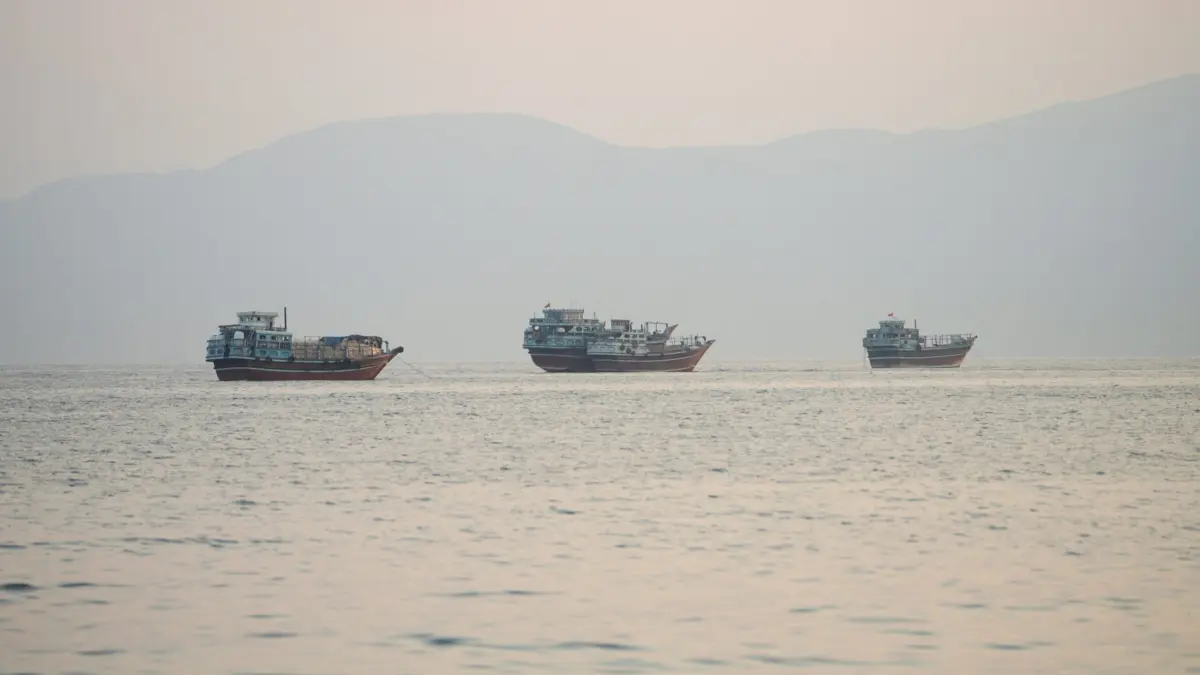
Iran has officially exempted commercial and transit ships originating from or linked to India, China, Iraq, and Qatar from the stringent navigation restrictions it has enforced across the critical Strait of Hormuz, a senior Iranian lawmaker announced on Tuesday.
The move represents a strategic calculation by Tehran as it navigates the ongoing fallout from the US-Israel war on Iran, which erupted on February 28, and a broader naval blockade reimposed by the United States on Iranian southern ports in July. While Tehran effectively closed the vital maritime chokepoint early in the conflict, the newly announced carve-outs allow specific nations to resume maritime trade routes through the area.
Amir Hayat Moqaddam, deputy chairman of the Iranian parliament’s National Security and Foreign Policy Committee, told the Iranian Students’ News Agency (ISNA) that vessels representing these four nations are now permitted to pass freely. According to the lawmaker, these ships are moving through the strait without interference, and US forces have not been intercepting them either.
The announcement raises critical geopolitical and economic questions regarding how Tehran enforces these exemptions, what it receives in return, and whether such vessels can genuinely navigate safely while a powerful US naval blockade remains active in the region.
What Does Iran Get in Return for Letting Ships Pass?
According to Hayat Moqaddam, the policy is built on a foundation of direct economic and diplomatic reciprocity. Tehran expects to receive vital medical supplies from India and essential political backing from China. Meanwhile, Iran already benefits from the diplomatic support of Qatar, which continues to spearhead ongoing mediation efforts aimed at bringing an end to the US-Israel war.
Hayat Moqaddam noted that Tehran will collect transit fees from both Indian and Chinese cargo vessels, whereas Qatari ships have been granted passage free of tolls. The Iranian lawmaker did not specify whether Iraqi ships would be subjected to similar financial levies.
Regional analysts note that bartering and transactional arrangements are hardly unfamiliar territory for Tehran. Because Iran has faced international economic penalties and trade restrictions for an extended period, relying on quid pro quo arrangements is a well-established practice.
Experts point out that the current strategy goes beyond traditional economic survival, functioning as a deliberate effort to puncture holes in the maritime embargo and facilitate the flow of critical goods and services in and out of the country. Analysts suggest that Tehran is likely charging either a direct transit fee or taking a percentage of the cargo value to allow these select vessels to transit the area without harassment.
Security analysts view the decision as a clever tactical move by Tehran. If successful, the exemptions could generate substantial revenue streams, given that China remains the single largest buyer of Iranian crude oil, purchasing nearly 90 percent of Iran’s total oil exports. Furthermore, by incorporating Qatar—a major player in the global liquefied natural gas (LNG) market—and India into the arrangement, Iran is actively working to fracture international acceptance of Washington’s enforcement strategy in the ongoing conflict.
Why Does It Matter to These Four Countries?
All four nations hold a high degree of economic dependency on the Strait of Hormuz for their international energy exports and imports. Shipping data underscores the massive volume of trade that traditionally moves through the corridor. Out of the 10.23 million barrels per day of Gulf crude oil that traversed the strait in October, approximately 42 percent was destined for China, while 13 percent went to India.
For Asia, the heavy reliance on Gulf oil and gas makes the reopening of transit routes a major economic priority, providing these governments with strong incentives to negotiate terms with Tehran. For India, the sudden disruption of Gulf oil supplies created significant economic losses. At the same time, India stands out as a major global producer of pharmaceuticals that Iran cannot easily manufacture domestically, creating a natural trade synergy.
Qatar, which has balanced its role as a key mediator between Washington and Tehran, saw its LNG shipments through the strait drop to zero in August before rebounding to 1.8 million tonnes in October, according to data from analytics firm Kpler. Over the same timeframe, Qatari crude transits declined from 517,000 barrels per day down to 193,000 barrels per day. In contrast, Iraqi crude flows through the corridor rose significantly from 1.69 million barrels per day to 2.65 million barrels per day. However, tracking firms like Kpler note that up to two million barrels per day of Middle Eastern crude have proven untraceable in origin, suggesting that actual volumes from Iraq and Qatar may be even higher.
For countries like India and Qatar, maintaining close diplomatic relationships with Washington remains an essential priority, even as both capitals have expressed frustration with aspects of US policy under President Trump. For Qatar, preserving a cooperative relationship with Iran is equally vital due to geographic proximity. Navigating these competing interests means that while these nations benefit directly from the exemptions, they also face potential diplomatic risks.
Is This Announcement Entirely New?
The policy of selective exemptions is not entirely unprecedented. Within weeks of the conflict’s outbreak, Iran began permitting select vessels from countries it regards as friendly to navigate regional waters. By April, the Iranian military command officially announced that neighboring Iraq—with which Iran shares close religious and political ties as a fellow Shia-majority state—was similarly exempt from restrictions. Analysts view the Iraqi exemption as a calculated effort by Tehran to support the economic recovery of its western neighbor.
Will Ships Be Able to Get Past the US Blockade?
Whether these exempted ships can successfully bypass restrictions ultimately depends on the posture adopted by Washington.
The US Central Command (CENTCOM) has maintained that its naval blockade applies broadly to all vessels of all nations entering or leaving coastal areas or ports inside Iran, while ships merely transiting the area without stopping at Iranian ports remain unaffected. CENTCOM has also stated that humanitarian shipments, including essential food and medical supplies required for the survival of civilian populations, are permitted to pass following inspection.
However, security analysts observe that Iranian statements regarding the exemptions do not appear limited strictly to humanitarian trade or non-Iranian ports. If the policy covers standard commercial shipping moving directly to and from Iran on behalf of countries like China and India, it could create significant friction with Washington’s naval strategy.
Observers note that if Washington tacitly accepts these exemptions, it could complicate and reduce the overall effectiveness of the American naval blockade, potentially impacting other regional states such as Saudi Arabia. Furthermore, technical ambiguities remain regarding whether the exemptions apply based on a vessel’s flag, its ultimate owner, its commercial operator, or other corporate links.
Lifting the naval blockade represents a central demand from Tehran before it will commit to comprehensive peace negotiations with the US, a process that is expected to encompass discussions regarding Iran’s nuclear program. Current talks mediated by Qatar center on an Iranian proposal to fully reopen the strait if Washington fulfills seven key conditions, which include lifting sanctions and ending the blockade. Analysts suggest that Tehran is attempting to decouple the issues of free passage through the Strait of Hormuz and broader oil exports from the nuclear dossier, leaving the ultimate success of the maneuver dependent on the American response.
Will This Make a Difference to Oil Markets?
For global energy markets, the immediate impact of the announcement is projected to be relatively modest. Market analysts suggest that current trading conditions are largely focused on the broader prospects of a negotiated peace settlement. However, market watchers warn that if regional hostilities flare up to full intensity, naval commanders and military forces on the ground may not have the capacity or time to distinguish between targeted vessels and exempted carriers.
Despite the announced exemptions, commercial shipping safety remains precarious. On October 30, the Qatari LNG carrier Al Mayeda was struck by unidentified objects while navigating the Gulf, according to its owner, the Qatar Gas Transport Company. Data compiled by the International Maritime Organization and United Kingdom Maritime Trade Operations indicates that more than 120 commercial vessels have been struck or targeted in the region since the war began, with October marking the most volatile month for maritime security.