
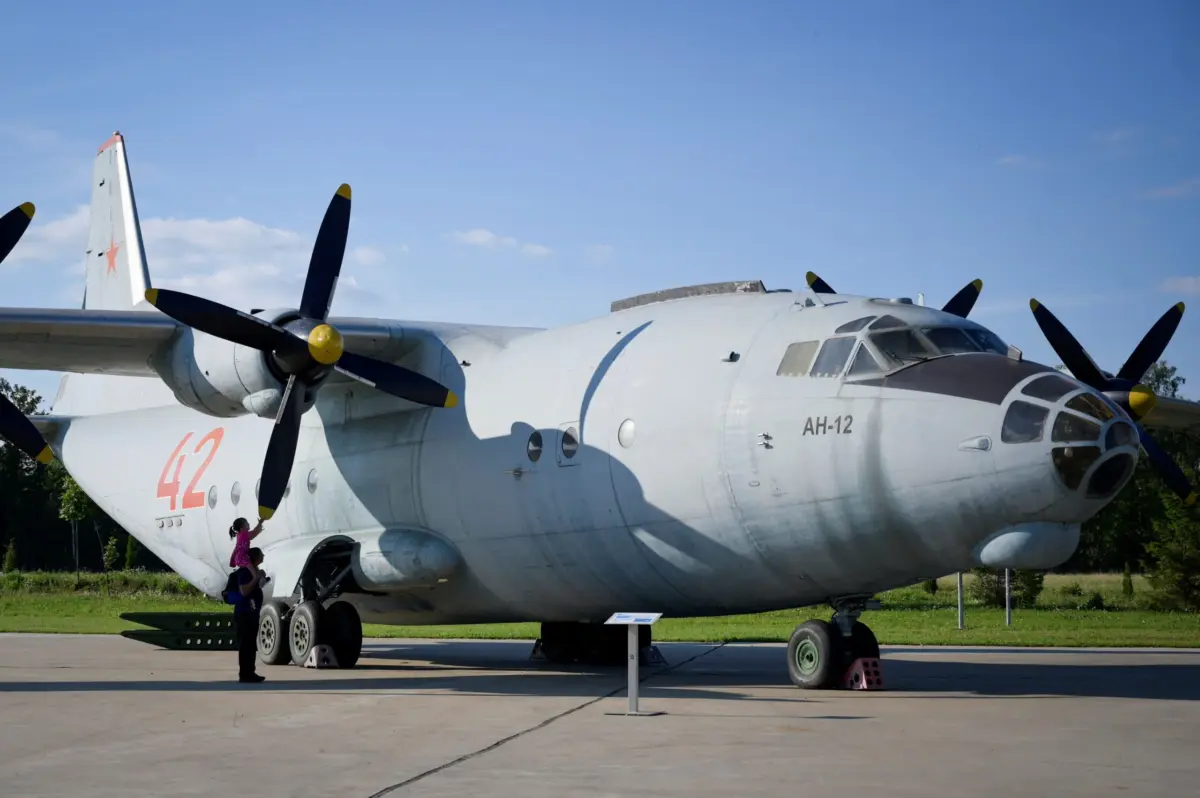
A military transport aircraft has crashed in western Siberia, resulting in the tragic loss of all 19 people on board. According to an official statement released by the Russian Defence Ministry and cited extensively by local media outlets, the incident has prompted an immediate investigation by air force experts, with preliminary findings pointing heavily toward a sudden and catastrophic equipment failure.
The aircraft involved was an Antonov An-12 transport plane, which typically operates with a standard crew of six members, though military transport flights can also carry additional personnel and cargo depending on their specific mission profiles. The aircraft went down in a sparsely populated, unpopulated area situated near the major industrial city of Kemerovo, located approximately 3,000 kilometers east of Moscow. The remote nature of the crash site prevented widespread damage on the ground or civilian casualties, though it also presented initial logistical challenges for regional emergency response teams attempting to access the wreckage.
Air force authorities and aviation safety officials have mobilized quickly to determine the precise sequence of events that led to the disaster. In a statement carried by the RIA Novosti news agency, the Russian Defence Ministry confirmed the immediate dispatch of a specialized investigative body. “A commission from the Russian Aerospace Forces is working at the site to establish all the circumstances of the incident,” the ministry’s statement declared. While formal conclusions will require a comprehensive analysis of the aircraft’s onboard systems and remaining physical evidence, initial assessments strongly suggest that technical malfunctions played a central role in the downing of the transport plane.
Regional authorities were quick to mobilize local emergency services following the disaster. Regional Governor Ilya Seredyuk utilized the Telegram messaging platform to provide real-time updates from the accident zone. Seredyuk reported that local emergency crews had successfully extinguished a fierce fire that broke out upon impact and confirmed that municipal and regional personnel were actively assisting federal investigators at the scene.
In a video distributed online, Governor Seredyuk recorded footage showing the immediate surroundings of the accident site, which is located near the village of Yagunovo. In the video, he explained that the plane had been actively flying through the region on a routine transport route when it suddenly experienced the catastrophic failure that brought it down. The presence of regional leadership underscored the gravity of the situation and the immediate coordination between local civil authorities and military investigators.
In accordance with standard legal and operational protocols following major military aviation accidents, Russia’s top criminal investigation agency, the Investigative Committee, launched a formal inquiry. The investigation will focus heavily on examining whether there were any potential violations of established flight safety rules or maintenance oversights prior to departure. These inquiries are routine procedures designed to uncover systemic issues, mechanical faults, or operational oversights that may have contributed to a fatal aviation incident.
The aircraft at the center of the tragedy, the Antonov An-12, holds a long and storied history within Soviet and Russian military aviation. Designed as a versatile four-engine turboprop transport plane, the An-12 has been a cornerstone of military logistics since it first entered active service in the late 1950s. Renowned for its rugged design and ability to operate in harsh weather conditions and rudimentary airfields, more than 1,000 units of the aircraft were manufactured during its peak production years. While the majority of the global fleet has been retired over the decades as newer, more efficient models were introduced, a notable number of An-12 transport aircraft still remain in active operation across Russia and several other nations for both military and civilian cargo duties.
This latest disaster compounds a growing record of serious military aviation incidents in Russia over recent months, highlighting ongoing concerns regarding the operational safety and maintenance of aging Soviet-era hardware. Just months prior, in September, another high-profile military aviation accident occurred when a Russian Tupolev Tu-95 nuclear-capable strategic bomber crashed in the eastern region of Amur. That accident resulted in the deaths of six crew members and left a seventh injured, sending shockwaves through the country’s military establishment and triggering intensive reviews of long-range aviation safety protocols.
As the investigation into the Kemerovo crash continues, military and civilian aviation experts will likely scrutinize the maintenance history of the aging An-12 fleet. The findings of the Aerospace Forces commission and the Investigative Committee are expected to shed further light on the exact nature of the equipment failure that silenced the transport plane and claimed the lives of all 19 individuals aboard, serving as a sombre reminder of the inherent risks faced by military aircrews operating legacy transport aircraft across vast and challenging terrains.