
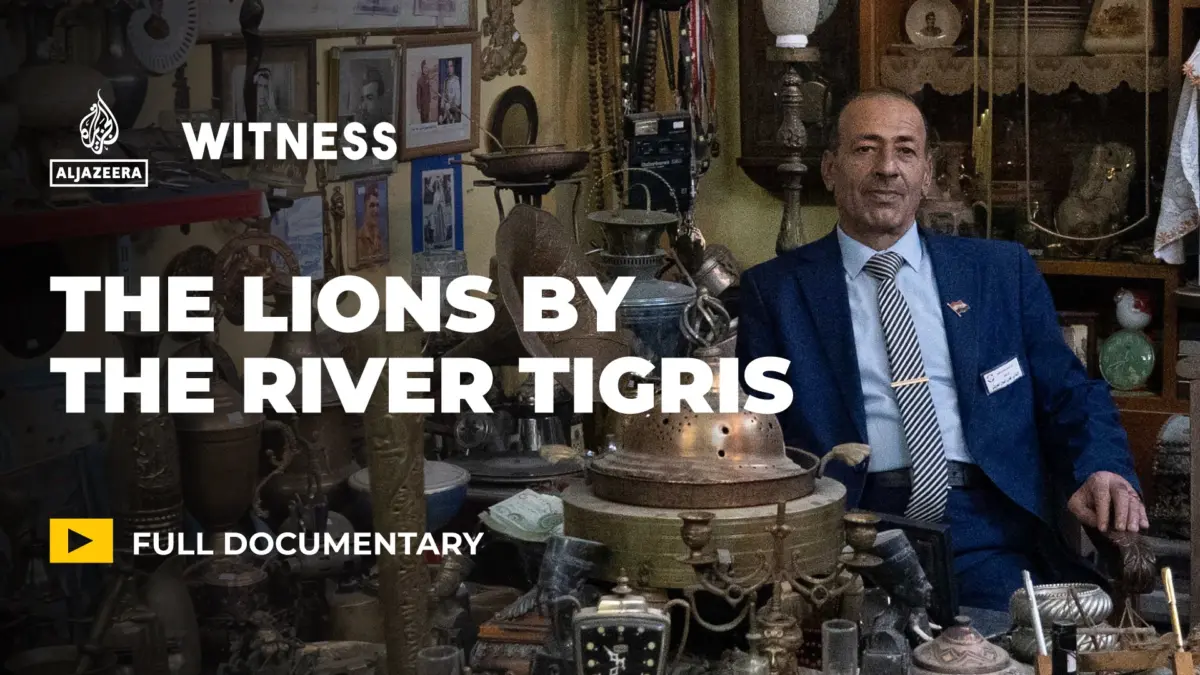
When the ancient Iraqi city of Mosul was devastated after its liberation from ISIL, its physical landscape was left in ruins, but its spirit and deep history could not be easily erased. Nearly a decade after the grueling military campaigns that freed the metropolis from militant control, the monumental task of rebuilding continues. Amidst the concrete dust, collapsed bridges, and hollowed-out shells of historical buildings, three men are striving to revive the beauty, heritage, and cultural heartbeat of their ancestral home. Their individual struggles, intertwined with the destiny of the city itself, form the emotional core of a compelling documentary titled The Lions by the River Tigris, directed by filmmaker Zaradasht Ahmed.
In the heart of war-ravaged Mosul, standing as a fragile and poignant link to the city’s shattered past, two carved stone lions remain anchored to a solitary gateway. These ancient figures have witnessed millennia of human history, trade, conquest, and civilization along the banks of the Tigris River, yet the recent chapter of destruction brought by ISIL was unlike anything the city had endured before. For Bashar, a local fisherman whose livelihood and family identity are tied to the river, the landscape of his youth is almost unrecognizable. He lost his once-grand family home during the ferocious battle to liberate Mosul nearly ten years ago. Today, virtually nothing remains of the sprawling property except for a solitary marble gate crowned with the two ancient lions, a structure he now fiercely guards as if it were the last remaining anchor of his personal history and dignity.
While Bashar views the surviving gate through the lens of personal loss and familial endurance, others in the city see it through the lens of collective memory and historical preservation. Fakhri, a devoted collector determined to save Mosul’s scattered heritage from being lost forever, has become deeply obsessed with acquiring the iconic lions gate. In a city where antiquities have been looted, destroyed, or neglected during years of conflict, Fakhri views every salvaged brick, carved stone, and historical artifact as a vital piece of a puzzle that must be pieced back together. His ambition is to house these rescued fragments in an unofficial museum, creating a sanctuary where future generations of Iraqis can touch and see the physical proof of their pre-war civilization. However, this preservationist zeal brings him into direct emotional and philosophical conflict with those around him.
Fakhri’s friend Fadil, a talented musician who was utterly silenced under the oppressive rule of ISIL, offers a starkly different perspective on the city’s recovery. During the years of militant occupation, music was strictly forbidden, instruments were burned, and cultural expression was driven underground or violently extinguished. Fadil understands deeply that the bricks, mortar, and stone monuments of Mosul are meaningless without the human souls who give them life. He continually challenges Fakhri to look beyond the cold allure of physical artifacts and recognize the immense human cost behind every piece of ancient heritage. For Fadil, the true revival of Mosul cannot be measured solely by the recovery of statues and architectural fragments, but by the restoration of human voices, art, music, and the freedom to create.
The tension between preserving the physical remnants of the past and healing the living community mirrors the broader challenges facing Mosul as a whole. As the city slowly rebuilds its infrastructure, roads, schools, and homes, a quiet cultural revival is beginning to take root. This delicate resurgence reflects the remarkable resilience of a metropolis boasting eight thousand years of history. Throughout the millennia, Mosul has risen and fallen through empires, wars, and shifting borders, maintaining a distinct cultural identity rooted in its strategic position along major trade routes and its rich multi-ethnic, multi-faith heritage.
The documentary The Lions by the River Tigris captures this pivotal historical moment through the intimate stories of Bashar, Fakhri, and Fadil. Director Zaradasht Ahmed documents not only the physical scars of a city emerging from the shadows of extremism, but also the internal debates among its residents about how best to honor the dead, protect the surviving culture, and chart a path forward. As Bashar continues to guard his marble gate by the river, Fakhri pursues his mission of rescue, and Fadil seeks to reclaim the silenced music of his city, Mosul stands at a crossroads between the ghosts of its devastating recent history and the enduring legacy of its ancient past.