
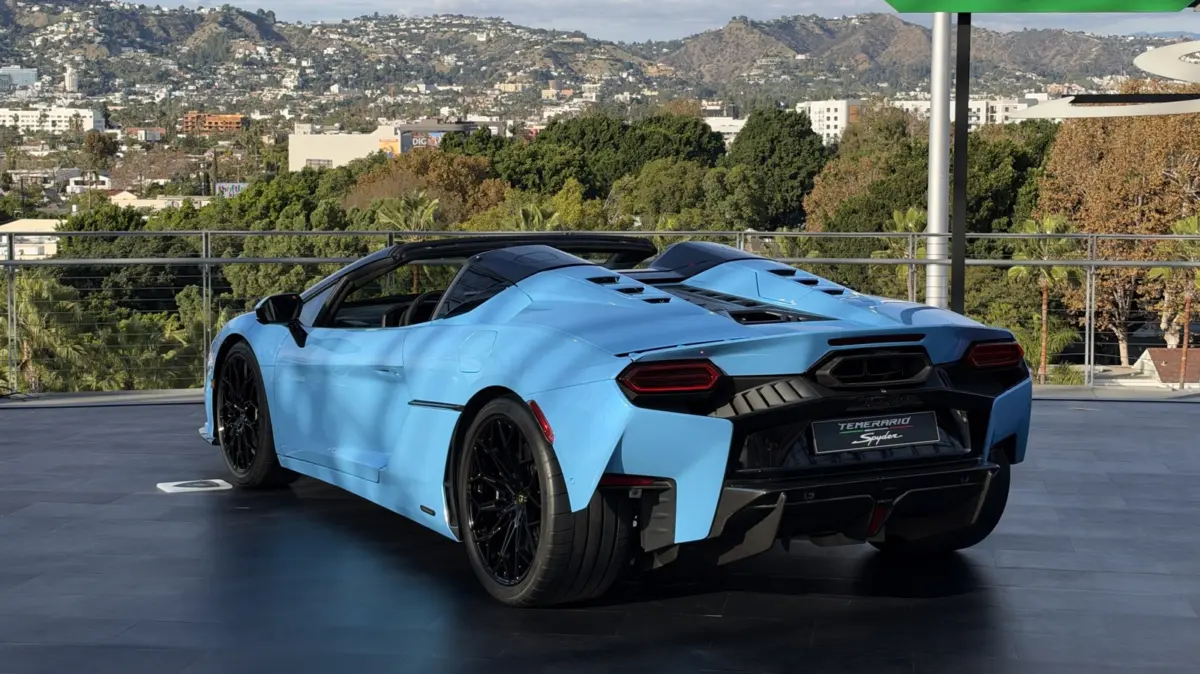
The Lamborghini Temerario has barely settled into the garages of early adopters, having spent roughly a year in the hands of enthusiastic customers, but the storied Italian manufacturer is already expanding the lineup. For those eager for open-air thrills, Lamborghini has officially pulled the wraps off the new Temerario Spyder, making its world debut at the Academy Museum of Motion Pictures.
While Lamborghini has a rich history of building droptop supercars stretching all the way back to the Silhouette in 1976, the Sant’Agata Bolognese firm has actually lagged behind industry trends when it comes to top mechanisms. The Temerario Spyder changes that narrative by introducing the brand’s very first convertible equipped with a powered retractable hardtop. Though this type of setup has already achieved peak popularity across the automotive landscape, its execution in the latest raging bull promises to keep heads turning.
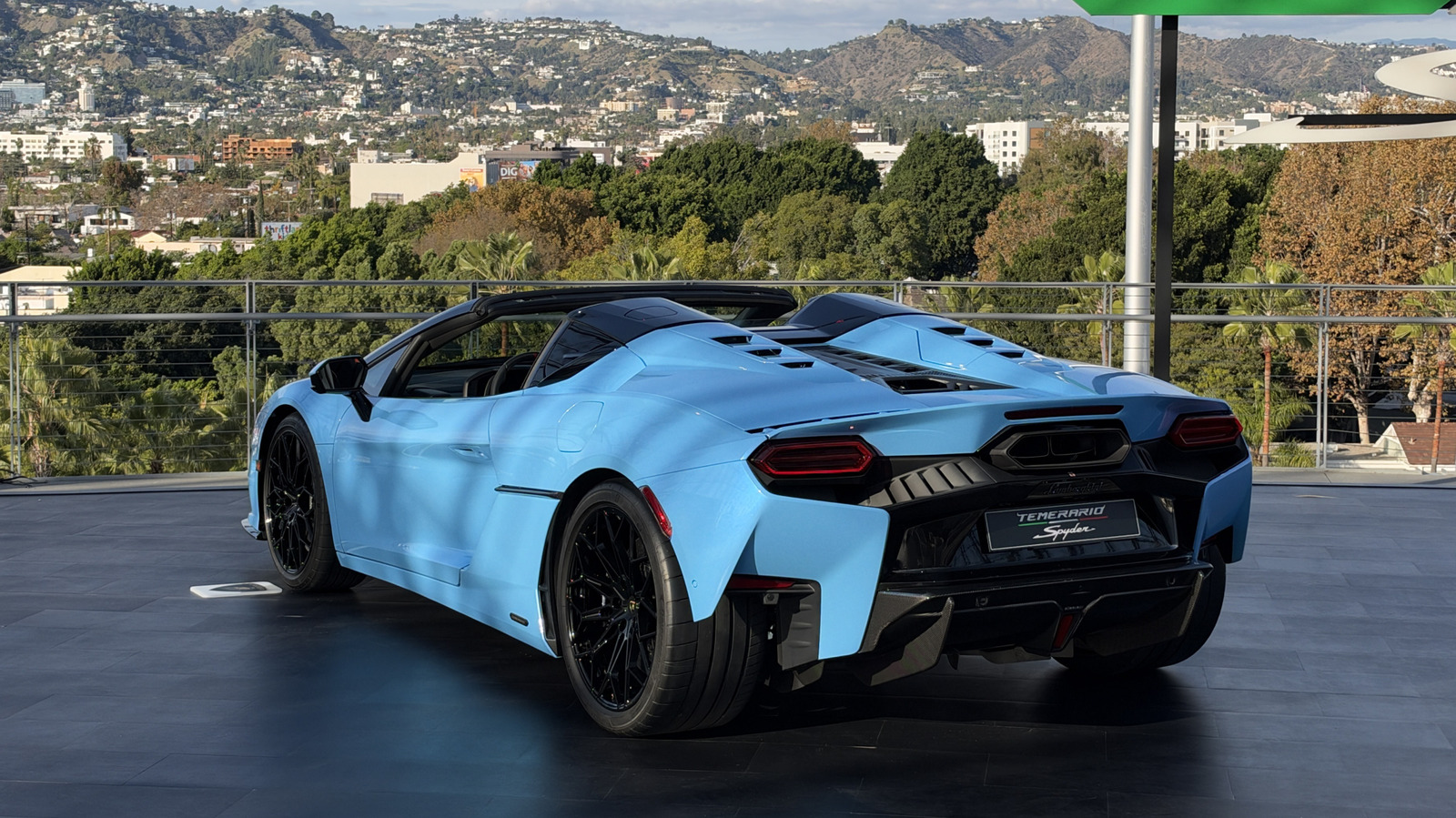
According to Lamborghini, the hardtop configuration was meticulously engineered "to combine comfort, driving precision and aerodynamic efficiency." The folding apparatus itself utilizes a unique, industry-first mechanism designed to deliver the high-octane exuberance that defines the brand’s most celebrated exotic models.
Look at that roof!
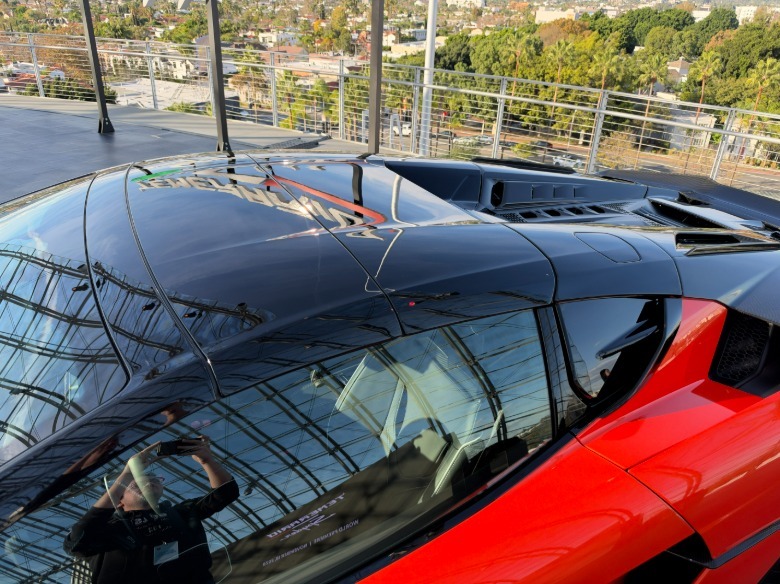
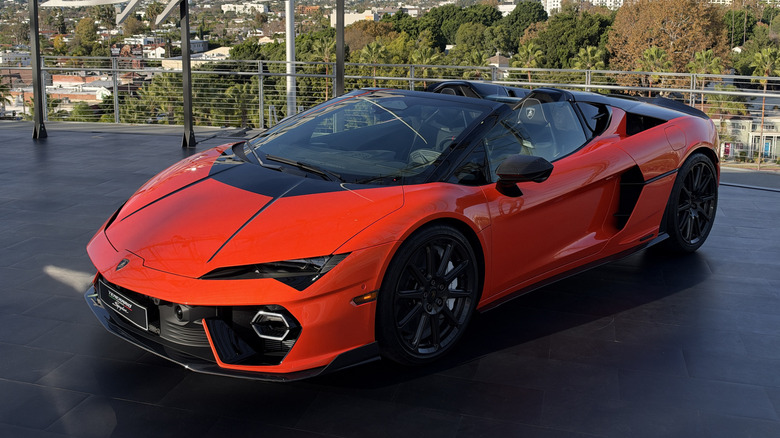
From a purely visual standpoint, the styling changes are subtle yet effective. The underlying proportions of the Temerario coupe already won praise for their aggressive stance, and the Spyder manages to elevate that aesthetic even further. The core profile and roofline remain largely identical when the hardtop is deployed. However, a closer look reveals two prominent cowls integrated into the decklid directly behind the seats, each featuring a striking trio of vents. In place of the coupe’s smaller side quarter windows, designers have carved out a fresh intake element to optimize airflow.
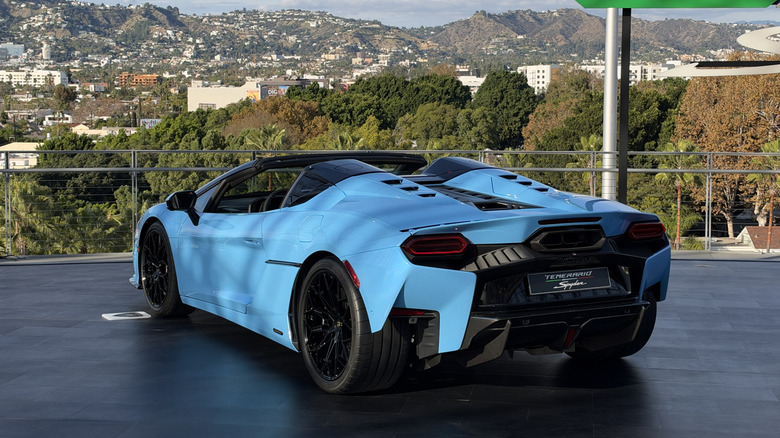
The engine cover provides an unobstructed view of the mechanical heart beating beneath, while an array of supplementary intakes, vents, and aerodynamic enhancements amplify the visual drama. Buyers looking for deeper personalization can opt for a new livery package that introduces stark black accents, including sharp framing around the headlights, pushing customization options well beyond what was initially offered on the coupe variant.
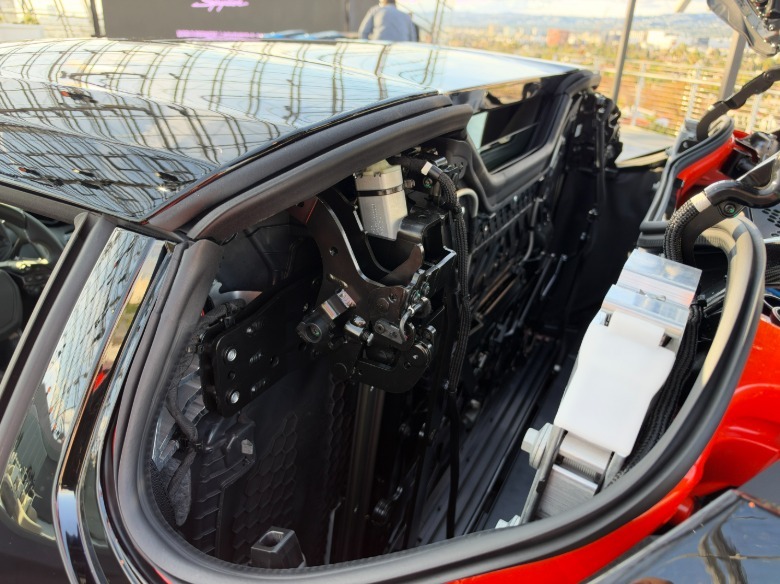
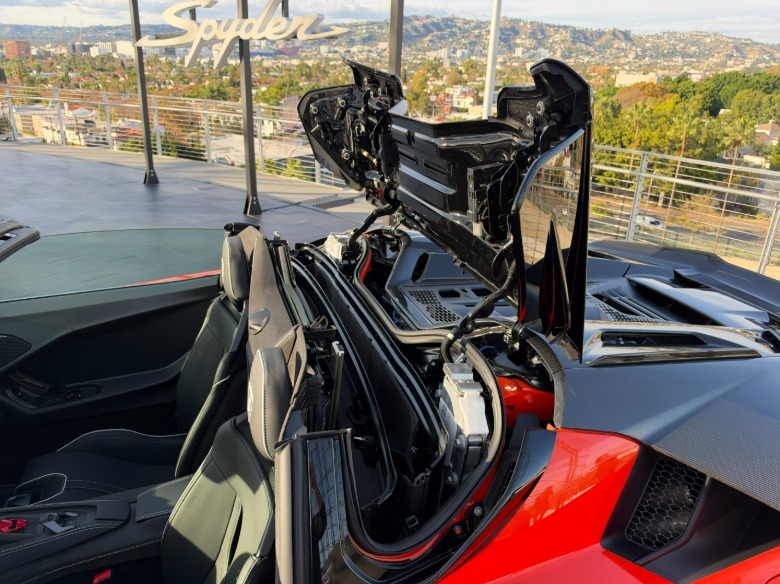
Undoubtedly, the engineering marvel of the car is its roof. The patented operating mechanism breaks away from conventional designs that cause the folded panels to sit flat on top of the rear deck. Instead, the hardtop splits neatly into two distinct panels that stow vertically right behind the seats, sitting just ahead of the engine bay. Rather than relying on traditional electro-hydraulic circuitry, the system operates via ten distinct electric actuators. This modern approach yields quieter operation, a smoother transition, and a significantly more compact assembly that is fascinating to watch in motion.
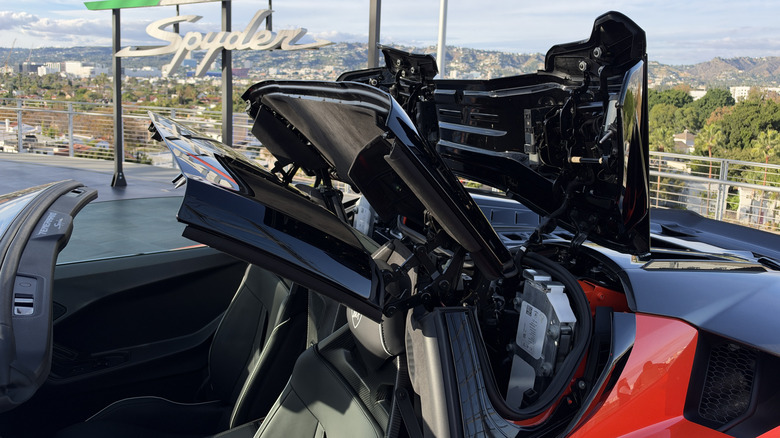
A traditional roof layout typically shifts a car’s center of gravity roughly 0.3 inches higher and 0.4 inches closer to the rear axle when lowered. By contrast, Lamborghini’s vertical stowing configuration ensures that the center of gravity actually drops by a couple of tenths of an inch when the top is open, while leaving the overall weight distribution completely unaltered. Operating the roof takes approximately 17 seconds to open and 18 seconds to close, functions that can be executed at vehicle speeds of up to 31 mph. Additionally, drivers can independently lower the rear glass window while the hardtop is up, allowing the cabin to absorb the raw acoustics of the engine without exposing occupants to the elements.
It’s only slightly slower
Developing a convertible variant without compromising structural integrity is a notoriously difficult engineering challenge. However, Lamborghini designed the Temerario architecture from day one with the Spyder in mind, minimizing the need for drastic structural compromises. Compared to its predecessor, the Huracán Spyder, the new Temerario boasts a 6% increase in static torsional rigidity, a 6% improvement in dynamic torsional rigidity, and a 9% boost in dynamic bending stiffness across the body shell. Furthermore, model-specific suspension tuning has been implemented to curb secondary vibrations on rough asphalt by up to 20%.
Propelling the Spyder is the exact same high-performance plug-in hybrid powertrain found in the Temerario coupe. The setup revolves around a twin-turbocharged 4.0-liter V8 engine capable of revving all the way to 10,000 rpm, or an astonishing 10,250 rpm when utilizing launch control. On its own, the internal combustion engine churns out 789 horsepower. Supplementing this are two axial-flux electric motors mounted on the front axle and a third motor sandwiched between the V8 and the eight-speed dual-clutch transmission. Combined, the system pumps out a staggering 907 horsepower, mirroring the output of the coupe while offering 13 distinct configurations spanning various drive modes and hybrid settings.
The physical weight penalty for shedding the fixed roof amounts to approximately 220 pounds. Despite this added mass, the performance drop in straight-line acceleration is remarkably minimal. Lamborghini reports that the Temerario Spyder rockets from 0 to 62 mph in just 2.8 seconds—a mere tenth of a second slower than its hardtop sibling. The sprint to 124 mph takes 7.3 seconds, putting it two-tenths behind the coupe, while the top speed remains identical at an astonishing 213 mph.
For owners looking to claw back some of that weight, specifying the optional Alleggerita package introduces an abundance of carbon-fiber-reinforced polymer components. These lightweight materials are applied to the front splitter, rear decklid, underbody panels, and door cards. When paired with optional carbon-fiber wheels, the total weight savings accumulate to a noteworthy 49 pounds.
It’ll even warm your neck
Sound has always been a defining characteristic of Italian supercars. Alongside the newly announced titanium Akrapovič exhaust system developed for the Temerario line, the acoustic experience of the Spyder has been fine-tuned to maximize open-air drama. According to Lamborghini, dropping the roof allows the raw soundtrack of the V8 to blend seamlessly with the surrounding environment, while the adjustable rear window lets drivers dial in their preferred balance of wind protection and cabin volume.
The acoustic profile adapts dynamically across the Città, Strada, Sport, and Corsa driving modes. In Città and Strada settings, comfort and sound refinement take priority. When switched to Sport and Corsa, the distinct firing orders and intake harmonics of the V8 become markedly more pronounced, rising in intensity alongside engine speed to heighten the visceral feel of open-cabin motoring.
To combat cooler ambient temperatures during open-air drives, Lamborghini has incorporated brand-new neck warmers directly into the seats. Featuring three distinct intensity settings, these integrated warmers can reach temperatures up to 113 degrees Fahrenheit. Moreover, building on the interior packaging improvements that made the Temerario noticeably roomier than the Huracán, the Spyder maintains generous cabin dimensions capable of accommodating drivers up to 6 feet, 7 inches tall comfortably—even while the roof mechanism is actively opening or closing.
Pricing details have yet to be officially finalized ahead of the vehicle’s market launch in 2027, but industry expectations point toward a premium of roughly $50,000 added to the coupe’s baseline MSRP of approximately $382,000.