
In an era where personal health optimization has become a multi-billion-dollar global industry, consumers are increasingly turning to dietary supplements to fill nutritional gaps, boost energy, or stave off chronic illness. Yet, beneath the polished labels and celebrity endorsements lies a largely opaque reality: there is little guarantee that a supplement contains what is advertised on the packaging, nor that it is free from potentially dangerous, undeclared contaminants.
For years, experts in evidence-based medicine have sounded the alarm regarding the dissemination of scientific information. It is a well-documented phenomenon that press releases—even those emerging from prestigious medical centers—are often riddled with overstatements, the omission of crucial data, and the aggressive promotion of preliminary findings. When these strategies are applied to medical journal press releases and communications from pharmaceutical giants, the results are frequently skewed by hype. However, a closer examination of the trade organizations representing the dietary supplement industry reveals an even more pervasive and systemic distortion of reality.
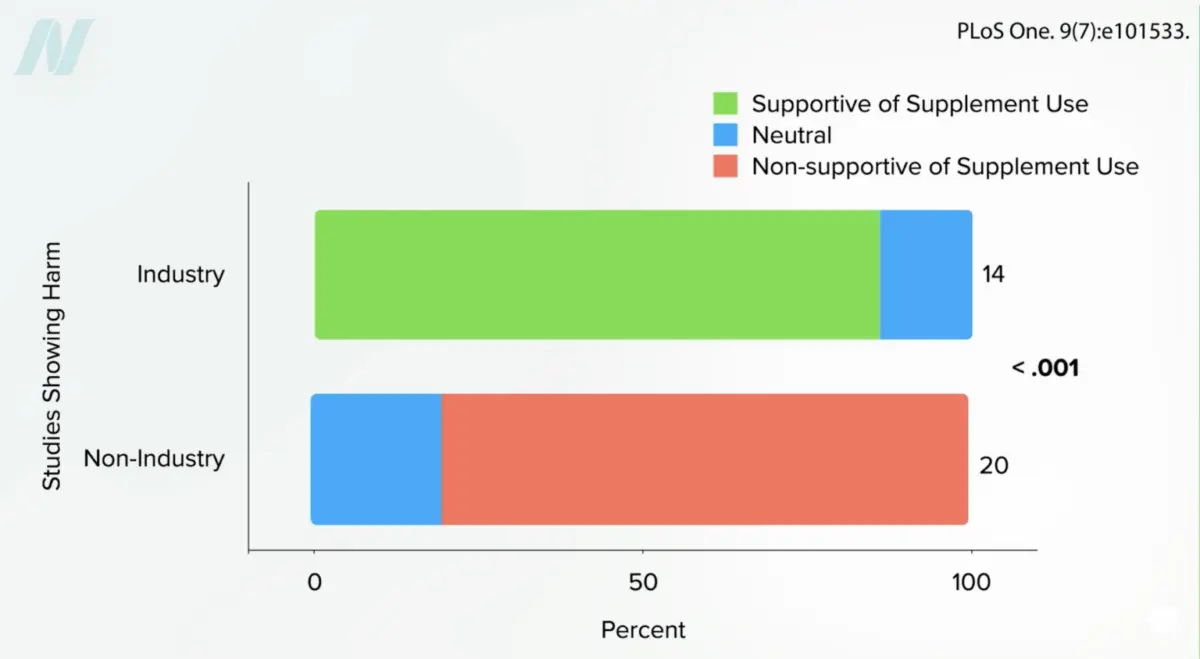
Recent research into the communication strategies of the supplement industry has uncovered a startling trend: 100% of the press releases issued by these trade organizations contained "spin." In the context of clinical research, spin is defined as the use of specific rhetorical strategies to either hype positive findings or denigrate negative ones, effectively distorting the actual outcomes of clinical studies.
Perhaps most concerning is the industry’s reaction to unfavorable data. When a clinical study is published that reports no benefit or outright harm associated with a specific supplement, the standard response from independent scientific institutions, such as the National Institutes of Health, is to caution the public. Conversely, the supplement industry often adopts the opposite approach. Data indicates that industry trade organizations advocate for the continued or increased use of supplements in response to more than 90% of studies that report no benefit or evidence of harm. In effect, where a rigorous scientific study might suggest that a product is ineffective or potentially hazardous, the industry’s public messaging often encourages consumers to ignore the warning, essentially suggesting that they double down on their purchase.
The consequences of this "spin-enriched" messaging are profound. It contributes to a burgeoning, unshakeable enthusiasm for supplements, even in the face of mounting evidence that many of these products offer no clinical efficacy. This cycle of misinformation creates a marketplace where consumers may be paying significant sums of money to ingest substances that provide no benefit and, in some instances, may cause physical harm.
The psychology of the modern consumer also plays a role in this dynamic. Studies suggest that for many, the science simply does not matter. Research into consumer behavior shows that the vast majority of dietary supplement users would remain "minimally influenced" by independent, taxpayer-funded studies that directly contradict the efficacy claims made by manufacturers. When presented with findings from public health authorities that a supplement is effectively a waste of money, only about one-fourth of regular users indicate they would consider discontinuing their use.

This disconnect between scientific evidence and consumer behavior is not a new phenomenon, but rather a modern iteration of the "snake oil" salesman. While the term is often used as a historical trope, it was rooted in the actions of real individuals, such as Clark "the Rattlesnake King" Stanley. In 1916, it was revealed that Stanley’s famous snake oil contained no actual snake oil; it was a concoction of spicy moth repellent and turpentine. Prosecuted under the newly established Pure Food and Drug Act, Stanley was fined a mere $20. Over a century later, the industry remains plagued by similar issues of integrity, despite a much more complex regulatory landscape.
The supplement industry frequently defends itself against claims of negligence by emphasizing that it is indeed regulated and that laws are in place to protect the consumer. While it is true that federal statutes exist, the practical ability of regulators to oversee the industry is severely hampered by the sheer volume of products on the market. The U.S. Food and Drug Administration (FDA) estimates that there are more than 85,000 dietary supplement products currently available to American consumers. This vast number, combined with the widespread underreporting of adverse side effects, the extreme difficulty of successfully prosecuting offenders, and the ease with which a supplier can simply rebrand and relaunch a product after it has been pulled from shelves, has fostered a largely unregulated environment.
In the real world, the lack of robust oversight means there is no guarantee that a bottle contains what is listed on its label. Studies have consistently found that supplements are frequently adulterated with undeclared pharmaceuticals—most commonly in products marketed for erectile dysfunction, weight loss, blood pressure, and diabetes. These contaminants represent an enormous risk to public health, contributing to an estimated 23,000 emergency room visits in the United States every single year. While proponents of the industry often point to the high mortality rates associated with prescription drugs to deflect criticism, the reality remains that the absence of quality control in the supplement market is a significant, preventable source of disability and illness.
The problem of purity is further complicated by the industry’s "dirty little secret": the practice of "dry labbing." This occurs when quality assurance labs, which are supposed to act as independent gatekeepers, simply rubber-stamp fraudulent purity documents to ensure a product reaches the market. Even when independent researchers attempt to shine a light on these practices, they often face significant professional and legal retaliation.
A notable example of this occurred when a researcher at Harvard published a paper replicating FDA findings that detected a designer, amphetamine-like stimulant known as BMPEA in various weight-loss supplements sold in the U.S. In a move that shocked the scientific community, one of the manufacturers involved, Hi-Tech Pharmaceuticals, sued the researcher for libel, slander, and product disparagement, initially seeking $200 million in damages. While the lawsuit was eventually unsuccessful, the manufacturer’s CEO openly admitted that the intent was to "silence" the researcher. The executive further expressed hope that the long, costly legal battle would serve as a warning to other academics, effectively scaring them away from investigating the supplement industry.
This aggressive legal posturing highlights the high stakes involved in the battle for transparency. As long as the supplement industry can rely on spin-heavy public relations, a lack of stringent, mandatory oversight, and the intimidation of those who seek to uncover the truth, the burden of safety will continue to fall squarely on the shoulders of the consumer. In this environment, the advice from medical professionals remains consistent: rely on established, independent scientific sources and maintain a healthy dose of skepticism toward claims that appear too good to be true, especially when they are accompanied by the persistent, unyielding hype of the industry itself.