
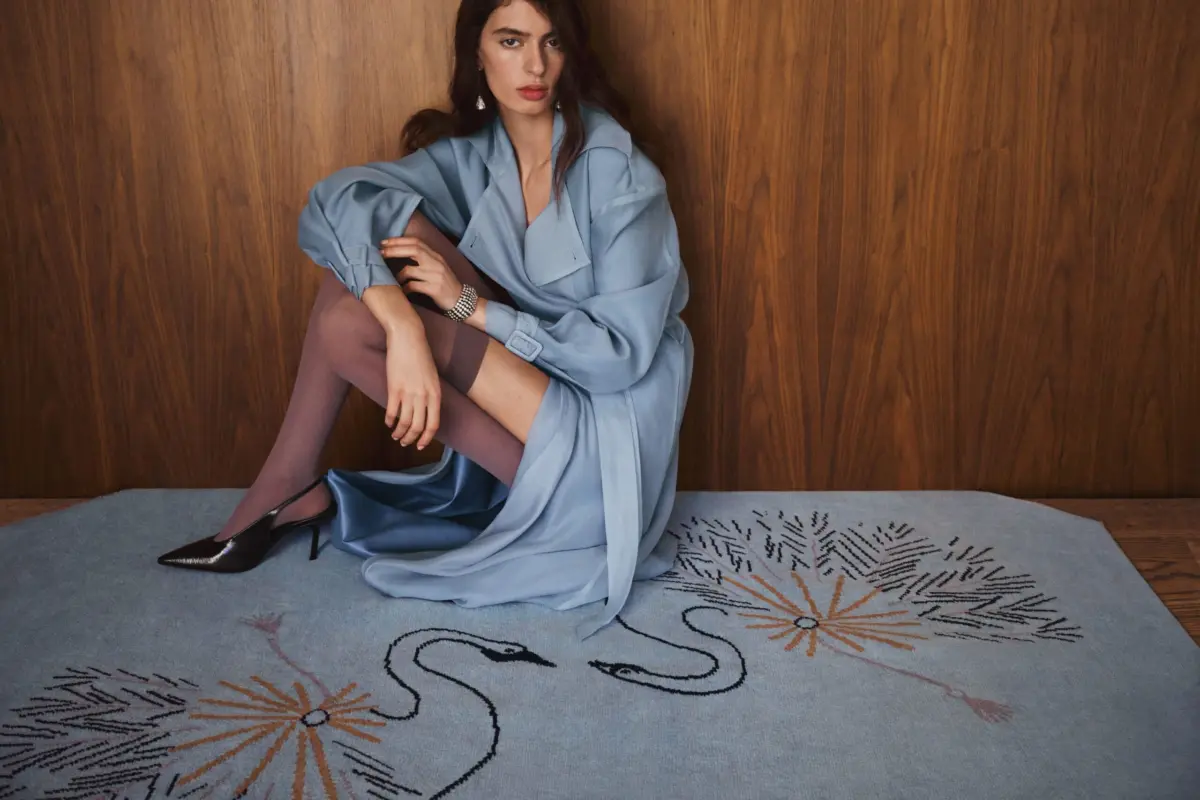
What defines a truly exceptional outfit? For the fashion-forward, the answer might lie in a meticulously chosen accessory or the foundational perfection of a classic white tee. But when it comes to the home, interiors experts are increasingly pointing toward a different essential: the rug. As the lines between personal style and interior design continue to blur, those who treat their homes as an extension of their wardrobe have a new reason to celebrate. Today, the sustainable fashion powerhouse Reformation officially launches its debut home collaboration, partnering with the luxury rug brand Les Éditions de Tapis to bridge the gap between sartorial elegance and residential comfort.
This limited-edition collection is the result of a creative dialogue between Thomas Coccimiglio, the founder and creative director of Les Éditions de Tapis, and Lauren Caris Cohan, the chief creative officer at Reformation. Together, they have curated a range of nine distinct rugs, each featuring hand-drawn motifs that span from the whimsical—tigers and swans—to the architectural and botanical, such as intricate palm trees. These pieces are designed to be playful and characterful, balancing a sense of eccentricity with a refined aesthetic that feels equally at home in the high-ceilinged expanse of a city apartment as it does in the quiet, cozy corners of a country cottage.
The partnership is described by the creators as a synthesis of "Parisian elegance meeting LA nonchalance." For Coccimiglio, this collaboration serves as a medium to explore the cross-cultural fascination between France and the United States. He notes that the collection is rooted in the romanticized visions each culture holds of the other. "I’ve always been fascinated by the romanticized visions that French and American cultures have of one another," Coccimiglio explains. "Americans dream of French history, Versailles, and the grandeur of the 18th century, while we French have our own fantasy of Los Angeles as a city of endless possibilities, rock ’n’ roll, cinema, and glamour."

This cultural exchange is the heartbeat of the collection, allowing for a marriage of deep-rooted European sophistication with the wit and unexpected flair that has become synonymous with the Reformation brand identity. The resulting rugs are not merely floor coverings; they are narratives of style, reflecting an approach that is both effortless and intellectually engaging.
The collaboration is not an overnight development, but rather the culmination of a creative partnership that has been flourishing behind the scenes for half a decade. Coccimiglio and Cohan have spent the last five years working together to design the rugs that adorn Reformation’s retail spaces globally. These store-specific rugs have served as more than just decor; they have been instrumental in bringing the brand’s aesthetic to life, grounding the physical shopping experience in a tangible, luxurious reality.
"Thomas has a similar sense of humor to us," says Cohan, who oversees the design and atmosphere of Reformation’s retail environments. "We’ve been able to inject that into the storytelling through the rugs in our stores, which are exquisite." Over the years, these store rugs have become a quiet, recurring talking point among customers. As shoppers browsed the latest seasonal collections, they often found themselves inquiring about the provenance of the rugs beneath their feet, expressing a desire to bring that same aesthetic into their private living spaces. Transitioning from retail design to a consumer-facing collection felt like the most natural evolution of the brand’s mission.

In overseeing this project, Cohan chose to give Coccimiglio significant creative freedom. This aligns with Reformation’s broader collaborative strategy, which prioritizes trust and synergy over rigid oversight. "With all our collaborations, we choose partners we trust, whether that’s Alexa Chung or Camille Rowe," Cohan notes. "We steer the ship, but we know we get the best out of people that way. Thomas designed every single element of these rugs."
The only specific constraint Cohan placed on the design process was the incorporation of color palettes from Reformation’s current Holiday collection. This was a strategic choice, intended to create a visual harmony between the fashion and home sectors of the brand. In fact, the campaign photography for the Holiday collection features the models posed against the new rugs, providing a seamless visual transition between the clothes customers wear and the environments they inhabit.
Among the nine pieces in the collection, each has its own distinct personality. Cohan points to the Très Grand Chintz Rug in Dark Wine as her personal favorite, noting its depth and versatility. Coccimiglio, meanwhile, highlights the Swans Fans Rug in French Blue as a standout example of the collection’s creative spirit. The design features two swans, a motif he felt was inherently linked to the romantic imagery of French châteaux.

"Swans belong to the romantic imagery of French châteaux, gliding across ornamental lakes and gardens," Coccimiglio says, describing the design’s origins, which began as a simple sketch on a Post-it note. "I started imagining their tails as delicate, fan-shaped feathers, almost like the elaborate hand fans from the 18th century—I loved the idea of transforming two romantic swans into something a little more decorative and Art Deco."
Beyond the visual storytelling, the quality of the collection is paramount. Each rug is hand-knotted by skilled artisans in India and Nepal, utilizing a blend of high-quality wool, linen, and silk. These are not fast-fashion accessories; they are pieces intended to last for generations, emphasizing craftsmanship and durability in an era of disposable goods.
When it comes to the practical application of these rugs within the home, Cohan—who brings experience in residential interior design to the table—offers a clear philosophy. "I always start with the rug, then build a room around it," she advises. She suggests that homeowners should not be afraid to let a rug take center stage, especially when it features such distinct character. "It can be a statement piece with everything else kept sparse, or you can layer on top of it."

Her most critical piece of advice for those looking to invest in a piece from the collection is to prioritize size. A common mistake in interior design, she warns, is opting for a rug that is too small for the space, which can disrupt the proportions of an entire room. When placed correctly, however, a rug serves as the grounding force of a room, creating a cohesive dialogue between furniture, art, and the individuals who use the space.
For Coccimiglio, the importance of the rug is even more fundamental. He reflects on the words of Edgar Allan Poe, who famously suggested that the soul of an apartment is the carpet. "I couldn’t agree more," Coccimiglio says. By bringing the artistry of Les Éditions de Tapis into the world of Reformation, the duo hopes to provide customers with the opportunity to define the "soul" of their own homes, grounding their daily lives in the same effortless elegance that defines their wardrobes.
As the collection debuts, it serves as a testament to the fact that personal style is not confined to what one wears, but extends to the very floor one walks upon. By blending the cinematic glamour of Los Angeles with the historical weight and romanticism of France, the collection offers a unique proposition: a piece of art that invites you to walk all over it, day after day. Whether chosen for its rich wine-toned chintz or its whimsical, Art Deco-inspired swans, each rug invites a new layer of character into the modern home, marking a significant milestone in Reformation’s ongoing expansion into the lifestyle space.