

Schools across the United States and Canada are discovering an engaging, play-based method to help students develop strategic thinking, improve their social-emotional competencies, and form lasting friendships—all while participating in a wildly popular hobby within a welcoming environment. Educational institutions are increasingly launching official Pokémon Clubs as afterschool programs, tapping into a cultural phenomenon that resonates deeply with students while quietly supporting vital academic and developmental milestones.
Remarkably, no prior gaming experience or deep Pokémon prowess is required for educators to start an afterschool club. Club coordinators highlight that these programs offer unique secondary benefits, such as giving older or more experienced players valuable opportunities to build leadership and communication skills by coaching their younger peers. For teachers, leading a club provides an approachable, low-stakes way to build stronger, more authentic bonds with students outside the traditional classroom structure.
"The community that Pokémon can build is meaningful because it’s a space where kids can grow their skills across many dimensions," says Maheen Sahoo, K-12 Partnerships Manager for The Pokémon Company International. "They’re not only learning how to play a Trading Card Game that requires strategic thinking skills, they are practicing key social-emotional skills like integrity, teamwork and respect."
Partnering for Play-Based Learning
Recognizing the developmental value of these programs, the International Society for Transforming Education (ISTE) has officially partnered with The Pokémon Company International to bring official Pokémon Clubs to K-12 schools across the United States and Canada as an exclusive member benefit. Participating ISTE members receive dedicated Pokémon Club kits, turnkey digital resources, and physical support materials designed to help educators launch their programs effortlessly.
To help educators navigate this new opportunity, EdSurge and Pokémon recently hosted a webinar titled "The Power of Play: Bring an Official Pokémon Club to Your School." During the event, Lauren Kelly, director of membership and community at ISTE, spoke with two experienced educators who currently lead official Pokémon Clubs: Zach Thompson, a fourth- and fifth-grade French immersion teacher in British Columbia, Canada, and Kathleen Clerc, a middle school teacher in Virginia. The educators shared practical advice for securing administrator buy-in, structuring club meetings effectively, and maximizing social-emotional learning outcomes.
Reflecting on what inspired him to launch his school’s club, Thompson explained his lifelong connection to the franchise. "I’ve been interested in Pokémon since I was a kid, and I’ve been interested in the Trading Card Game for a long time," Thompson said. "So it started with something I already enjoyed and felt comfortable doing, and it just felt natural to share it with students."
For Clerc, the inspiration came from a mix of family life and pedagogical observation. "Honestly, my own children introduced me to Pokémon," Clerc shared. "One day, I played the Trading Card Game with them, and I thought, Oh my goodness, there’s so much math in this and so much I could do with this with my students. And seeing how much kids love Pokémon, I thought, This is a great way to connect with kids."
Addressing Educator Hesitation and Cultivating Student Expertise
Many teachers might hesitate to launch such a program out of fear that they do not know enough about the underlying mechanics of the game. However, both veteran club leaders emphasize that comprehensive personal knowledge of the franchise is entirely unnecessary.
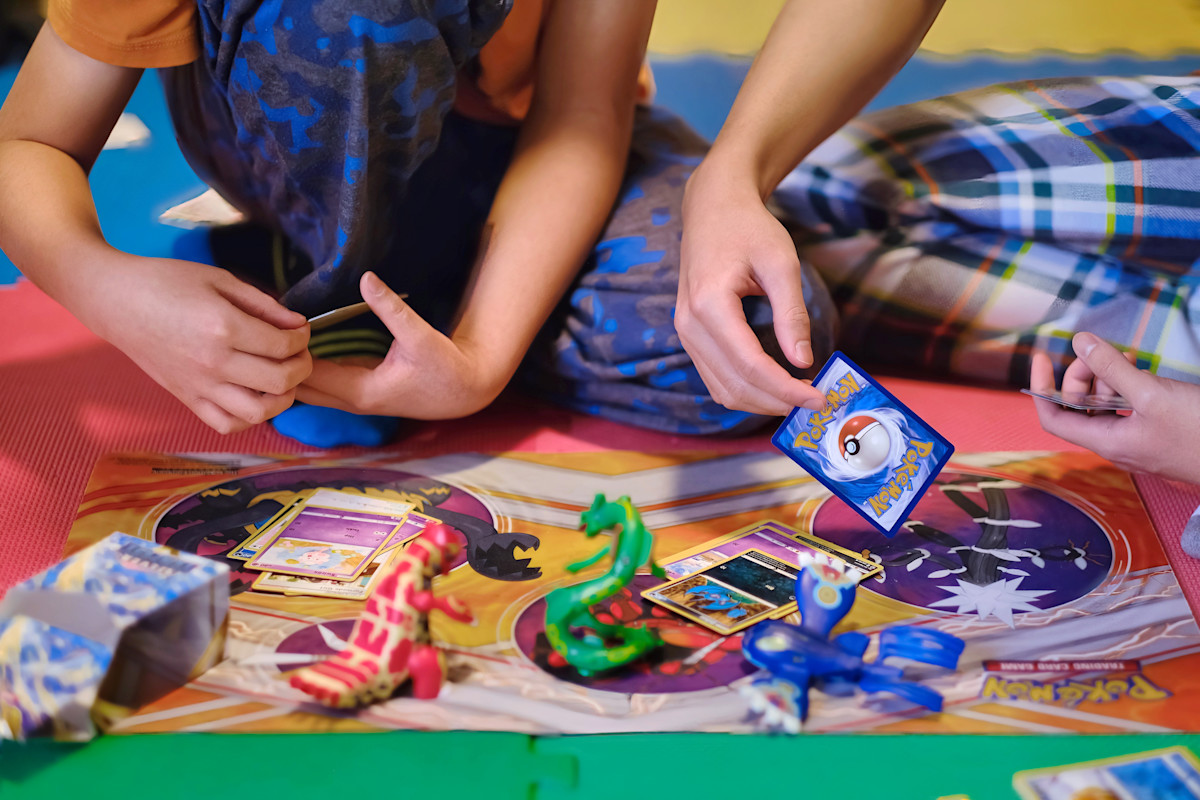
"I would tell them that you absolutely do not need to be the Pokémon expert in the room," Thompson noted. "What you need to know is how to create a positive environment for kids. Almost certainly, some of your students know quite a bit about the game. And then suddenly they get to say, ‘Oh, let me teach you how this works,’ and then they begin teaching other students. There’s something powerful about putting a student in the position of being an expert when they might not usually see themselves as a leader."
Clerc echoed this sentiment, emphasizing the welcoming nature of the wider community. "One of the great things about the Pokémon community is that everybody wants to help," she said. "Your kids will help you. And even if you don’t do everything right, it’s fun. There’s no pressure. I don’t know it all, and I’ve been doing this for three or four years."
When evaluating the concrete academic and developmental benefits observed during club sessions, both teachers point to a robust blend of rigorous cognitive demands and critical emotional growth.
"There are a lot of academic skills built into the game," Thompson explained. "Students are reading fairly complicated texts. They’re interpreting rules. They’re doing mental math, calculating damage, managing resources, planning several turns ahead, making predictions, evaluating risk."
Beyond academics, however, Thompson emphasizes the interpersonal resilience fostered by the club environment. "The most important growth that I see is social and emotional," he said. "Pokémon Club gives students a safe space to practice winning and losing. Sometimes we’re afraid of the word ‘competition,’ but competition isn’t automatically negative. It’s something that helps students develop those skills naturally."
Clerc similarly highlighted the foundational math and critical thinking embedded in the cards. "What opened my eyes to the Trading Card Game was, you’re multiplying, you’re adding, you’re subtracting. You’re doing all the basic skills but also learning upper-level skills like critical thinking and planning ahead," she observed. Furthermore, she noted the role of unpredictability in building emotional maturity: "And it’s a game of chance too. You can be the best player, but you can lose if you don’t draw the right cards. That’s part of the experience, along with things like conflict resolution—kids have to work through when they have a disagreement."
Realizing Impact and Securing Institutional Buy-In
Both educators shared transformative moments that made them realize their clubs were creating impacts far beyond their initial expectations.
For Clerc, the change was most visible in a student who typically struggled with social engagement. "I have a student who’s a brilliant young man but very socially awkward—doesn’t talk in class," Clerc recalled. "Pero he loves Pokémon. Pokémon is his thing. He joined the club, and he’s a totally different person. You would see him in the classroom and see him in the club, and you wouldn’t know it was the same student. There are a lot of times when a kid will ask me something about the game and I have no idea, so I’ll say, ‘Go ask him,’ and he’ll tell them the answer and it’s just an amazing thing."

Thompson pointed to organic student leadership and community building as his defining moments. "For me, it was realizing that the students are naturally taking ownership of the club," he said. "You see experienced students notice that someone doesn’t know how to play and they sit beside them without being asked and start teaching them. They start explaining things in a really patient and kind way. You also notice students who may struggle socially, and they start to feel like, ‘This is my place. This is where I belong. These are my people.’ I feel like anybody that’s running a Pokémon Club has a story like that."
For educators seeking to convince skeptical school administrators or district leaders to approve a club, the teachers recommend experiential proof over theoretical arguments. Thompson suggests inviting leaders directly into the space. "The best way for me [to get buy-in], once I got the club started, was to invite administrators to come see one of our sessions," he advised. "Once anybody who has any apprehensions comes in and sees kids engaging with each other and having fun, they go, ‘What the heck is going on here? It’s amazing.’ If you can’t win them over by listing all the academic benefits, ask them to come take a look. That’s what I do with parents too."
Clerc offered a similar piece of practical advice: "I would say, just play a game with them. Ask them to sit down and look a little bit closer to see that this is more than just a card game."
Reflecting on how running the club has influenced their own professional growth, both teachers emphasize renewed appreciation for student-driven engagement. Clerc noted that the deeper bonds formed over shared interests translate directly back to classroom receptiveness, making students more willing to participate because a genuine interpersonal connection has been established. Thompson agreed, noting that the experience constantly reinforces the sheer power of student interest in fueling self-directed learning.
When it comes to daily organization, both educators stress that simplicity is key. Meetings do not require heavily orchestrated lesson plans or rigid structures. According to Clerc, students simply arrive, materials are distributed, and they dive right into playing. Thompson reinforced this view, stating that as long as children are sitting across from one another connecting over a game they love, the club is succeeding.
Ultimately, both educators view the clubs as profound spaces for holistic student development. "Pokémon Club is more than the sum of its parts," Thompson concluded. "It’s more than just a place to play a game. It can be a place where students find new friends, discover confidence, learn how to win and lose really well, take on leadership, and feel like they belong."
Echoing that sentiment, Clerc urged other educators to take the leap. "My final point is that it just takes one experience," she said. "For me, it just took that one experience playing Pokémon to open my eyes. This is more than just some cards lying on a table. Just try it."