
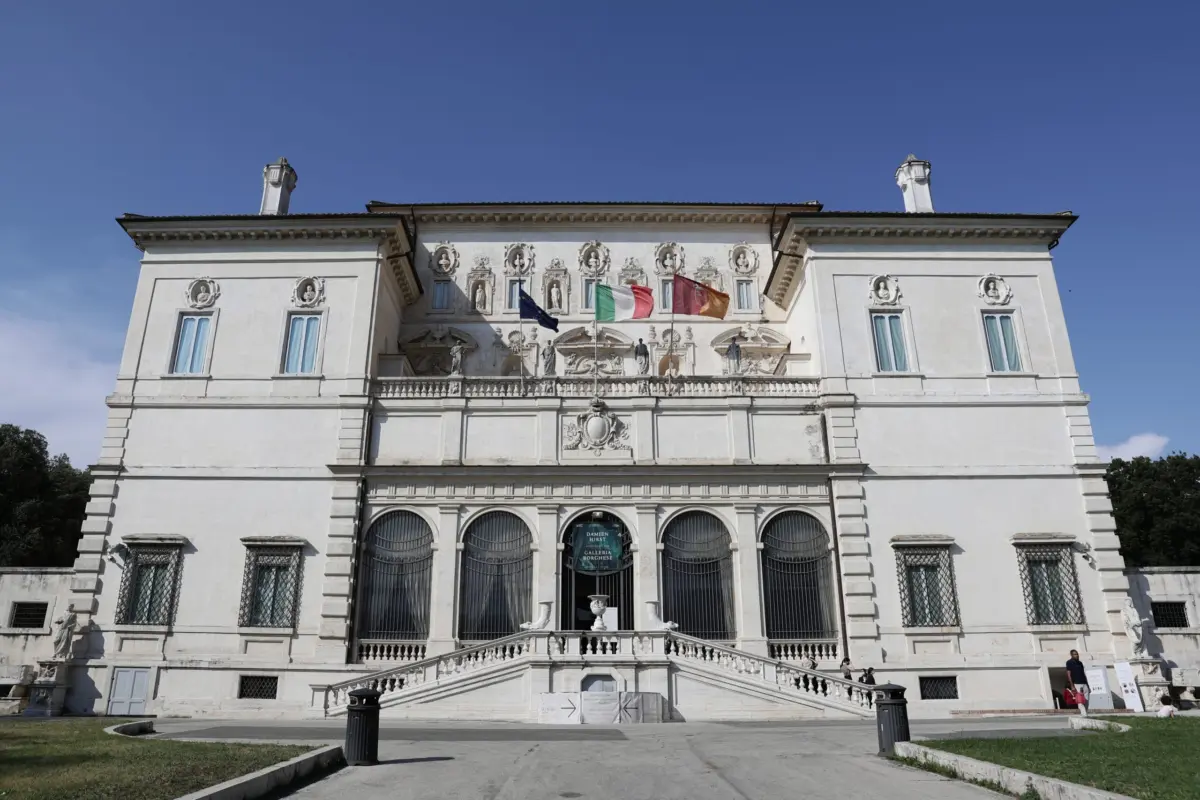
Rome’s iconic Galleria Borghese, a jewel of the 17th century and one of the world’s most celebrated repositories of Baroque art, is facing an existential crisis born of its own overwhelming popularity. In a bold and divisive move to accommodate a massive influx of international visitors, the museum has officially launched an international architectural competition to design a significant expansion of the historic villa. As reported by Le Figaro, the move signals a turning point for the site, which currently struggles to manage the crush of art lovers descending upon the Italian capital.
The Galleria Borghese houses an unparalleled collection of masterpieces, ranging from the dramatic, life-like sculptures of Gian Lorenzo Bernini and the moody, revolutionary canvases of Caravaggio to the neoclassical elegance of Antonio Canova and the timeless grace of Raphael. However, the very fame of these works has become a logistical burden. The museum welcomes approximately 700,000 visitors annually, with a staggering 60 percent of that total comprised of international tourists. This high volume has necessitated strict crowd control measures that, while preserving the integrity of the art, have left thousands of prospective visitors stranded at the gates.
"Until now, we have had to cap daily attendance at 2,000 people, allowing entry only to those who have booked online," Francesca Cappelletti, the museum’s director, explained in an interview with the French newspaper. "Yet, every day, we see groups of international visitors in the park who are disappointed to find they cannot enter because there are no spots left."
A Vision for Modern Growth
To address these capacity constraints, the museum, with the backing of Italy’s Ministry of Cultural Heritage and the Rome municipality, has moved forward with plans for a 3,000-square-meter extension. The project, which carries an estimated price tag of $11.15 million (€10 million), is intended to be far more than a mere ticket hall. The expansion aims to provide much-needed space to showcase works currently languishing in storage, while also facilitating space for rotating exhibitions, a new restaurant, a bookstore, and a state-of-the-art conservation laboratory.
Cappelletti is adamant that the museum’s future requires a departure from historical mimicry. "We cannot alter the existing heritage; the solution must involve a contemporary structure," she argued, drawing a parallel to one of the most famous architectural interventions in museum history. "After all, look at the Louvre pyramid in France—it works perfectly." The vision, according to the director, is to introduce a structure that complements the villa’s distinct white, ornate facade while existing in harmony with the lush, sprawling gardens of the surrounding Borghese park.
The organizational heavy lifting for the competition has been handed to the Italian engineering firm Proger Spa, which is also a dedicated patron of the museum. Prospective candidates have until November 13 to submit their expressions of interest. Seeking to distance the selection process from corporate influence, Cappelletti emphasized that the decision-making power will remain independent. "Naturally, it is not the company, but rather a jury of independent experts and renowned international figures that will select the winner in mid-May 2027," she clarified. "We have no intention of relinquishing our role; the final decision rests with us. That said, every effort must be made to ensure that Italian public funds remain protected."
A Storm of Heritage Backlash
Despite the museum leadership’s pragmatic approach, the announcement has ignited a firestorm of protest from preservationists, art historians, and political figures, all of whom argue that the villa’s historical purity is non-negotiable. For many, the idea of adding a modern wing to the 17th-century villa is not an evolution, but an act of desecration.
Alix van Buren, president of the Friends of the Villa Borghese association, was among the first to voice fierce opposition, labeling the project an insult to the architectural legacy of the site. "It is a grotesque proposal. It is blasphemy," van Buren told the Times of London. "The villa is one of the most perfect, unalterable artistic ecosystems that human genius has ever created. Not a single pin can be moved without upsetting the balance."
The criticism has resonated throughout the Italian cultural sector, with heritage organizations and academics lining up to condemn the project. Michele Campisi, general secretary of the heritage group Italia Nostra, dismissed the plan as "bizarre," suggesting that the museum’s management is attempting to pivot the institution into a high-traffic tourist magnet akin to the Colosseum, rather than maintaining its status as an intimate, scholarly sanctuary for art.
The academic community has been equally scathing. Tomaso Montanari, a prominent professor of art history at the Università per Stranieri di Siena, did not mince words in the Italian newspaper Il Fatto Quotidiano. He described the extension proposal as "moronic," suggesting that the addition of a modern structure would be the equivalent of "building an extension on Brunelleschi’s dome" at the Florence Cathedral—a comparison intended to highlight the perceived absurdity and lack of respect for architectural history.
The political fallout has been equally severe. The proposal has moved beyond the realm of architectural debate and into the halls of government. Fabio Rampelli, the vice-president of Italy’s lower house of parliament and a close ally of Prime Minister Giorgia Meloni, has publicly called for Director Cappelletti’s resignation. In a stinging critique posted to his social media, Rampelli accused the museum administration of treating the national treasure as if it were a private project. "Treating a space like this as if it were your own back garden is dismal," he stated, reflecting a growing sentiment among those who believe the state’s heritage assets should be protected from any form of modernization that alters their historical footprint.
The Balancing Act of the 21st Century
The controversy surrounding the Galleria Borghese highlights a perennial struggle facing historic European cities: how to balance the demands of modern mass tourism with the preservation of immovable, fragile cultural heritage. While the museum’s leadership maintains that an expansion is the only way to alleviate the pressure of an increasingly globalized visitor base and to properly care for works currently hidden in storage, the backlash underscores a profound cultural attachment to the preservation of the "status quo."
For the museum, the stakes are exceptionally high. The institution must now navigate a path between the practical necessity of updating its infrastructure to serve the public and the fierce protectiveness of a community that views any alteration as a violation of the past. As the competition for the design proceeds, the eyes of the global art world remain fixed on Rome, watching to see whether the Galleria Borghese will succeed in creating a bridge between the 17th-century masterpiece and the needs of the 21st century, or if the weight of history will prove too heavy to permit such a change.
With the deadline for entries looming and the debate showing no signs of cooling, the project stands as a litmus test for how Italy handles its immense artistic legacy in an era of unprecedented tourism. Whether or not the proposed extension eventually breaks ground in 2027, the conversation it has sparked has already served as a reminder of the deep, often conflicting, passions that surround the world’s most precious cultural assets.