
President Donald Trump’s ambitious plan to construct a 250-foot-tall triumphal arch in Washington, D.C., reached a critical juncture on Thursday as a federal commission began a final review of the project. The move comes despite a wave of mounting opposition from local governments, historic preservationists, and legal experts who argue that the structure—which the president has famously declared would be "more beautiful" than France’s iconic Arc de Triomphe—is being pushed through without proper congressional oversight or environmental consideration.
The National Capital Planning Commission (NCPC), currently led by Trump-appointee Mark Paoletta, convened on Thursday afternoon to deliberate on the final blueprints for the massive monument. Should the commission grant its approval, construction could theoretically begin immediately. However, the project remains entangled in a web of litigation that could halt work before the first stone is laid. Critics of the arch, including several members of Congress and legal representatives from the District of Columbia and Virginia, are banking on a federal judge to step in and block the project on the grounds that it circumvents established federal law.
The timing of the commission’s review is particularly notable, occurring just two days after a seismic midterm election that saw Republicans lose their majorities in both the House and the Senate. Despite the shift in the political landscape, the Trump administration appears determined to cement the project’s status before the current term expires.
Legal Challenges and Concerns Over "Lawless" Procedures
The project has faced fierce resistance since its inception over a year ago. On Wednesday, the attorneys general of D.C. and Virginia, Brian Schwalb and Jay Jones, filed a joint court motion urging the judiciary to intervene. In their filing, they argued that the administration’s attempt to fast-track the arch is fundamentally unlawful. "The Court should not allow this lawless project to evade scrutiny," the officials wrote, highlighting that such a significant alteration to the nation’s capital memorial landscape traditionally requires explicit congressional authorization—a step that the president has pointedly avoided.
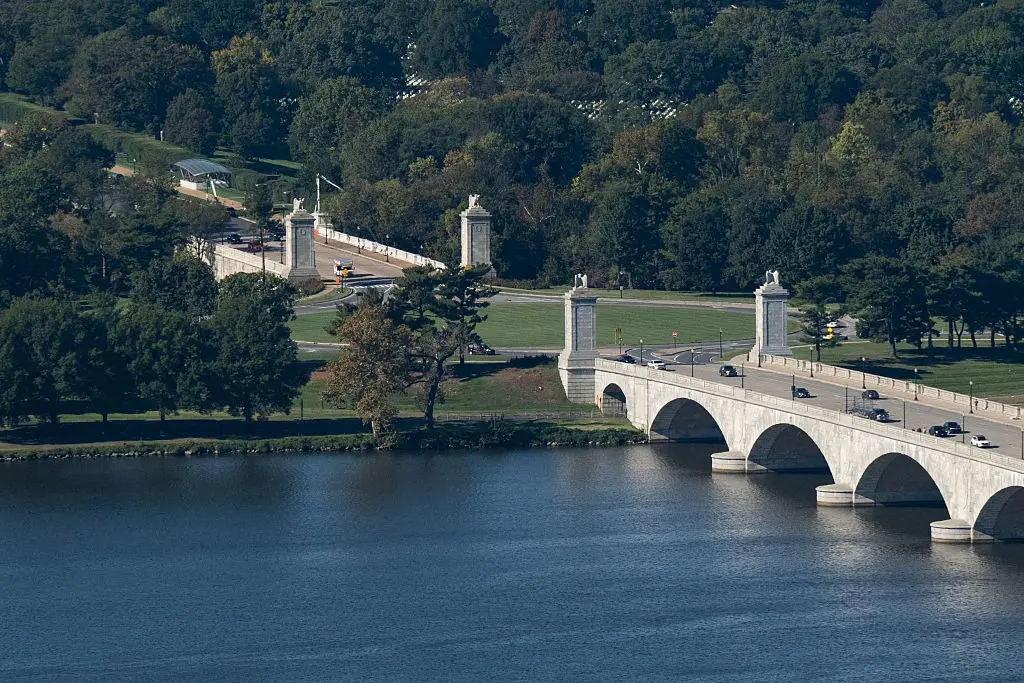
The proposed site for the arch is Memorial Circle, a highly sensitive area positioned directly between the Lincoln Memorial and Arlington National Cemetery. For many, this location is hallowed ground, representing the physical and symbolic link between the heart of the nation’s capital and the final resting place of its veterans.
The Arlington County Board, which has been at the forefront of the legal battle, filed a lawsuit last month naming the National Park Service as a defendant. The suit contends that the arch would "directly obstruct the line of sight between the Lincoln Memorial and Arlington National Cemetery that was deliberately created to symbolize the nation’s post-Civil War reunification." Beyond the aesthetic and historical concerns, the board’s lawsuit raises alarms about the practical, physical impact of such a massive structure, specifically citing potential risks to regional flight paths and the strain it would place on local emergency services.
A "Military Complex" Reimagined
Perhaps the most controversial aspect of the project is the president’s evolving vision for the arch. While it was initially pitched as a tribute to the United States’ upcoming 250th anniversary, the design has recently taken on a more militaristic character. In recent weeks, the president has described the monument as a "military complex," going so far as to include plans for a sniper’s nest within the structure.
This pivot has drawn sharp rebukes from local officials and safety advocates. The Arlington County Board’s lawsuit explicitly warns that repurposing a public monument as a staging point for security forces presents an unnecessary danger. "Using the Arch to store large stockpiles of ammunition and as a staging point for drones and snipers, so close to commuters and tourists, will dramatically worsen these public-safety harms and the risk of accidents," the filing states.
The administration has sought to justify the project by citing century-old plans that were technically authorized by Congress to commemorate the reunification of the country after the Civil War. However, historians and critics have repeatedly pointed out that these original plans—which have languished for decades—called for a pair of modest columns, not a 250-foot-tall triumphal arch. The president’s insistence on the grandeur of the current design has led many to view the project as an exercise in personal legacy-building rather than a genuine effort to fulfill a historic mandate.
The Commission’s Stance
During Thursday’s hearing, the NCPC leadership remained steadfast in its support for the project. Mark Paoletta, who was appointed as commission chairman this past August, offered a staunch defense of the president’s vision. Addressing the commission, Paoletta argued that the empty space at Memorial Circle has long been an eyesore that fails to honor the nation’s history.
"It dishonors our veterans and leaves a key monumental gateway to Arlington that Congress authorized uncompleted," Paoletta said, characterizing the absence of a monument at the site as a "national disgrace." He framed the project as a necessary completion of a vision that has been neglected for too long, dismissing the concerns of local officials as obstacles to a historic goal.
Throughout the afternoon, the commission heard lengthy public testimony from both proponents and opponents of the arch. While the voices of preservationists and local residents were loud in their opposition, the commission’s alignment with the administration suggests that approval is the expected outcome.
The Looming Court Battle
As the commission prepares to render its final decision, the focus of the controversy has shifted toward the federal courts. If the NCPC provides the final stamp of approval, the administration will likely attempt to break ground as quickly as possible, creating a "facts on the ground" scenario that might complicate future legal reversals.
However, the legal arguments filed by D.C., Virginia, and the Arlington County Board are robust. By invoking the potential for public safety risks and the violation of federal procedural requirements, opponents are attempting to create a judicial firewall. For the time being, the nation’s capital remains in a state of suspense, caught between an administration eager to leave a permanent mark on the D.C. skyline and a coalition of local leaders and legal experts determined to prevent what they characterize as an irreversible defacement of the city’s most sacred memorial landscape.
The debate over the arch has become a flashpoint for broader discussions about executive power, the preservation of public space, and the interpretation of historical legacy. For those who view the Lincoln Memorial and Arlington National Cemetery as the twin pillars of American national identity, the arch represents not just a construction project, but a profound intervention into the character of the nation’s capital. With the project’s future now hanging in the balance of a potential court injunction, the coming days are expected to be pivotal for both the project’s supporters and its detractors.