
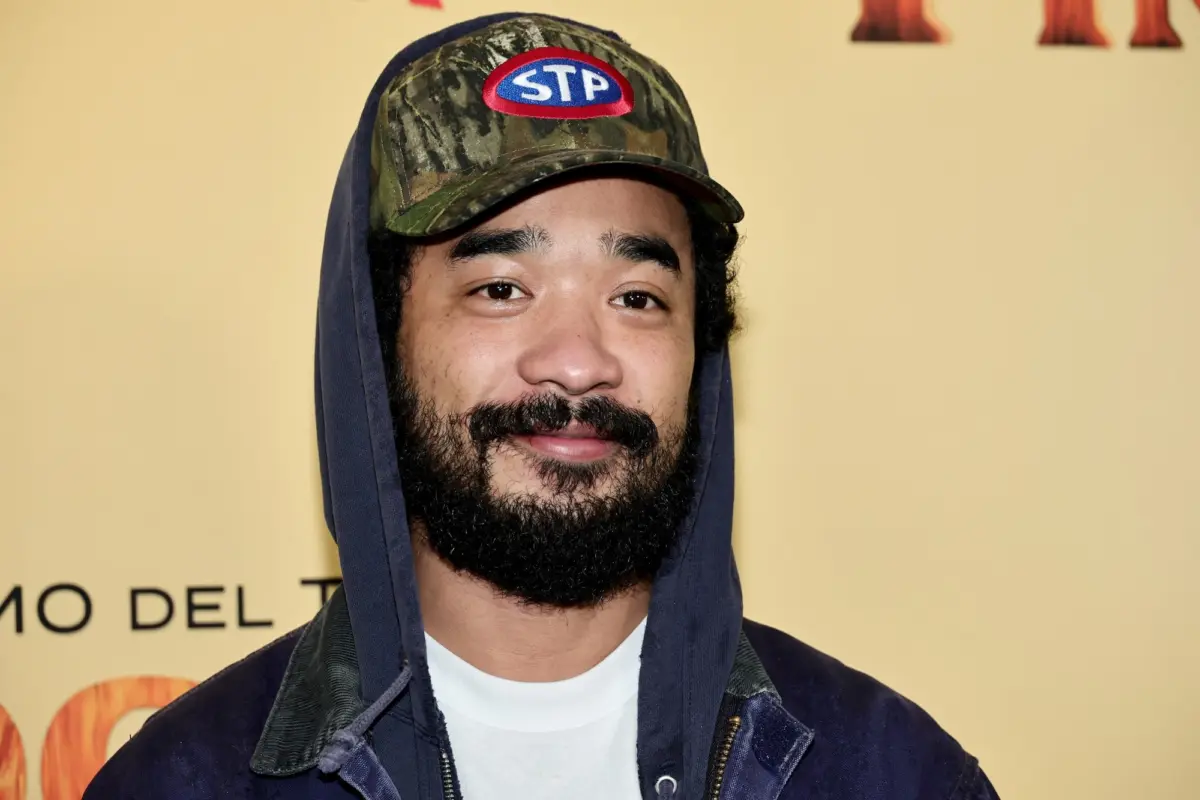
The Tragic Loss of Lucien Smith
The art world is mourning the loss of Lucien Smith, the celebrated American artist whose untimely death at the age of 37 has been officially classified. According to reports from the New York City medical examiner’s office confirmed this Thursday, Smith passed away due to an accidental overdose involving a combination of fentanyl and oxycodone. The artist had been found unresponsive in his Manhattan residence on September 7, a discovery that sent shockwaves through the contemporary art community where he had been a prominent and polarizing figure for over a decade.
Smith’s trajectory in the art market was meteoric. Rising to prominence in his early twenties, he was quickly heralded as a market darling, known for his experimental techniques and his ability to capture the zeitgeist of a new generation of collectors. In recent years, however, he had pivoted his focus toward more philanthropic and supportive roles, actively mentoring and advocating for emerging artists to help them navigate the often-turbulent waters of the commercial art world.
His latest body of work, a series titled Rain Paintings—created through the innovative application of spray paint via industrial air compressors—is currently on public display at the Tripoli Gallery in Wainscott, New York. The exhibition, titled Delay of Game, serves as a poignant testament to his creative evolution. Reflecting on the loss, art dealer Bill Powers, who was instrumental in Smith’s early career, shared a somber sentiment in September, noting that the artist’s presence has shifted into a more ethereal realm, stating, “Lucien lives in a wordless place inside us now.”
Allegations of Unauthorized Picasso Reproductions
In a separate development, the legacy of Pablo Picasso has become the subject of a significant legal battle in France. A court in Aix-en-Provence has initiated a preliminary criminal investigation following a formal complaint filed in March by Paloma Ruiz-Picasso, the daughter of the late legendary artist. The complaint alleges that a substantial number of reproductions—specifically silver plates and gold medallions—were manufactured using original Picasso molds without the necessary authorization from the estate.
The legal action, brought forward on behalf of nine of Picasso’s heirs, marks a major escalation in the family’s efforts to police the artist’s intellectual property. The Picasso Administration, which serves as the official representative for the family, claims to have identified at least 17 suspicious collections of silver and gold items circulating in the market.
While the official complaint has not publicly named specific suspects, the family’s legal counsel took the unusual step of publishing a warning in the Gazette Drouot regarding “Hugo silverware.” This reference points directly to Ateliers Hugo, a historic goldsmith workshop in Aix-en-Provence founded in 1933 by the great-grandson of the author Victor Hugo. Nicolas Hugo, the current head of the workshop and a noted art dealer and curator, has vehemently denied any involvement in the production of unauthorized works. Speaking to The Art Newspaper, Hugo acknowledged the existence of duplicate items on the market, noting that they date back to his father’s tenure running the atelier, but he maintained that he has no knowledge of how or by whom those pieces were produced. As of the latest reports, Nicolas Hugo has not been questioned by investigators, leaving the origins of these “Popping Out Picassos” a subject of intense scrutiny.
Legislative Shifts and Cultural Funding
The recent political climate in the United States, marked by the Democratic Party’s seizure of control in Congress, has prompted widespread speculation regarding the future of federal arts funding. Industry observers are now closely monitoring how this shift in power will influence the operations of major cultural institutions, including the Smithsonian Institution and the Kennedy Center for the Performing Arts.
The debate over arts funding has long been a flashpoint in Washington, and with the change in congressional leadership, stakeholders are bracing for potential shifts in policy. Analysts suggest that while the immediate future remains uncertain, the window for legislative action is narrow. Organizations are assessing the potential for either increased federal support or tighter oversight, with many emphasizing that time is of the essence to ensure that the nation’s cultural infrastructure remains robust amidst shifting political priorities.
Historical Discoveries and Market Movements
In the realm of archaeology and historical research, recent findings have offered new insights into the past. Archaeologists conducting research in Siberia have provided evidence that appears to corroborate the writings of the Greek historian Herodotus. By analyzing hair samples from human remains excavated at the Tunnug burial site, which date back nearly 3,000 years, researchers have concluded that nomadic Scythian warriors likely inhaled cannabis fumes as part of ritualistic practices.
Meanwhile, in Spain, researchers have uncovered the remains of a significant 12th-century Muslim palace garden in Murcia. The site is notable for its distinct, cross-shaped layout, providing archaeologists with a rare glimpse into the sophisticated landscape architecture and cultural synthesis of the period.
The high-end art market also saw notable activity recently, with hedge fund manager Ken Griffin reportedly acquiring Leonardo da Vinci’s Madonna of the Yarnwinder (ca. 1505) for a staggering $250 million. Following the acquisition, the work was loaned to the Metropolitan Museum of Art, further cementing the intersection of private wealth and public cultural access.
In the political arena, President Trump signed a proclamation this past Thursday aimed at preserving the Oval Office as a national monument. The move follows his high-profile redecoration of the office, which incorporated significant amounts of gold trim and furniture. The aesthetic choices drew sharp criticism from former President Barack Obama, who famously likened the new look to a scene where “Saddam Hussein opened a Cheesecake Factory.”
The Kicker: Fashion and the Art Fair
As the art world continues its global circuit, the intersection of high fashion and art-world professional attire remains a subject of humorous observation. During the recent Art Basel Paris in October, a Look Book feature by Curbed sought to capture the eclectic style of fair attendees. Amidst a sea of high-fashion statements, the portrait of gallerist David Zwirner stood out for its stark simplicity.
Photographed while taking a coffee break, Zwirner was captured wearing an unpretentious ensemble of a black shirt, slacks, and sneakers. When asked about his aesthetic choices, the gallerist offered a refreshingly honest perspective on the pressures of professional style. “I’m wearing what I wore yesterday and what I will wear tomorrow,” Zwirner remarked. “I’ve been wearing New Balance for 30 years. Usually I wear a T-shirt, but today’s too cool. I couldn’t tell you who made any of this. I’m not Mr. Fashion.” His comments served as a reminder that even in the hyper-curated environment of international art fairs, the pragmatic approach often takes precedence over the performative.