
Every morning, nine-year-old Abkar Mohammed swaps the traditional classroom for the chaotic, sun-baked streets of Port Sudan. While children in other parts of the world sit at desks learning mathematics and literature, Abkar spends his days cleaning and polishing shoes on the pavement, trading his childhood for the meager coins needed to keep his family afloat.
Abkar arrived in this eastern Sudanese city alongside his mother and three siblings from Khartoum, making the harrowing journey just days after the country’s devastating armed conflict erupted on April 15, 2023. Having lost his father even before the war shattered their homeland, the young family now shares a modest rented home in al-Kasara, a low-income neighborhood in Port Sudan.
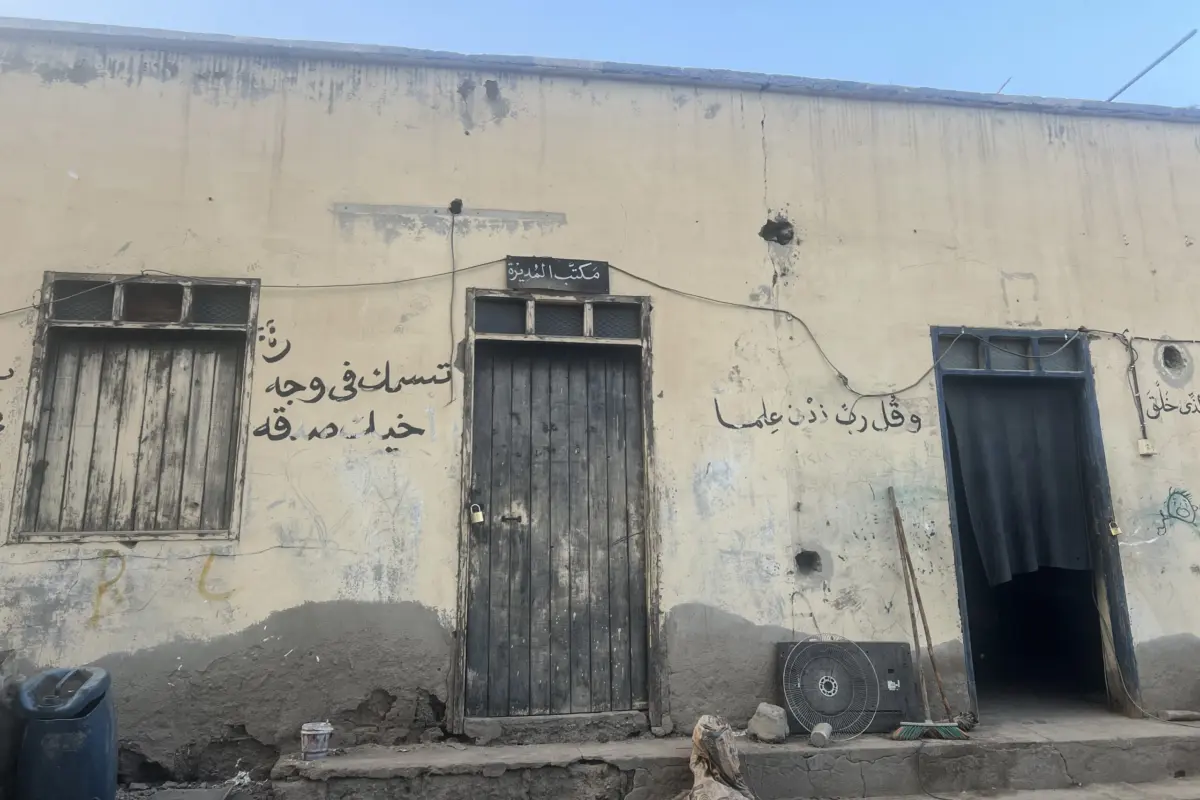
Because of the family’s desperate financial situation, formal education is an impossible luxury. Instead, Abkar attends classes at a traditional “khalwa,” where he spends his mornings learning the Quran. As soon as those lessons conclude, his workday begins.
“When my lesson finishes, I pick up my shoe-cleaning equipment and head to busy areas to work,” Abkar told Al Jazeera, describing a daily routine far beyond his years. “In the evening, I take public transport home, making sure I get back before sunset.”
For every pair of shoes he cleans or stitches, Abkar receives around 1,000 Sudanese pounds—roughly equivalent to 11 US cents. By the end of a grueling day on his feet, he manages to earn about 10,000 pounds, or $1.08. Every single note goes directly to his mother to cover the family’s most basic daily needs.
“My 23-year-old brother works on casual jobs in the markets to cover most of the household expenses,” he added quietly.
Abkar’s heartbreaking reality is far from unique. His story echoes the daily lives of eight million children out of the 17 million school-age children currently denied an education across Sudan, according to statistics compiled by UNICEF. In regions like Darfur, which has suffered some of the most intense violence of the conflict, the crisis is even more catastrophic: about 80 percent of schools remain entirely closed, leaving 70 percent of local children completely cut off from formal learning.
Humanitarian organizations warn that the scale of the educational collapse is unprecedented. Save the Children estimates that children in Sudan have missed an average of roughly 484 days of classroom learning since the war broke out in April 2023. This staggering loss is the direct result of prolonged school closures, active fighting, relentless displacement, and widespread damage to educational infrastructure.
Throughout the conflict, schools and universities have frequently borne the brunt of the violence. The Rapid Support Forces (RSF), which has been locked in a bitter war with the Sudanese Armed Forces (SAF) since 2023, has repeatedly been accused of targeting civilian infrastructure, including educational facilities, in drone strikes. The physical destruction of learning materials compounds the crisis; in September 2026, a devastating drone attack struck two warehouses in North Kordofan, obliterating more than 330,000 school textbooks and essential learning supplies that children desperately needed.

Sulaima Ishag, head of the Government Advisory Council for Women and Children, explained to Al Jazeera that children residing in active conflict zones—such as Darfur and parts of Kordofan—face the greatest risk of permanently losing access to education. She noted that this generational setback carries particularly dire consequences for young girls.
“Cases of school dropouts and child marriage reported, alongside sexual violence,” Sulaima told Al Jazeera. “[Girls] face additional risks, including adolescent pregnancy and increased domestic responsibilities, which can further limit their chances of returning to education.”
She warned that the complete absence of schools as safe, protective environments strips away essential social safeguards, leaving children dangerously vulnerable to a multitude of threats. These include child labor, early marriage, forced recruitment by armed groups, exploitation, sexual violence, human trafficking, and permanent family separation. Furthermore, the crisis inflicts a profound psychological and social toll on children—especially those hailing from the poorest families—even in areas currently deemed relatively safe.
Eva Hinds, UNICEF’s head of advocacy and communication in Sudan, underscored the sheer scale of the infrastructure collapse, noting that nearly half of all school buildings across the country can no longer function as classrooms because of war-related damage.
“Displaced children, many of whom have been forced to flee several times, face additional barriers, as repeated displacement disrupts their learning and separates them from teachers and classmates, often leaving them without learning materials or a safe place to study,” Hinds told Al Jazeera.
Without the protective environment of a school, children are increasingly pushed into hazardous child labor and exposed to recruitment by armed groups and other severe abuses. Hinds warned that the longer these young minds remain out of the classroom, the more insurmountable the challenge of recovering lost education becomes. This systemic disruption threatens to widen existing societal inequalities, ultimately preventing an entire generation of Sudanese youth from contributing to the nation’s future peace, recovery, and development.
“The conflict in Sudan continues to have a devastating impact on children’s education. The consequences extend far beyond the classroom,” Hinds said.
The invisible wounds left by the war are just as alarming as the physical destruction. Psychologist Hanaa Mohamed told Al Jazeera that prolonged displacement and the sudden halt to formal education have inflicted a heavy psychological toll on the country’s youth. Many children live in a perpetual state of fear, suffering from severe sleep disturbances and an inability to concentrate.
“These pressures have also led to changes in behaviour, including increased aggression or social withdrawal,” she told Al Jazeera. “Being out of school deprives children of an important protective environment. The absence of that protection has also helped bring cases of violence and sexual exploitation against children to light.”
Compounding the educational emergency is a total economic collapse. Sudan’s economy has effectively been dragged backward by three decades due to the war, leaving 60 percent of the population living in extreme poverty. Families fleeing the front lines frequently arrive in new towns or displacement camps carrying little more than the clothes on their backs and possessing zero local social connections. With the national financial crisis severely limiting job opportunities for adults, desperate parents are increasingly forced to rely on their children to generate essential survival income.

Saliha Omer, a street-side tea seller in Port Sudan, explained that her meager daily earnings make it impossible to afford the costs of enrolling her 11-year-old son in school. While he currently works long hours at a local grocery store in Port Sudan, Saliha is desperately planning a return trip to Khartoum in the near future so that he might finally resume his education.
“I couldn’t enrol him because of our financial circumstances after we were displaced,” Saliha told Al Jazeera.
Older teenagers face a similar bleak calculus. Sixteen-year-old Mahmoud al-Ghali has not seen the inside of a classroom since the war erupted when he was just 13 years old, a period marked by multiple forced displacements. For the past three years, he has spent his days selling packets of crisps and sweets on the bustling streets of Port Sudan to help his family survive.
Mahmoud vividly remembers his final days at school, when he and his classmates sat for their end-of-year exams, eagerly preparing for intermediate school and a hopeful new chapter in their lives. The war permanently derailed those plans.
“After reaching Al-Fao in December 2023, I worked as a street vendor until I managed to save some money. Then I came to Port Sudan with my uncle in July 2025, hoping to earn more so I could help my family with household expenses,” he told Al Jazeera.
Mahmoud’s daily routine involves purchasing wholesale packets of sweets and snacks from local shopkeepers to hawk on the streets. At dusk, he settles his accounts with the traders, keeping a modest profit of around 20,000 Sudanese pounds—amounting to less than three dollars a day. This hand-to-mouth existence, exacerbated by skyrocketing living costs, leaves virtually no hope for his own return to the classroom.
However, there are rare glimmers of resilience. Mahmoud’s two younger brothers have successfully returned to their studies in their home village in Gaziera State after the SAF regained military control of the area. Driven by their success, Mahmoud continues to save whatever money he can, hoping to eventually expand his humble trading venture.
“I’ve got used to working because circumstances have left me with little choice,” he said. “I no longer feel as strongly about going back to school as I once did, but I’ll keep trying so my younger brothers can finish their education.”