
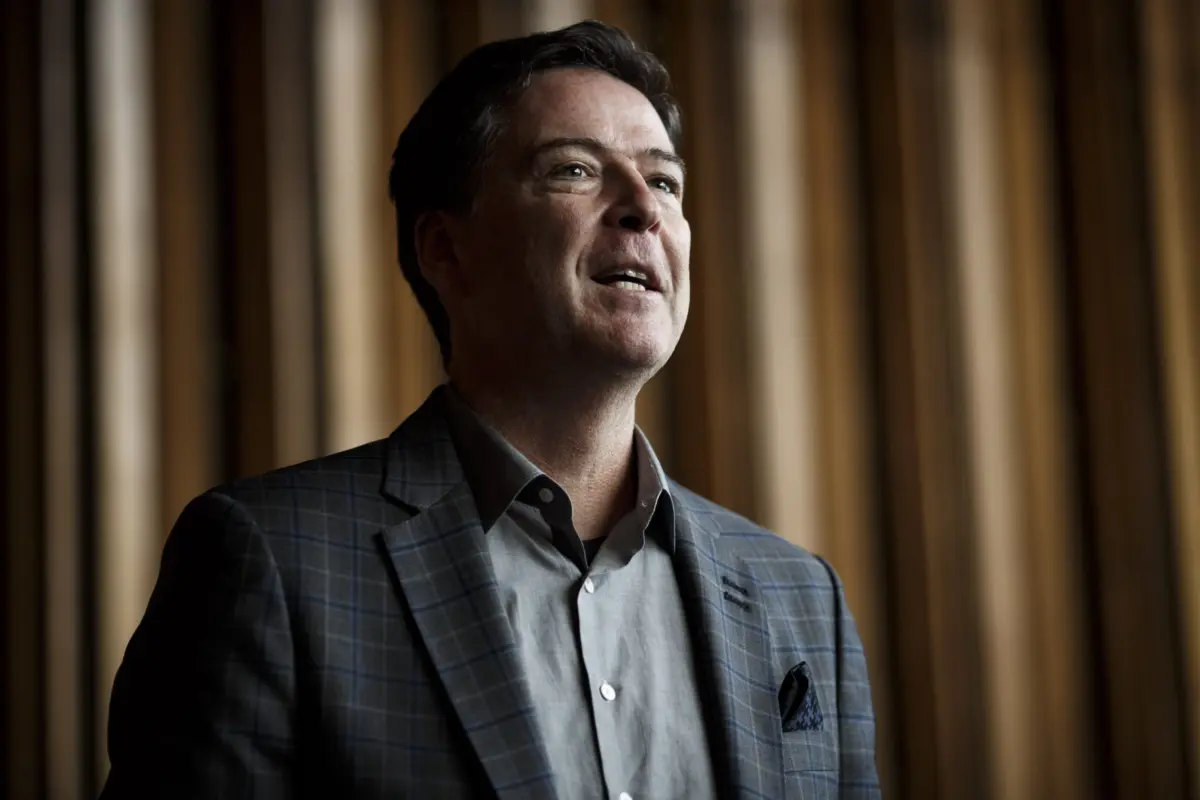
Former Federal Bureau of Investigation (FBI) Director James Comey is facing a third set of criminal charges under the administration of United States President Donald Trump, marking a dramatic escalation in a long-standing political and legal feud.
Recently unsealed court documents revealed that the Trump administration has accused Comey of two counts related to the unlawful dissemination of information regarding national defense. Comey, a prominent and high-profile critic of the president, has not been indicted by a grand jury in this particular matter and has continuously denied any wrongdoing.
This development represents the third time the Trump administration has sought to level criminal charges against the former FBI director since the president returned to office in January 2025. The intensifying legal pressure has drawn sharp criticism from Comey’s defense team, who argue that the new filings bypass standard judicial safeguards and revisit matters that federal investigators previously examined and closed years ago.
The latest charges stem from an investigative article published by The New York Times on October 5, 2016. That report detailed how the email platform Yahoo was ordered by authorities to scan traffic on its network for a specific computer signature allegedly tied to a foreign terrorist organization. Federal prosecutors now allege that Comey directed sensitive information to be disclosed to the reporter on that story, Charlie Savage.
In an October court filing outlining the government’s position, prosecutors claimed that Comey utilized intermediaries to leak classified details to the press. "The defendant [Comey] through one or more co-conspirators directed Individual #1 to disclose national defence information to a reporter for a national news publication," the court filing reads.
Responding to the unsealed documents, Comey published a video on the online platform Substack to denounce the administration’s ongoing legal maneuvers, characterizing them as a clear campaign of political retribution.
"Well, now they’re back again. It would almost be funny if it weren’t such an appalling abuse of the Department of Justice, one that we cannot become numb to," Comey said in the video message. "Nothing’s changed with me. I’m still innocent, and I’m still not afraid of these people, and I still believe in the independent federal judiciary."
Reflecting on the timeline of the current presidential term, Comey noted that Trump is only midway through his second four-year term, hinting that he anticipates additional legal hurdles ahead. "The next couple years are going to be hard for all of us," Comey added. "It’s really important that we stand straight and keep the faith in America."
The legal strategy employed by prosecutors in this latest filing has become a central point of contention for Comey’s defense counsel. In a public statement released to news media, Comey’s defense attorney, Pat Fitzgerald, dismissed the charges as feeble and legally flawed, noting that the government had already investigated the exact same matter twice before.
"Both times the Government determined that no charges should be brought against anyone," Fitzgerald’s statement read.
Fitzgerald further emphasized a procedural distinction in how the government brought the case forward, pointing out that prosecutors had chosen to bypass the traditional grand jury process. An indictment typically requires presenting charges to a grand jury, which must then independently evaluate the evidence and choose whether to approve criminal charges. Instead, prosecutors utilized a mechanism known as a "criminal information."
"Ten years after the article was published, the Government filed an ‘Information’ against Mr. Comey that was not approved by a judge nor issued by a grand jury," Fitzgerald said. "It purports to charge Mr. Comey with crimes that he did not commit."
The case has been assigned to Federal Judge Trevor McFadden of the US District Court in Washington, DC, who is a Trump appointee.
The roots of the friction between Trump and Comey stretch back nearly a decade. Trump has long sought the legal prosecution of the former FBI director, whom he fired from his leadership role in May 2017 during his first term in office. Comey had served as the head of the bureau since 2013, but his dismissal occurred while the agency was actively investigating potential ties and coordination between Russia and Trump’s 2016 presidential campaign—an investigation that Trump has repeatedly denounced as a political hoax.
Following Trump’s second inauguration in January 2025, his administration initiated a series of investigations and prosecutions targeting several of the president’s most prominent political critics, with Comey remaining a primary focus.
The momentum behind these efforts appeared to crystallize in September 2025, when Trump publicly urged then-Attorney General Pam Bondi to take action against Comey and other perceived adversaries. In a pointed social media post on Truth Social, Trump criticized the perceived lack of movement within the Justice Department.
"Nothing is being done. What about Comey, Adam ‘Shifty’ Schiff, Leticia???," Trump wrote to Bondi, referencing Comey, a prominent Democratic lawmaker, and New York Attorney General Letitia James. "They’re all guilty as hell, but nothing is going to be done."
Trump concluded his public directive by telling Bondi not to delay any longer before pursuing the three critics, writing, "JUSTICE MUST BE SERVED, NOW."
Just five days after that public post, on September 25, 2025, Comey was indicted on charges of lying to Congress and obstructing a legislative proceeding. However, that specific case was eventually dismissed by the courts after it was determined that the prosecutor leading the effort, Lindsey Halligan, had been unlawfully appointed.
A second criminal indictment followed on April 28. In that second case, the Trump administration accused Comey of attempting to threaten the president by publishing a photograph on social media featuring seashells arranged to spell out the numerical message "86 47." Prosecutors argued that the imagery carried a sinister subtext; while "47" serves as a direct reference to Trump as the 47th president, and "86" is a standard culinary and service industry slang term meaning to discard or refuse service to an item or customer, the administration asserted that the phrase implied political violence. That legal proceeding remains ongoing.
The unveiling of the third set of charges coincided with developments in a separate legal battle involving the Comey family. Earlier on Monday, prior to the public disclosure of the new federal charges, a federal judge ruled that Comey’s daughter, Maurene Comey—a former assistant US attorney—had been unlawfully terminated last year during Trump’s second term.
The younger Comey had consistently maintained that her firing was an act of retaliation directly linked to her father’s public profile and ongoing friction with the administration. Siding with her claims, the court ruled that she was legally entitled to "retroactive reinstatement" and full backpay.
Meanwhile, James Comey has continued to deny all allegations of criminal misconduct, and his defense team has formally requested that the latest set of charges be dismissed by the court.