
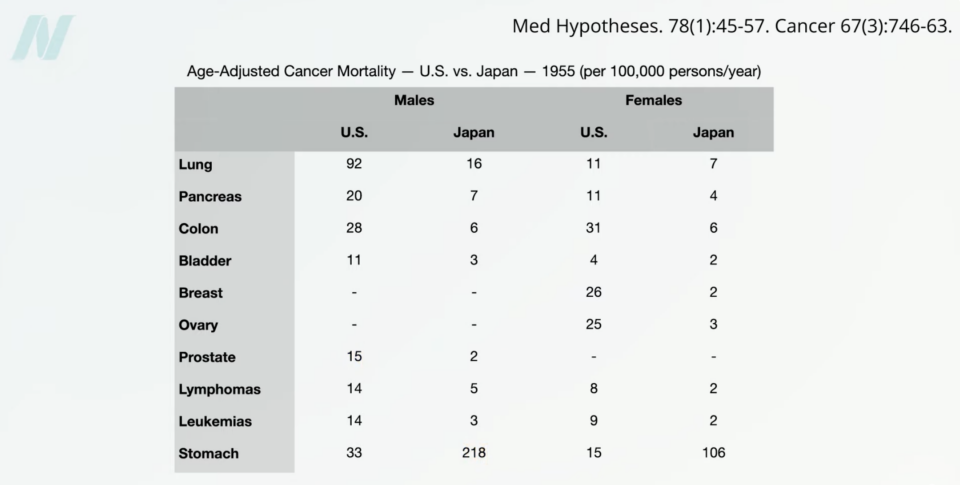
For decades, Japan has occupied a unique position in global health metrics. It consistently reports the highest life expectancy in the world while managing to maintain these outcomes with a fraction of the healthcare spending seen in other high-income nations. Researchers have long pointed to the traditional Japanese diet as a primary driver of this longevity, particularly noting its role in maintaining low rates of coronary artery disease. When compared to the West, Japan has historically boasted some of the lowest incidences of several major cancers, including breast, colon, prostate, bladder, and ovarian malignancies. Yet, this public health success story features a stark, persistent contradiction: Japan remains among the nations with the highest rates of stomach cancer.
This statistical anomaly creates a complex puzzle for epidemiologists and nutrition scientists. To illustrate the scale of this divide, one can look at comparative data between Japanese and American populations. While Japanese men have historically faced a risk of prostate cancer seven times lower than their American counterparts, they have simultaneously dealt with a stomach cancer incidence six times higher. This "Achilles’ heel" in an otherwise remarkably healthy dietary pattern has prompted decades of scientific inquiry into what specific environmental or nutritional factors could be responsible for such a high burden of gastric disease.
Investigating the Origins of the Gastric Cancer Epidemic
Early theories regarding this high incidence often focused on external contaminants. In the 1970s, a prominent hypothesis suggested that the culprit might be the talc used in the industrial polishing process for white rice. The theory was that this mineral coating, intended to give the grains a glossy, aesthetic sheen, might be introducing a carcinogen into the digestive tract. While talc has indeed been linked to other health concerns—most notably becoming the subject of massive litigation involving ovarian cancer and cosmetic powders—scientific scrutiny eventually exonerated it as the primary cause of Japan’s stomach cancer rates.
When researchers turned their attention to genetics, they found that hereditary factors were insufficient to explain the trend. Data gathered from Japanese migrants provided a clear window into the influence of lifestyle versus biology. As these individuals and their subsequent generations moved to Western countries and adopted Westernized diets and lifestyles, their rates of stomach cancer did not remain static; they plummeted, eventually aligning with the lower rates seen in their new home countries. This shift confirmed that the issue was not rooted in the Japanese genome, but rather in the dietary and environmental exposures inherent to their traditional living patterns.

The Role of H. Pylori and the Geographical Enigma
The most well-established risk factor for gastric malignancy today is the bacterium Helicobacter pylori (H. pylori). This organism colonizes the lining of the stomach, where it triggers chronic, low-grade inflammation. Over time, this persistent inflammatory state can compromise the integrity of the stomach lining and set the stage for cellular mutations, potentially leading to cancer. Because of this strong association, H. pylori is categorized as a Group 1 carcinogen, representing the highest level of scientific certainty that an agent causes cancer in humans.
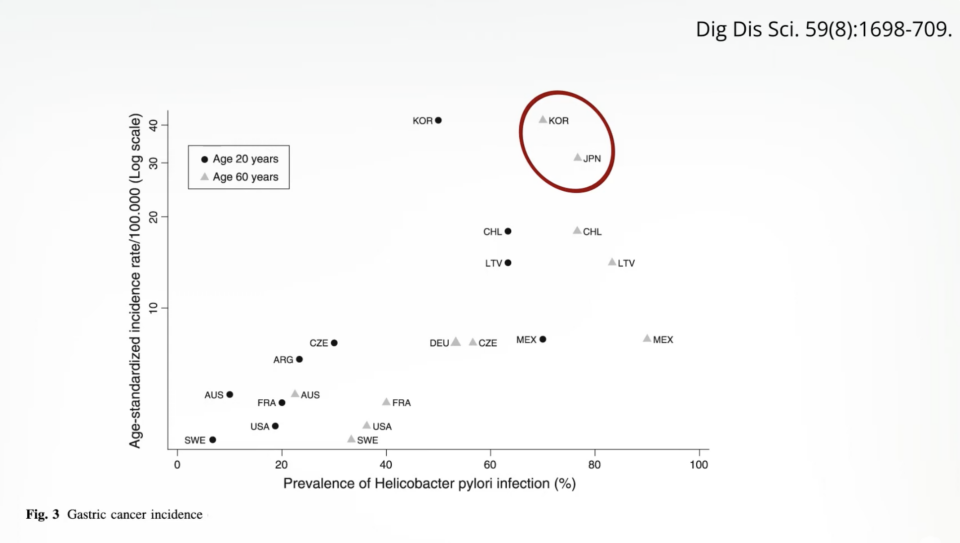
Geographically, the data seems to align with this diagnosis: Japan and Korea, both of which experience the highest stomach cancer rates globally, also report some of the highest incidences of H. pylori infection. For a time, this appeared to be the definitive answer. However, the scientific community soon encountered a series of "enigmas" that challenged this simple cause-and-effect relationship.
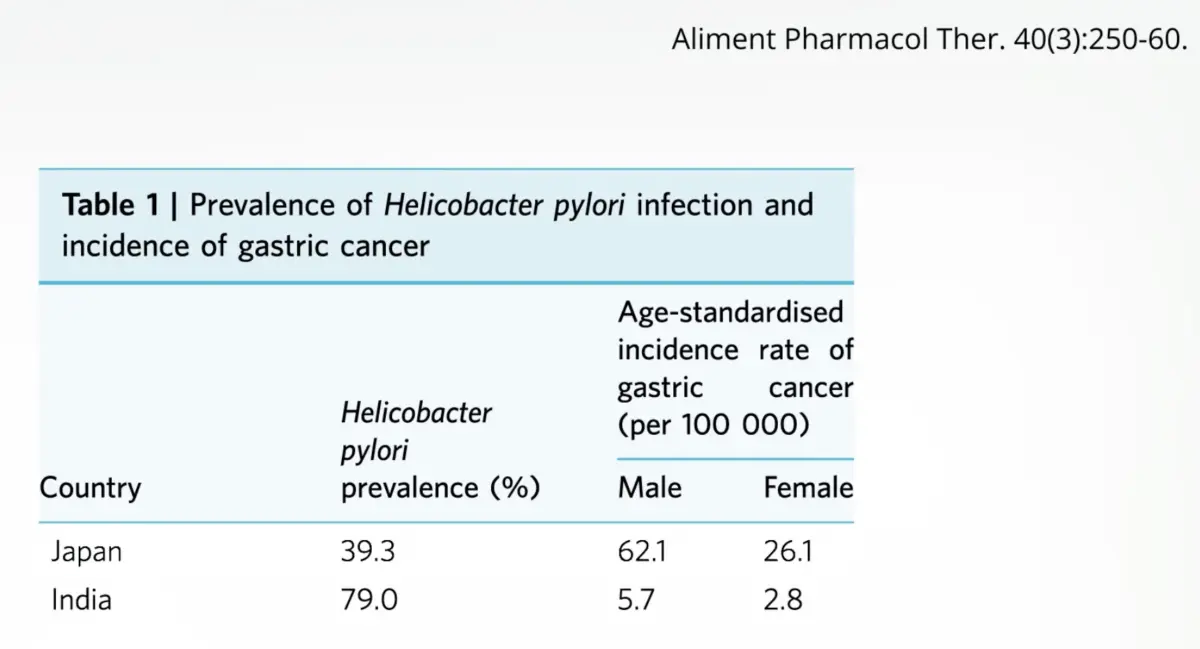
The first was the "African enigma," where nations like Nigeria exhibited widespread H. pylori prevalence but reported only a fraction of the stomach cancer cases seen in Japan. This was followed by the "Indian enigma," which presented an even more confounding set of data: H. pylori is estimated to be twice as common in India as it is in Japan, yet the rate of stomach cancer among the Indian population is ten times lower. These discrepancies proved that the presence of the bacteria alone could not explain the epidemic in East Asia.
Identifying the Co-Factors of Gastric Carcinogenesis
While H. pylori is a significant catalyst, the majority of people infected with the bacteria do not go on to develop cancer. Given that half of the world’s adult population is estimated to carry H. pylori, it is clear that the bacterium acts more as an initiator or a facilitator. It appears to "set the stage," perhaps by increasing the susceptibility of the stomach lining to other dietary insults. The question then becomes: what are the co-factors present in the Korean and Japanese diets that turn a common infection into a life-threatening disease?
Comparative studies of Asian populations with similar H. pylori infection rates but vastly different cancer outcomes have increasingly pointed toward the consumption of preserved, salted foods. These include both salted fish and, more significantly, salt-fermented vegetables. In contrast, diets high in fresh fruits and vegetables have been associated with as much as an 85% reduction in the risk of stomach cancer. Notably, the consumption of fresh, unpreserved fish does not appear to show a significant association with the disease, suggesting that the problem lies not in the food source itself, but in the method of preservation.
A comprehensive review of 60 individual studies reinforced this finding, identifying a strong link between pickled food consumption and increased gastric cancer risk. The correlation was notably stronger in Korea than in Japan, a fact researchers attribute to the significantly higher per-capita consumption of salt-fermented vegetables, such as kimchi, in the Korean diet.
The biological mechanism for this damage has been observed in both clinical and experimental settings. Research in Vancouver demonstrated that when healthy subjects consumed 30 ounces of fukujinzuke—a type of vegetable pickled in soy sauce—over three days, biopsies of their stomach linings revealed moderate to severe tissue abnormalities. These changes, which were absent in subjects eating fresh vegetables, were suggestive of significant gastric irritation.
The Nuance of Soy and Salt
Not all traditional Japanese staples carry the same risk. Interestingly, the consumption of non-fermented soy products—such as tofu, edamame, and soymilk—is associated with a lower risk of stomach cancer. Experts believe this is due to the presence of isoflavone compounds, which offer anti-inflammatory and antioxidant benefits. This protective effect, however, is not found in fermented soy products, even those like miso that are common in the Japanese diet.
The underlying factor of salt consumption remains central to the discussion. While salt itself is not classified as a direct carcinogen, its impact on the digestive system is profound. High salt intake is believed to physically damage the stomach lining, thin the protective mucus layer that keeps the stomach wall safe from its own acid, and enhance the colonization of H. pylori. Furthermore, salt may facilitate the penetration of other environmental carcinogens and even promote their formation within the stomach. In the Japanese context, these risks appear most acute for individuals who are already suffering from the chronic inflammation associated with H. pylori.
While the medical standard for addressing H. pylori infection typically involves a rigorous course of antibiotics, the ongoing search for dietary interventions remains a vital area of research. Understanding how certain foods exacerbate the risk of gastric cancer, while others may offer a measure of protection, continues to be a cornerstone of efforts to reduce the prevalence of this disease in the region.