
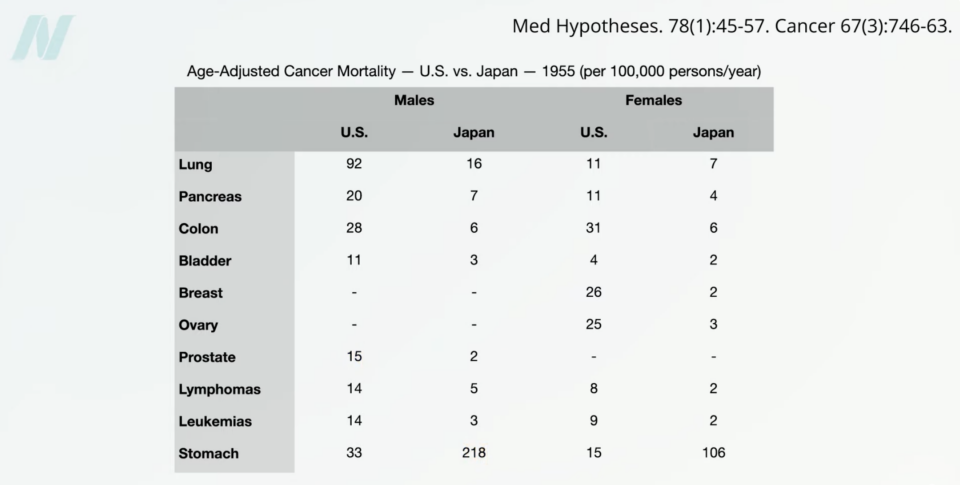
For decades, Japan has held the title for the world’s longest life expectancy, a feat achieved while spending a remarkably small fraction of its GDP on healthcare compared to other high-income nations. This exceptional longevity is frequently cited in public health circles, with researchers often pointing to traditional Japanese dietary patterns as the primary engine behind the country’s low rates of coronary artery disease. Indeed, historically, Japan has reported some of the lowest global incidences of colon, breast, ovarian, prostate, bladder, and blood cancers. Yet, tucked away within this success story lies a puzzling and persistent health crisis: Japan continues to record some of the highest rates of stomach cancer in the world.
This duality—where a diet celebrated for cardiovascular health is simultaneously linked to a high incidence of a lethal malignancy—presents a significant epidemiological mystery. To illustrate the scale of this contrast, consider that Japanese men have historically faced a risk of prostate cancer seven times lower than their American counterparts. Conversely, those same men have been documented as having six times the incidence of stomach cancer. This jarring disparity has led researchers to search for an "Achilles’ heel" within the Japanese diet.
Initial Theories and the Migrant Evidence
When researchers first began scrutinizing this trend in the 1970s, one of the earliest hypotheses focused on the processing of white rice. The theory suggested that talc, used as a polishing agent to give white rice a glossy, appealing sheen, might be a carcinogenic culprit. This suspicion gained traction in part because of the known dangers of talc in other contexts; for example, the use of talcum powder has been linked to ovarian cancer, leading to significant legal repercussions for companies like Johnson & Johnson. However, subsequent investigations into gastric health failed to find a definitive link between rice-polishing talc and stomach cancer, forcing scientists to return to the drawing board.
Some skeptics questioned if the answer was simply genetic predisposition. However, the study of Japanese migrants effectively dismantled that theory. Research consistently shows that as Japanese individuals and their subsequent generations adopt more "Westernized" diets and lifestyles, their rates of stomach cancer decline significantly. This transition indicates that environmental factors, particularly diet, play a much larger role than heredity in determining gastric cancer risk.
The Role of H. Pylori and the Geographic "Enigmas"
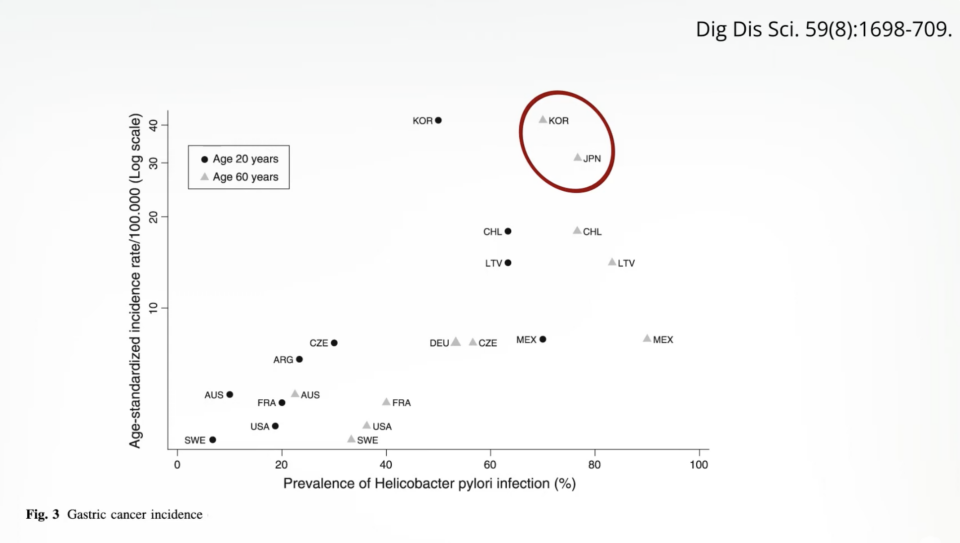
For many years, the primary suspect in the stomach cancer investigation has been Helicobacter pylori (H. pylori). This bacterium colonizes the lining of the stomach and induces chronic inflammation. Over time, this persistent state of irritation can compromise the integrity of the stomach lining, creating a fertile environment for cancerous mutations. H. pylori is officially classified as a Group 1 carcinogen, meaning there is the highest level of scientific certainty that it is a causative agent for cancer in humans. Given that Japan and Korea report both high rates of stomach cancer and high prevalence of H. pylori infections, it seemed for a time that the mystery had been solved.
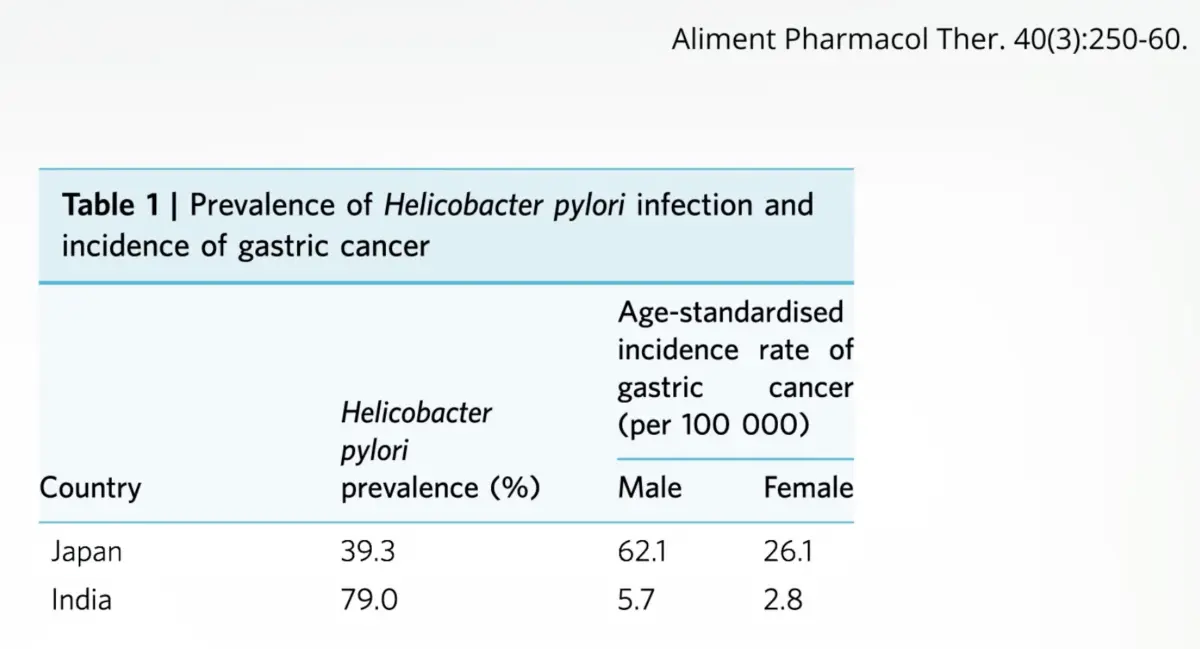
However, the scientific community soon encountered several confounding contradictions, often referred to as "enigmas." If H. pylori were the sole driver of the cancer, one would expect the highest rates of infection to correlate perfectly with the highest rates of stomach cancer. Instead, researchers identified the "African enigma," where countries such as Nigeria exhibit high levels of H. pylori infection but report only a fraction of the stomach cancer cases seen in Japan. Similarly, the "Indian enigma" reveals that H. pylori is twice as prevalent in India as it is in Japan, yet the incidence of stomach cancer among the Indian population is ten times lower.
These contradictions highlight a critical reality: while H. pylori may be a necessary catalyst for many cases of stomach cancer, it is not sufficient on its own to produce the disease. After all, H. pylori is one of the most common human infections globally, affecting an estimated half of the world’s adult population, yet the vast majority of those infected never develop cancer. This suggests that the bacteria set the stage for malignancy, but a secondary co-factor—likely something within the diet—must be present to tip the scales.
Evaluating the Impact of Salt and Fermentation
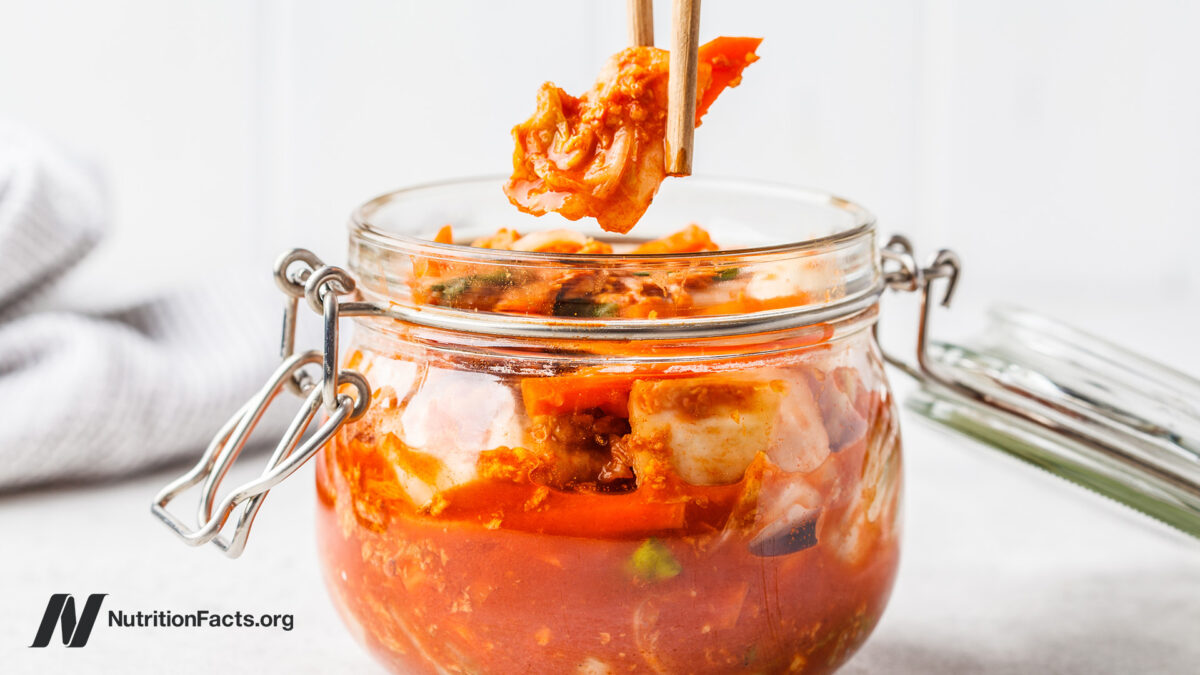
If inflammation from H. pylori creates a susceptibility in the stomach lining, what environmental triggers in the Korean and Japanese diets take advantage of that vulnerability? Comparisons of different Asian populations with similar H. pylori infection rates but widely varying cancer outcomes have repeatedly pointed toward the consumption of preserved and salted foods. This category includes both salted fish and pickled vegetables, which have been consistently flagged as potential culprits.
In stark contrast, the consumption of fresh vegetables and fruits is associated with an 85% reduction in the odds of developing stomach cancer. Meanwhile, studies on the consumption of fresh fish have yielded neutral results, suggesting that the problem lies not in the food source itself, but in the method of preservation. A comprehensive review of 60 studies confirmed that high intake of pickled foods is linked to significantly elevated rates of stomach cancer. This correlation is particularly strong in Korea, where the per-capita consumption of salt-fermented vegetables, such as kimchi, is five to eight times higher than in Japan.
To test this, researchers conducted human-based experiments. In a study performed in Vancouver, participants were fed 30 ounces of fukujinzuke (vegetables pickled in soy sauce) or pickled cucumbers over a three-day period. Before the study, the participants’ stomach biopsies were entirely normal. However, after just a few days of consuming the pickled products, biopsies revealed moderate to severe tissue abnormalities, indicating significant irritation of the stomach lining. Conversely, no such damage was observed in participants who consumed fresh cucumbers or carrots.
Protective Factors and the Future of Gastric Health
While certain traditional foods pose a risk, others appear to offer protection. Non-fermented soy products, including tofu, edamame, and soymilk, have been linked to a lower risk of stomach cancer in Japan. Scientists attribute this benefit to the anti-inflammatory and antioxidant effects of isoflavones found in soybeans. Interestingly, no such protective association has been found with fermented soy foods, even those like miso, which are often heavily salted.
This brings the discussion back to the role of salt. While salt is not typically classified as a direct carcinogen, its physiological effects are profound. High salt intake can physically damage the stomach lining, thin the protective mucus layer, and enhance the colonization of H. pylori. Furthermore, salt may facilitate the penetration of other dietary carcinogens and even assist in the formation of new ones within the digestive tract. Even moderately high salt consumption has been shown to increase cancer risk, though in Japan, this effect may be largely confined to those who are already suffering from the chronic inflammation associated with an H. pylori infection.
As modern medicine continues to rely on aggressive antibiotic regimens to treat H. pylori, the limitations of this approach—including the risk of antibiotic resistance and the failure to address dietary habits—become more apparent. The search for dietary interventions that could help eradicate or manage these infections naturally remains an active and vital area of clinical research. Understanding the delicate balance between protective compounds like soy isoflavones and the inflammatory impact of salt and pickling is essential for refining public health strategies in regions where these cancers remain a significant threat to longevity. As researchers continue to untangle these complex interactions, the goal remains to isolate the specific dietary modifications that could mitigate the risk for those living in high-prevalence areas, without sacrificing the nutritional benefits of a traditional diet.