
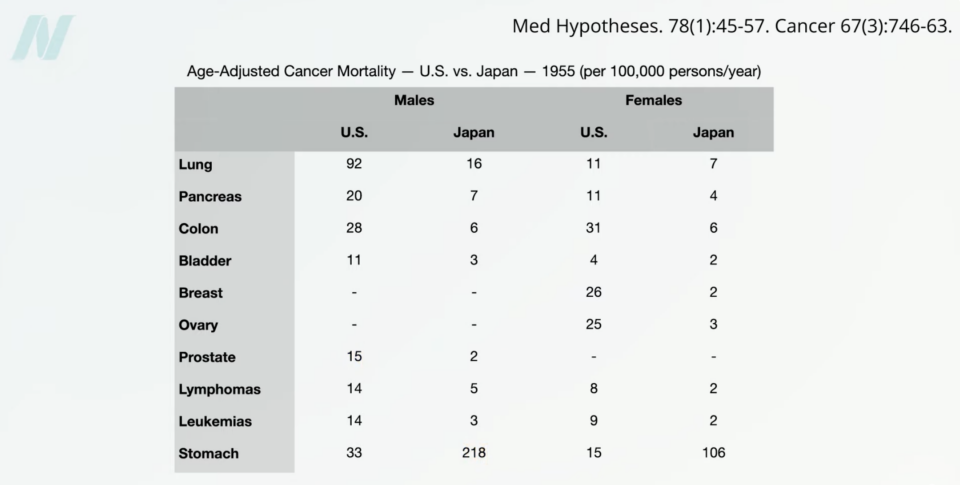
For decades, Japan has occupied a unique position in global health statistics. The nation consistently boasts the world’s longest life expectancy, achieving these remarkable health outcomes while spending a significantly smaller portion of its gross domestic product on healthcare compared to other high-income nations. This impressive longevity is widely attributed to traditional Japanese dietary patterns, which are largely credited with maintaining the country’s exceptionally low rates of coronary artery disease. Furthermore, Japan has historically recorded some of the lowest incidence rates for a variety of cancers, including breast, colon, ovarian, prostate, bladder, and blood-related malignancies.
Yet, there is a striking and persistent anomaly in this success story: stomach cancer. Despite their overall health profile, the Japanese population experiences some of the highest rates of stomach cancer in the world. The disparity is stark. For example, while Japanese men have historically faced a risk of prostate cancer seven times lower than their American counterparts, they have simultaneously dealt with a stomach cancer incidence rate six times higher. This apparent "Achilles’ heel" in the Japanese diet and health landscape has puzzled researchers for years, prompting an intensive search for the environmental and biological triggers responsible for this divergence.
The Search for an Etiology: Beyond Genetics
When medical researchers first began investigating this trend in the 1970s, one of the earliest hypotheses focused on the processing of white rice. It was theorized that the talc used to polish rice grains—providing them with a signature glossy sheen—might be a carcinogenic agent. This theory gained traction because talc had already been implicated in other health concerns, including ovarian cancer, which eventually led to massive, high-profile legal judgments against manufacturers of cosmetic talcum powder. However, further scientific scrutiny revealed that the talc-rice connection did not hold up as a primary cause for the elevated rates of stomach cancer in Japan.
If the culprit was not in the polishing of rice, could the cause be genetic? Extensive epidemiological research has effectively ruled out a simple hereditary explanation. Studies focusing on Japanese migrants provide compelling evidence to the contrary: as these individuals and their children adapt to "Westernized" diets and lifestyles, their rates of stomach cancer begin to decline, eventually mirroring the trends of their new home countries. This suggests that the risk factor is rooted in environmental factors—specifically, the dietary and lifestyle choices prevalent in Japan rather than innate genetic predispositions.

The Role of Helicobacter pylori
The most well-established risk factor for gastric malignancy is Helicobacter pylori (H. pylori), a bacterium that colonizes the human stomach lining. This infection is known to cause chronic inflammation, a state that significantly increases the risk of cellular mutations that can lead to cancer. Consequently, H. pylori is classified as a Group 1 carcinogen, representing the highest level of scientific certainty regarding its role in cancer development.
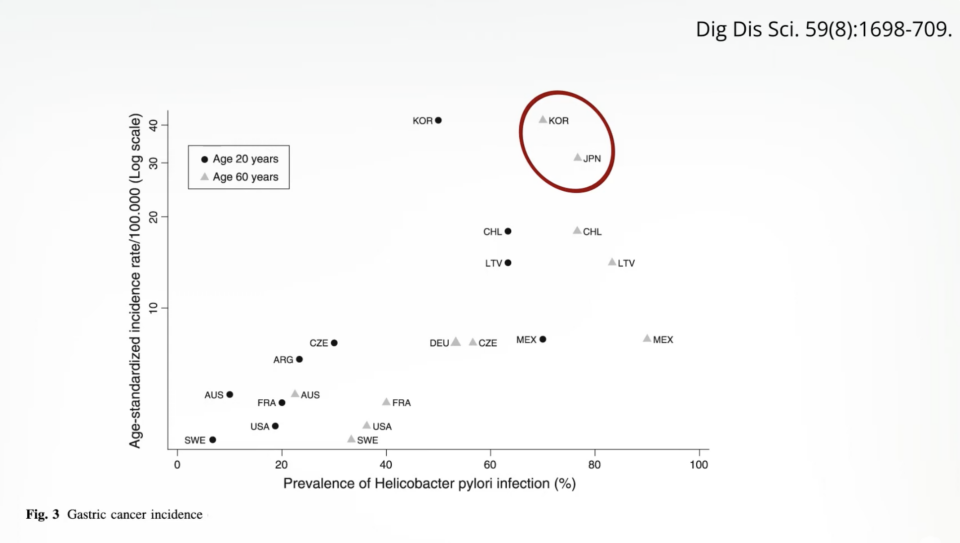
Given that Japan and South Korea report both high stomach cancer rates and a high prevalence of H. pylori infection, it was initially tempting for researchers to conclude that the mystery was solved. The logic appeared sound: the bacteria causes chronic inflammation, and that inflammation leads to cancer. However, this conclusion quickly ran into significant empirical hurdles that researchers have dubbed "enigmas."
The "Enigmas" of Global Health
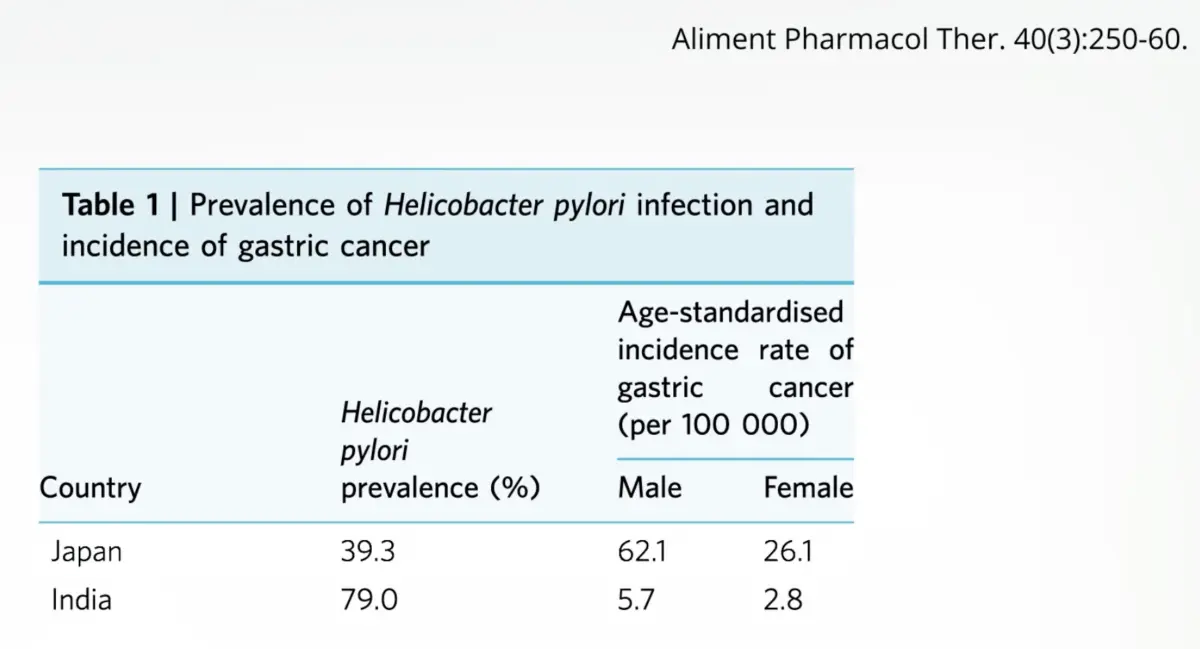
The "African enigma" emerged when data from countries like Nigeria revealed a high prevalence of H. pylori infection among the population, yet the incidence of stomach cancer remained a mere fraction of what was observed in Japan. A similar contradiction appeared in the "Indian enigma," where H. pylori is twice as common in India as it is in Japan, yet the rate of stomach cancer among Indians is ten times lower.
These findings shattered the notion that H. pylori alone could explain the Japanese epidemic. While it is true that the majority of stomach cancer cases are associated with this bacterium, it is equally true that most people infected with H. pylori—roughly half of the world’s adult population—never develop stomach cancer. This strongly implies that there is a critical co-factor at play in countries like Japan and Korea. The inflammation caused by the bacteria likely acts as a precursor, "setting the stage" by making the stomach lining more susceptible to damage from other environmental carcinogens. The question then becomes: what specific elements in the traditional Japanese and Korean diets might be acting as these carcinogenic catalysts?
The Impact of Preserved and Salted Foods
When researchers compared the dietary habits of various Asian populations with similar H. pylori infection rates but widely different cancer outcomes, a consistent pattern emerged. The consumption of preserved, salted foods—specifically salted fish and pickled vegetables—appeared to be the primary culprits. In contrast, the consumption of fresh fruits and vegetables was linked to an 85% reduction in the risk of stomach cancer. Notably, the consumption of fresh, non-preserved fish did not show a clear association with the disease.
A comprehensive review of 60 individual studies reinforced this finding, noting that the intake of pickled foods was associated with significantly higher rates of stomach cancer. This association was particularly pronounced in South Korea, where the per-capita consumption of salt-fermented vegetables, such as kimchi, is significantly higher than in Japan.
To test this in a controlled environment, researchers in Vancouver conducted a study involving human participants. Over a three-day period, subjects were fed 30 ounces of fukujinzuke—a popular Japanese condiment made of assorted vegetables pickled in soy sauce—or pickled cucumbers. Gastric biopsies taken before the experiment showed normal, healthy tissue. While biopsies remained normal after the consumption of fresh carrots or cucumbers, the results following the intake of pickled vegetables were significantly different. After only a few days, researchers observed moderate to severe tissue abnormalities in the stomach lining, which are known precursors to irritation and potential malignancy.
Soy and Salt: The Complexity of Diet
The nutritional picture is further complicated by the role of soy. Interestingly, the consumption of non-fermented soy foods, such as tofu, edamame, and soymilk, is associated with a lower risk of stomach cancer in Japan. This protective effect is generally attributed to the anti-inflammatory and antioxidant properties of isoflavone compounds found in soybeans. Conversely, no such protective association has been found with fermented soy products, including highly salted miso.
This brings the discussion to the role of salt itself. While salt is not categorized as a direct carcinogen, its secondary effects are profound. High salt intake is believed to physically damage the stomach lining and deplete the protective mucus layer that shields the stomach from acid. By weakening this barrier, salt can enhance the colonization of H. pylori and facilitate the penetration of other dietary carcinogens into the stomach wall. Furthermore, high salt concentrations may contribute to the chemical formation of carcinogens within the digestive tract. Even in the context of Japan, where the diet is otherwise considered health-promoting, research indicates that the detrimental effects of high salt intake may be particularly dangerous for those who are already living with chronic inflammation caused by H. pylori.
The complexity of these interactions underscores why simple dietary solutions are rarely sufficient. While the medical community currently relies on intensive courses of multiple antibiotics to treat H. pylori infections, the search for natural, diet-based strategies to combat the bacterium and reduce the risk of gastric cancer remains a high priority for researchers. As the medical community continues to explore the intersections of microbiology, dietary patterns, and chronic disease, the focus remains on understanding how these variables can be managed to lower the incidence of this persistent, yet potentially preventable, form of cancer.