
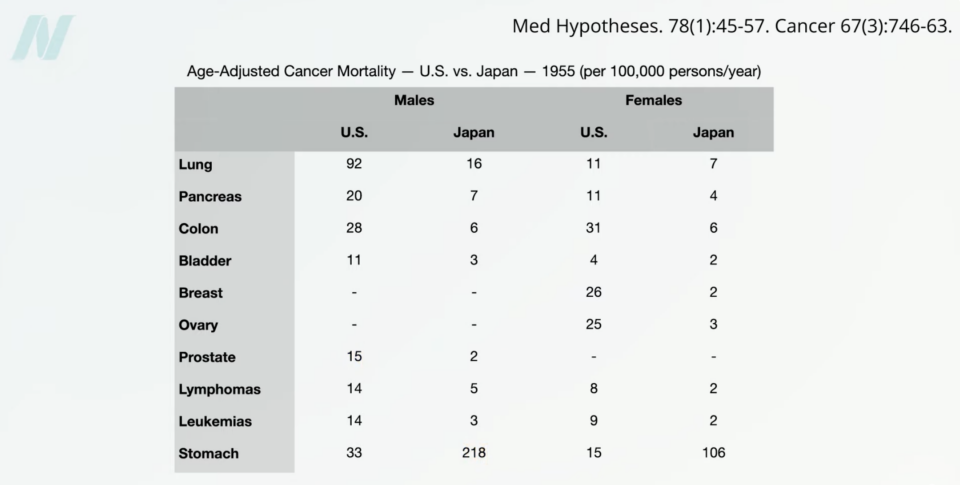
For decades, Japan has stood as a global leader in public health, consistently boasting the highest life expectancy in the world while managing to sustain that longevity with a healthcare expenditure that is only a fraction of what other high-income nations spend. This remarkable feat is frequently attributed to the traditional Japanese diet, which is widely credited with helping the population maintain some of the lowest rates of coronary artery disease, as well as remarkably low incidences of various cancers, including colon, breast, ovarian, prostate, bladder, and blood-related malignancies. Yet, beneath these impressive statistics lies a striking medical contradiction: Japan also suffers from some of the highest rates of stomach cancer in the world.
This paradox has long puzzled researchers. How can a society that masters the art of healthy aging also face such an elevated risk of gastric malignancy? The disparity is stark; Japanese men, for example, have historically experienced seven times less prostate cancer than their American counterparts, yet they have suffered from six times the incidence of stomach cancer. This clear "Achilles’ heel" in the Japanese dietary profile has become a focal point of intense nutritional and epidemiological investigation.
The Search for the Culinary Culprit
In the 1970s, as researchers began to grapple with this disparity, one of the earliest theories focused on the processing of white rice. It was hypothesized that the talc used to polish rice grains—designed to give the product a glossy, appealing sheen—might be acting as a carcinogen. This theory gained traction because talc had already been implicated in the development of ovarian cancer, a link that eventually led to significant legal consequences and multi-billion dollar damages against companies like Johnson & Johnson. However, when applied to the context of stomach cancer, the talc hypothesis failed to hold up under scrutiny; it did not provide a satisfactory explanation for the high incidence rates observed in the Japanese population.
The search then shifted to genetics, but that theory was quickly dismantled by studies of Japanese migrants. Research consistently demonstrated that as Japanese individuals migrated to Western countries and adopted "Westernized" diets and lifestyles, their rates of stomach cancer dropped significantly. This shift suggested that the primary drivers of the disease were not inherent genetic predispositions, but rather environmental and, specifically, dietary factors that changed upon relocation.
The Role of H. Pylori and the "Enigmas"
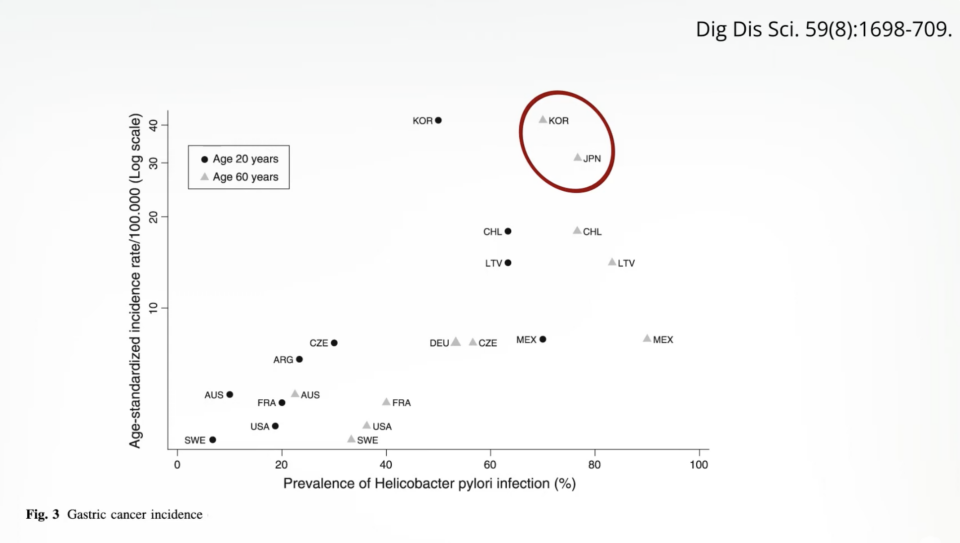
For many years, the primary suspect in the development of stomach cancer has been Helicobacter pylori (or H. pylori), a bacterium that infects the lining of the stomach. This infection is known to cause chronic inflammation, a condition that can serve as the catalyst for the development of cancer. H. pylori is classified as a Group 1 carcinogen, meaning there is the highest level of scientific certainty that it causes cancer in humans. Given that Japan and Korea have some of the highest rates of H. pylori infection in the world, it initially seemed as though the mystery had been solved: the infection rates perfectly aligned with the high incidence of stomach cancer.
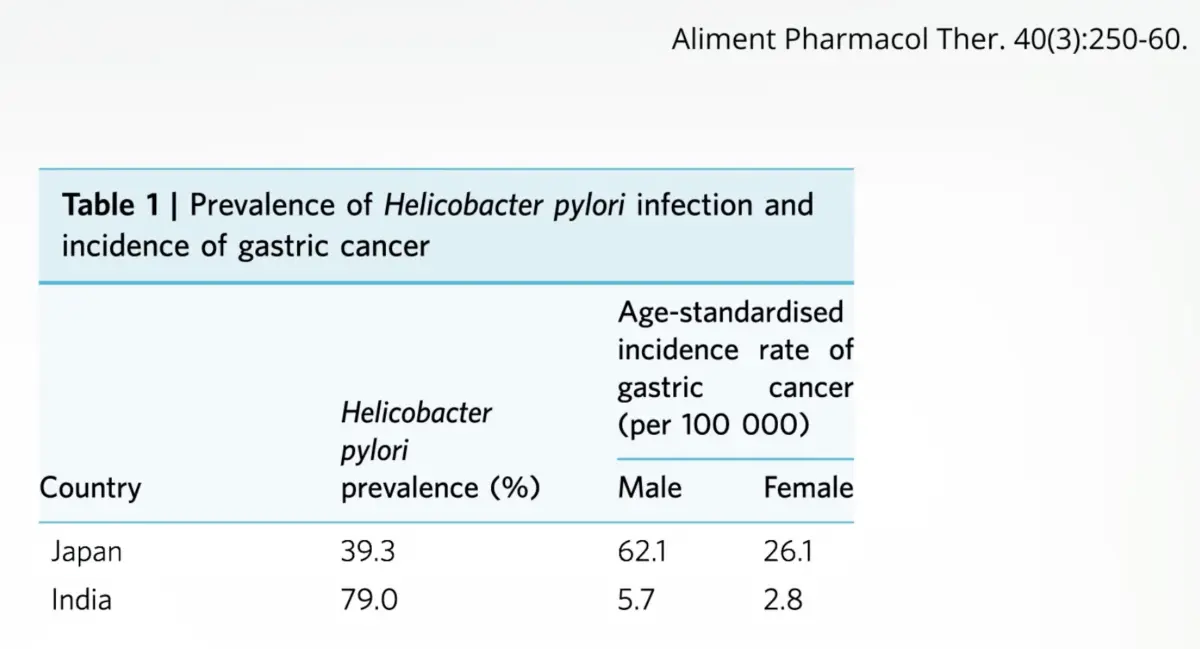
However, the case proved far more complex than a simple cause-and-effect relationship. The medical community was eventually forced to confront the so-called "African enigma," where countries like Nigeria reported even higher rates of H. pylori infection than Japan, yet experienced only a fraction of the stomach cancer rates. This was followed by the "Indian enigma," where H. pylori is twice as prevalent in India as it is in Japan, yet the Indian population suffers from ten times less stomach cancer.
These discrepancies made it clear that H. pylori alone could not account for the Japanese and Korean epidemic. While it is true that most cases of stomach cancer are associated with the bacterium, it is equally true that most people infected with H. pylori never develop cancer. In fact, roughly half of the world’s adult population is infected with H. pylori, yet the vast majority do not experience gastric malignancy. It became evident that some form of co-factor must exist in countries like Japan and Korea that accelerates the transition from chronic inflammation to cancer. The infection likely sets the stage by increasing the vulnerability of the stomach lining, but it requires a secondary, perhaps dietary, influence to fully trigger the disease.
The Impact of Preservation and Salt
When researchers compared the dietary habits of various Asian populations with similar H. pylori infection rates but drastically different cancer outcomes, a pattern began to emerge. The culprit appeared to be the consumption of preserved, salted foods, including both fish and vegetables. Conversely, the consumption of fresh fruits and vegetables was found to be associated with an 85% reduction in the odds of developing stomach cancer. Interestingly, fresh fish did not show a similar association, suggesting that the problem lay not in the source of the protein, but in the method of preservation.
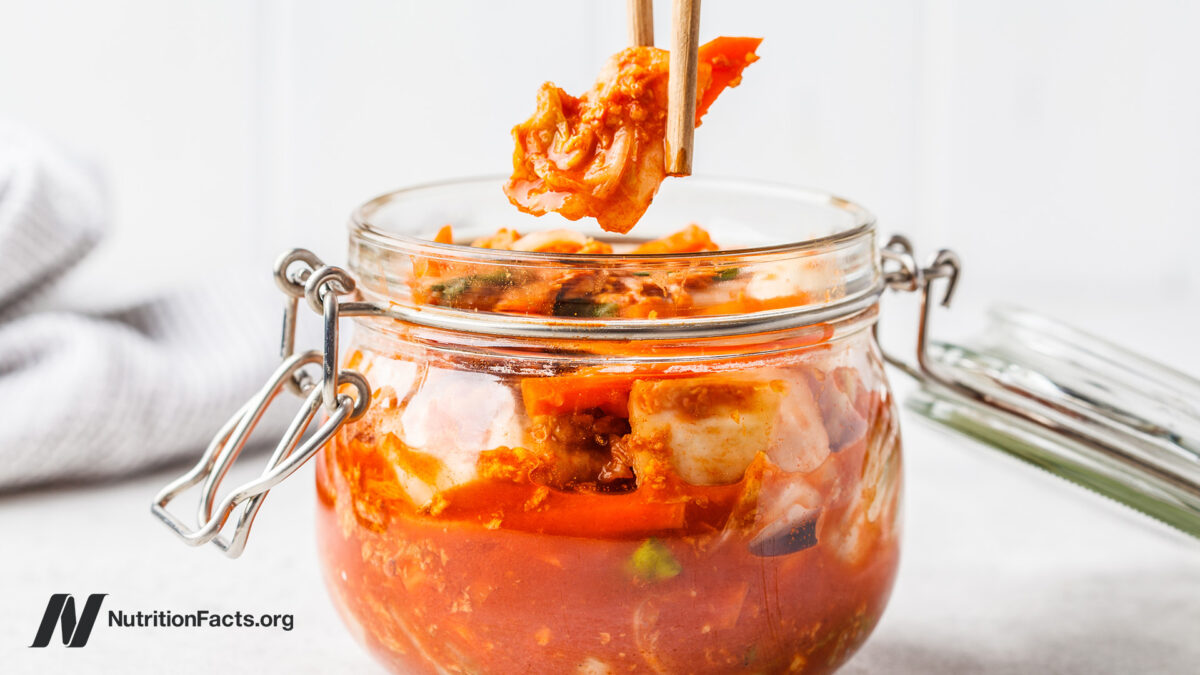
A comprehensive review of 60 studies further corroborated this, finding that the consumption of pickled foods was strongly linked to higher rates of stomach cancer. The effect was even more pronounced in Korea than in Japan, which researchers suspect is tied to the fact that the per-capita consumption of salt-fermented vegetables, such as kimchi, is five to eight times higher in Korea.
To determine if this was merely a statistical correlation or a causative mechanism, researchers turned to clinical testing. In a Vancouver-based study, participants were fed 30 ounces of fukujinzuke (vegetables pickled in soy sauce) or pickled cucumbers over a three-day period. Before the experiment, the participants’ stomach linings were healthy and normal. After consuming the pickled vegetables, however, biopsies revealed moderate to severe tissue abnormalities that were not present in those who had consumed fresh carrots or cucumbers. The results provided compelling evidence that these preserved foods could cause significant irritation to the stomach lining.
Balancing Risk with Protective Nutrition
While the consumption of fermented, salted products presents a clear risk, other aspects of the traditional Japanese diet offer significant protection. For example, non-fermented soy foods such as tofu, edamame, and soymilk are consistently linked to a lower risk of stomach cancer. This protective effect is attributed to the anti-inflammatory and antioxidant properties of isoflavone compounds found in soybeans. Notably, this protection does not extend to highly salted fermented soy products like miso, highlighting that the processing method remains the critical variable.
Salt itself is not categorized as a direct carcinogen, but it acts as a significant facilitator. High salt intake can physically damage the stomach lining, thin the protective mucus layer, enhance the colonization of H. pylori, and assist in the penetration and formation of other carcinogens. Even moderately high salt consumption is associated with a significantly increased risk of cancer, though in the context of Japan, this effect appears to be most dangerous for individuals who are already suffering from the chronic inflammation caused by H. pylori.
The challenge of eradicating H. pylori has traditionally been met with a rigorous, multi-antibiotic cocktail. However, the scientific community is now looking toward nutritional interventions as a potential auxiliary or preventative strategy. As researchers continue to investigate whether specific dietary patterns can naturally inhibit the bacteria, the focus remains on understanding how to maintain the benefits of the Japanese diet—its heart-healthy, longevity-promoting aspects—while mitigating the risks posed by historical food preservation techniques. The path forward involves a delicate balance: leveraging the protective power of fresh, whole foods while reducing the consumption of the salted, pickled items that have long served as an Achilles’ heel for public health in the region.