
When James Parkinson first meticulously documented the characteristic symptoms of the disease that would later bear his name two centuries ago, the medical landscape was fundamentally different. Today, our understanding of Parkinson’s disease has evolved far beyond the initial clinical descriptions, shifting toward a more nuanced appreciation of how environmental factors, genetics, and—perhaps most importantly—lifestyle choices influence the progression of neurodegeneration. Among these factors, nutrition has emerged as a significant area of research. As we look back at two hundred years of progress, it is clear that the role of our diet in brain health is not merely a modern curiosity; it is a critical component of how we approach chronic illness.
Current research suggests a compelling, albeit complex, connection between dietary habits and the risk of developing Parkinson’s disease. Evidence increasingly points to the idea that certain dietary patterns may act as catalysts for neurodegeneration, while others offer a protective shield. For instance, diets high in animal fats, dairy products, mercury, and iron have been linked to an increased risk of developing the condition. Conversely, a plant-based dietary pattern, characterized by high intake of antioxidants and nutrient-dense whole foods, appears to offer a degree of protection.
The mechanism behind this protective effect is rooted in the fundamental biology of aging and disease. Plant-based diets are well-documented for their ability to preserve body tissues from the damaging effects of oxidative stress and systemic inflammation. These two processes are considered the hallmarks of many chronic-degenerative diseases, including Parkinson’s. By contrast, diets heavily reliant on animal-based foods—specifically those rich in animal proteins and saturated fats—are frequently correlated with the promotion of neurodegenerative pathways. This is the same dietary profile often implicated in the development of other leading causes of mortality, such as cancer, heart disease, and diabetes.
However, it is vital to approach the concept of "plant-based" nutrition with nuance. Not all plant-derived foods are universally beneficial. A prime example of this complexity is the graviola fruit, also known as soursop. While the fruit is sometimes lauded for its potential to assist in lowering blood pressure and uric acid levels, it carries a hidden risk. Soursop contains specific neurotoxic compounds that have been linked to the development of an atypical form of Parkinson’s disease. Population studies have consistently identified a correlation between the overconsumption of this fruit and the incidence of neurodegenerative symptoms, serving as a stark reminder that even within a plant-based framework, one must remain discerning about the specific properties of the foods consumed.
For those looking to mitigate their risk, adopting a predominantly plant-based diet appears to correlate with the lowest prevalence and incidence rates of Parkinson’s disease. Yet, the conversation surrounding nutrition is no longer limited to risk reduction; there is growing interest in whether dietary intervention can be used as a tool to manage the disease after a diagnosis has been made.

Previous clinical observations have highlighted intriguing possibilities. In one noted case report, a patient who adhered to a diet low in animal fat, which featured a daily intake of whole grains and one to two cups of strawberries, experienced a noticeable reduction in Parkinson’s symptoms. While these findings are promising, they highlight the vast scope of the challenge ahead. There are approximately 20,000 edible plant varieties across the globe, yet only a tiny fraction have been rigorously studied for their specific anti-Parkinsonian activity. This leaves a massive gap in our knowledge, suggesting that the "food as medicine" approach for neurodegeneration is still in its infancy.
One specific plant-derived substance that has captured significant scientific attention is coffee. For years, the coffee bean has been a subject of intense investigation, with researchers suggesting that it likely exerts a protective effect against the development of Parkinson’s disease. Further studies have gone as far as to suggest that coffee might help slow the progression of the disease. One notable study observed that patients already diagnosed with Parkinson’s who consumed coffee or caffeinated tea appeared to cut their risk of dying prematurely by nearly half.
However, in the world of clinical science, correlation is not causation. Observing that coffee drinkers have lower risks or better outcomes does not automatically mean that coffee itself is the active agent responsible for these benefits. To truly understand the impact of caffeine, it had to be put to the test in a rigorous, controlled environment.
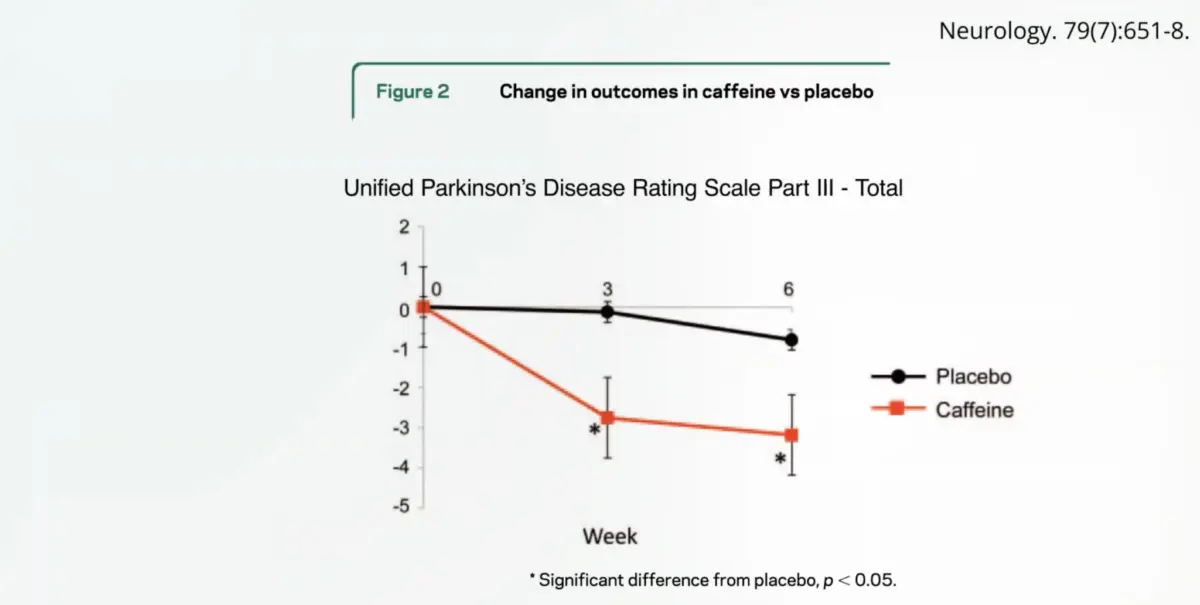
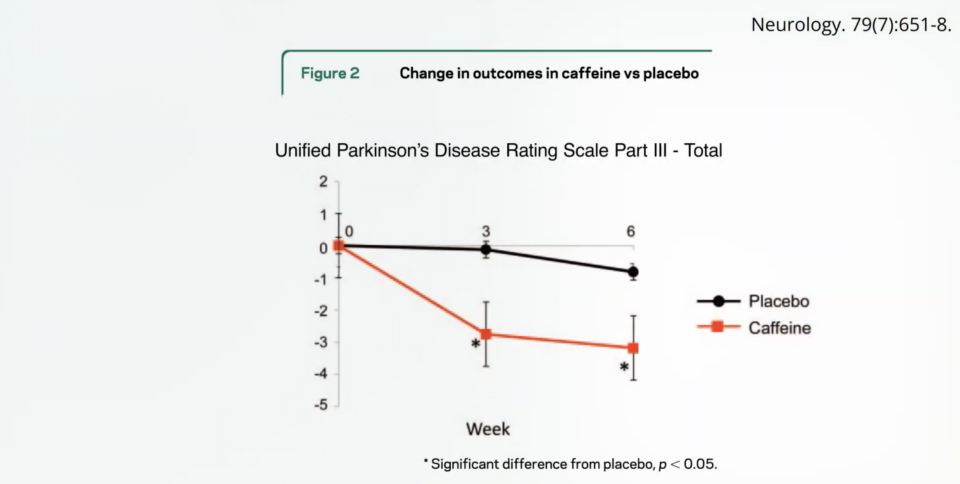
To settle the debate, researchers conducted a six-week, randomized, placebo-controlled, double-blind study. In this trial, participants were divided into groups, with one group receiving caffeine in a dosage regimen meant to mirror daily consumption. Participants started with the caffeine equivalent of one cup of coffee twice a day—once in the morning and once after lunch—before escalating to the equivalent of two cups of coffee twice a day. This amount of caffeine is roughly equivalent to four cups of black tea twice a day or six cups of green tea. The initial results were striking: the participants in the caffeine group showed a significant improvement in their Parkinson’s symptoms within just three weeks compared to the placebo group.
This finding was initially greeted with optimism. Coffee, if proven effective, could represent an incredibly affordable, accessible, and safe symptomatic treatment for patients worldwide. However, the study faced an important limitation: its duration. Caffeine is known for having "tachyphylactic" properties, a pharmacological term describing a phenomenon where the effectiveness of a drug or substance diminishes rapidly with repeated use. This is a common experience for those who notice that their morning cup of coffee eventually loses its "kick" when consumed daily. Researchers were naturally concerned that the benefits observed in the six-week study might be transient.
To determine if the benefits would hold up over time, a follow-up study was published five years later. This time, the trial was significantly longer. Parkinson’s patients were randomized to receive the same dosage—about two cups of coffee’s worth of caffeine twice a day—for a period exceeding six months. The results were disheartening. After more than six months of monitoring, the researchers found that there was no significant benefit for the caffeine group over the placebo group.
The conclusion was clear: while caffeine might offer a temporary, short-term improvement in symptoms, that benefit does not appear to be sustained over the long term. The rapid dissipation of these effects suggests that the body may quickly adapt to the stimulation, or that the mechanism by which caffeine provides relief does not address the underlying pathology of the disease in a way that allows for long-term symptom management. Consequently, the consensus in the medical community has shifted, and caffeine cannot currently be recommended as a reliable symptomatic therapy for parkinsonism.
The journey of researching coffee as a treatment for Parkinson’s underscores the essential nature of clinical trials. It highlights the vast difference between observational data—which might show that coffee drinkers have better outcomes—and the hard reality of clinical intervention, where the goal is to provide a consistent, enduring therapeutic effect. While coffee remains a fascinating topic for its potential protective properties against the development of the disease, its role as a treatment remains unproven. As the scientific community continues to explore the vast array of plant varieties, the focus will undoubtedly remain on identifying interventions that offer not just fleeting relief, but sustained improvements in quality of life for those living with Parkinson’s disease.