
When James Parkinson first meticulously documented the hallmark symptoms of the disease that would eventually bear his name over two centuries ago, the medical landscape was fundamentally different. Today, our understanding of Parkinson’s disease has evolved far beyond those initial clinical observations, shifting into a complex field that considers genetics, environmental triggers, and—increasingly—the profound impact of nutrition. While the path to a cure remains elusive, researchers are scrutinizing how dietary choices may influence both the development and the management of this neurodegenerative condition.
The relationship between diet and Parkinson’s is a subject of intense investigation. Emerging evidence suggests that certain dietary patterns may act as either catalysts or shields. For instance, diets high in animal fats, dairy products, mercury, and iron have been linked to an increased risk of developing the disease. Conversely, plant-based diets rich in antioxidants appear to offer a degree of protection. This protective mechanism is rooted in the ability of plant-based nutrition to mitigate oxidative stress and chronic inflammation, two primary drivers of neurodegenerative decline. By contrast, diets heavy in animal proteins and saturated fats are not only associated with the progression of neurological disorders but are also implicated in the rise of other systemic health crises, including cancer, heart disease, and diabetes.
However, the assumption that all plant-based foods are inherently beneficial requires nuance. The natural world is complex, and some plants carry potential risks. A notable example is graviola, or soursop, a fruit that has gained attention for its potential to lower blood pressure and manage uric acid levels. Despite these purported benefits, scientific inquiry has revealed a darker side: the fruit contains neurotoxic compounds. Population studies have indicated that the overconsumption of soursop is linked to an atypical form of Parkinson’s disease. This serves as a critical reminder that while plants are essential for human health, their chemical constituents must be evaluated with scientific rigor.

For those looking to manage Parkinson’s through nutrition, the focus often shifts from risk reduction to symptom management. Case reports have previously highlighted diets low in animal fat, supplemented with daily servings of whole grains and strawberries, as potentially effective strategies for easing symptoms. Yet, with approximately 20,000 edible plant varieties available globally, our current clinical understanding of which specific plants possess anti-Parkinsonian activity remains frustratingly limited.
Among the various foods and beverages subjected to scrutiny, coffee has emerged as a primary candidate of interest. For years, epidemiological data has suggested that coffee consumption is likely to exert a protective effect, potentially delaying the onset of the disease. Furthermore, some studies have hinted that patients with Parkinson’s who regularly consume coffee or caffeinated tea might see a reduction in their risk of premature mortality. These findings have sparked optimism, yet they highlight the classic scientific hurdle: correlation does not equate to causation. Observing that coffee drinkers have lower rates of disease does not prove that coffee is the mechanism responsible for that protection. To determine whether caffeine can serve as an active treatment, researchers had to move beyond observational studies and put the substance to the test in a controlled clinical environment.
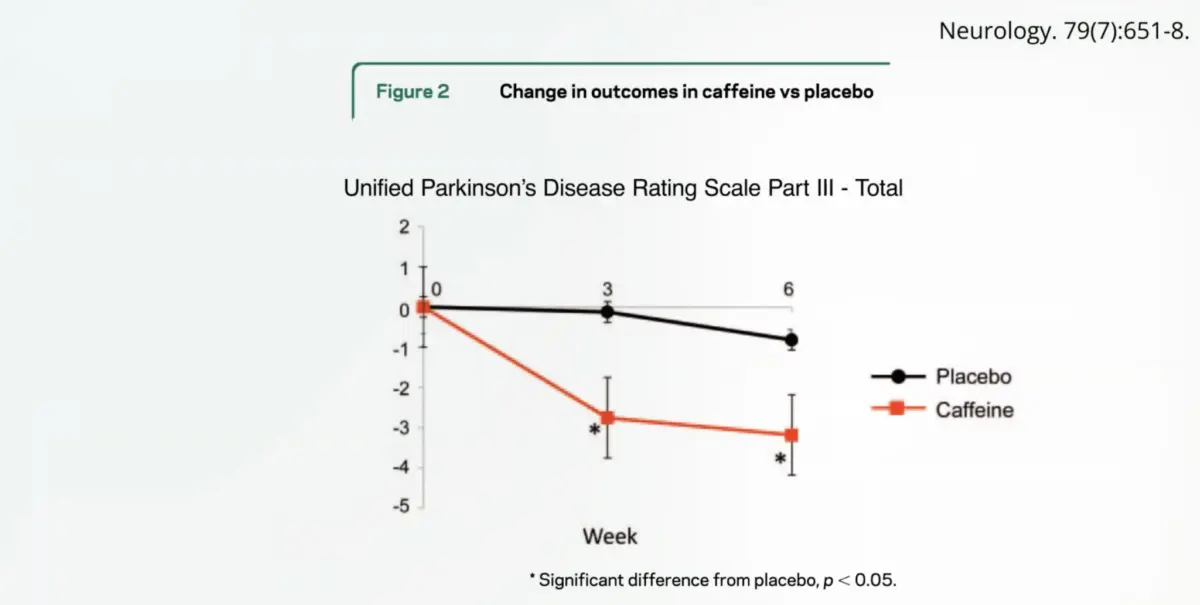
In a landmark six-week, randomized, placebo-controlled, double-blind study, researchers set out to determine if caffeine could function as a therapeutic intervention. The trial protocol was robust: participants in the caffeine group began with a dosage equivalent to one cup of coffee twice a day—taken in the morning and after lunch—before escalating to a dose equivalent to two cups of coffee twice daily. This level of intake roughly mirrored the caffeine content found in four cups of black tea or six cups of green tea per serving. The initial results were compelling. Within just three weeks, the researchers observed a significant improvement in the Parkinson’s symptoms of those in the caffeine group compared to those receiving the placebo.
This finding was initially met with excitement, as it suggested that a simple, inexpensive, and accessible intervention could alleviate some of the burdens of the disease. However, scientists remained cautious regarding the long-term viability of this approach. One significant limitation of the study was its duration. Caffeine is known to have "tachyphylactic" properties, a pharmacological term describing how the efficacy of a substance can diminish over time with repeated exposure. This phenomenon is well-documented in other contexts, such as using caffeine to combat sleepiness, where the body quickly develops a tolerance.
To address these concerns, researchers conducted a more rigorous, long-term follow-up study five years later. In this extended trial, patients with Parkinson’s were randomized to receive a dosage of caffeine equivalent to two cups of coffee twice daily, not for a few weeks, but for more than six months. The results of this longer-term investigation were sobering. Contrary to the initial findings, the study showed no sustained benefit over the placebo group. The improvement observed in the short term appeared to be transient, fading as the body adjusted to the intake.
Ultimately, the data suggests that while caffeine may provide a temporary symptomatic boost, it does not offer the durable, long-term therapeutic relief that patients and clinicians hope for in a treatment regimen. Consequently, the consensus among researchers has shifted: caffeine cannot be recommended as a primary symptomatic therapy for parkinsonism. While the quest for nutritional interventions continues, the lesson from these trials is clear—the difference between a short-term observation and a long-term medical solution can be significant. It underscores the necessity of rigorous, longitudinal testing before any substance, even one as common as coffee, can be integrated into the clinical management of chronic, degenerative diseases. The search for effective, sustainable, and evidence-based treatments remains a vital and ongoing priority in the effort to improve the quality of life for those living with Parkinson’s.