
When James Parkinson first meticulously documented the cluster of symptoms that would eventually bear his name, the medical community’s understanding of the condition was in its infancy. Over the two centuries that have elapsed since those initial descriptions, our grasp of the disease has evolved significantly, shifting from a focus on purely clinical observation to a nuanced exploration of the environmental and nutritional factors that may influence its development and progression. Today, the conversation surrounding Parkinson’s disease increasingly involves the role of diet, with researchers investigating everything from the potential dangers of specific plant-based neurotoxins to the promising—though often misunderstood—benefits of caffeine.
The growing body of research into the etiology of Parkinson’s disease suggests that dietary patterns play a critical role in neurodegenerative health. Epidemiological evidence has pointed toward several dietary components that may elevate an individual’s risk. Diets high in animal fats, mercury, iron, and dairy products have been consistently flagged as potential contributors to the disease’s development. Conversely, a diet centered on whole, plant-based foods—rich in antioxidants—appears to provide a protective effect.
The rationale behind this protective mechanism is rooted in the body’s need to combat oxidative stress and chronic inflammation, two primary drivers of neurodegenerative decline. Plant-based diets are well-regarded for their ability to protect cellular integrity, potentially shielding the nervous system from the damage that leads to chronic-degenerative conditions. In contrast, diets heavy in animal-derived proteins and saturated fats are frequently linked not only to neurological decline but also to a host of other modern ailments, including cardiovascular disease, diabetes, and certain forms of cancer.
However, the assumption that all plant-based foods are inherently beneficial is a dangerous oversimplification. Nutrition is rarely binary, and the potential for toxicity exists even within the plant kingdom. A poignant example of this is the consumption of graviola, more commonly known as soursop. While this fruit is often praised for its ability to lower blood pressure and manage uric acid levels, it also contains specific neurotoxic compounds. Clinical observations have linked the overconsumption of soursop to an atypical form of Parkinson’s disease, suggesting that even "natural" sources can harbor risks if they contain compounds that threaten neurological health.
Understanding these risks is essential for those who prioritize a plant-based lifestyle, as the goal is to reduce the risk of disease through informed consumption. Yet, the conversation regarding nutrition and Parkinson’s extends beyond risk prevention; there is a growing interest in whether diet can serve as a legitimate tool for managing the symptoms of the disease once it has been diagnosed.
Previous investigations into dietary management have highlighted promising case studies. For instance, reports have suggested that a regimen low in animal fats, which incorporates daily servings of whole grains and one to two cups of strawberries, may yield a reduction in the severity of Parkinson’s symptoms. While these findings are encouraging, the sheer scale of global biodiversity presents a challenge for researchers. With approximately 20,000 edible plant varieties currently identified worldwide, the scientific community has only scratched the surface in terms of testing which plants may hold genuine anti-Parkinson’s activity.
Among the various substances studied, coffee has arguably received the most sustained attention. For years, observational studies have indicated that coffee consumption is likely to exert a protective effect against the onset of Parkinson’s. Some data even suggest that the disease’s progression might be slowed by the habit; one study notably observed that Parkinson’s patients who consumed coffee or caffeinated tea appeared to cut their risk of premature mortality in half.
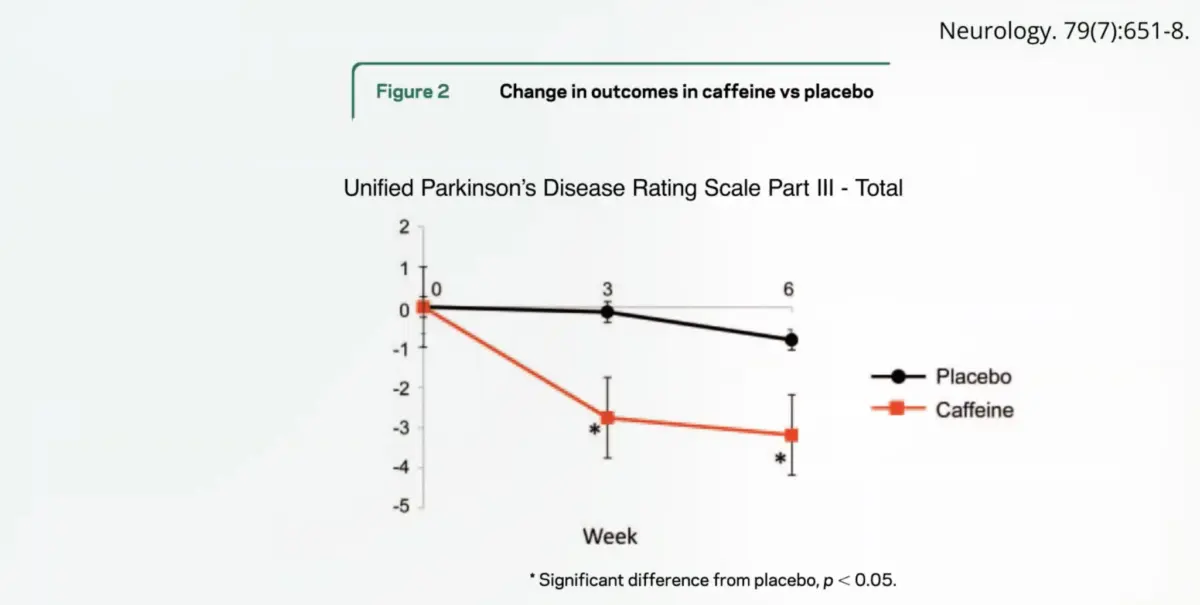
While these correlations are compelling, they are not proof of causation. Correlation does not imply that caffeine is a therapeutic agent; it merely suggests a relationship that warrants deeper, more rigorous testing. To determine whether caffeine could actually act as a functional treatment, researchers turned to a six-week, randomized, placebo-controlled, double-blind trial.
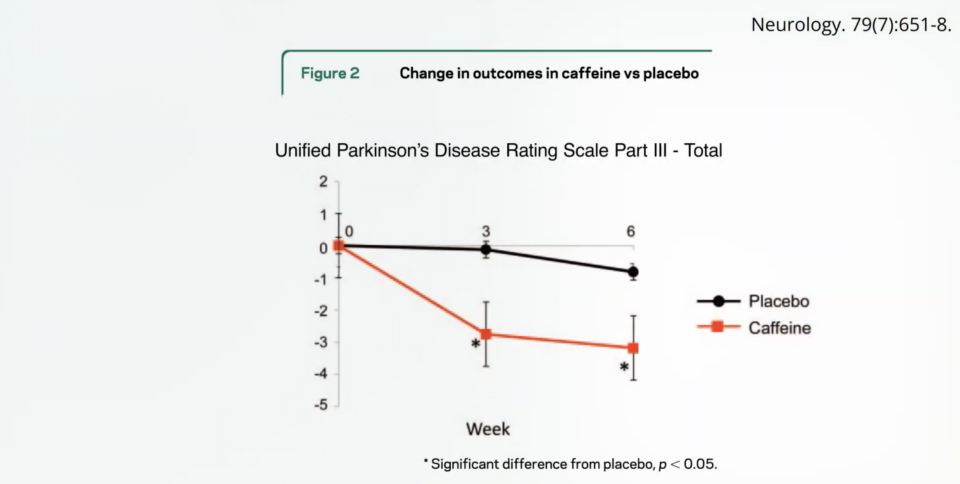
In this study, participants were divided into a caffeine-supplemented group and a placebo group. The intervention group began by consuming a dosage of caffeine roughly equivalent to one cup of coffee twice a day, eventually increasing to the equivalent of two cups twice a day—a regimen comparable to consuming four cups of black tea or six cups of green tea per day. The findings from this initial short-term study were striking: participants experienced a significant improvement in their Parkinson’s symptoms within just three weeks when compared to those receiving the placebo.
For a brief period, these results fueled optimism that coffee could serve as an inexpensive, safe, and accessible intervention for those living with the disease. However, scientists remained cautious due to a significant limitation: the duration of the study. Caffeine is known to exhibit "tachyphylactic" properties, a pharmacological phenomenon where the therapeutic effects of a substance diminish over time with repeated use. This is a common occurrence when caffeine is used to combat sleepiness or fatigue, and researchers questioned whether the observed benefits in Parkinson’s patients would persist over the long term.
To address this uncertainty, a follow-up study was conducted five years later, providing a much-needed long-term perspective. In this trial, Parkinson’s patients were randomized to receive a daily intake of caffeine—equivalent to two cups of coffee twice a day—for a period exceeding six months. The results were disheartening for those hoping for a simple dietary fix: the study showed no significant benefit over the placebo.
This longer-term evidence suggests that while caffeine may provide a transient, short-term improvement in symptoms, that benefit does not hold up over extended use. The initial enthusiasm surrounding caffeine as a potential therapeutic agent for Parkinson’s was tempered by the realization that its impact is fleeting. Consequently, the medical consensus has shifted to reflect this, concluding that caffeine cannot be recommended as a sustained symptomatic therapy for parkinsonism.
The arc of this research serves as a reminder of the complexities inherent in medical science. While dietary patterns like plant-based nutrition continue to show promise for long-term health and risk reduction, the search for a simple "caffeine cure" for Parkinson’s symptoms demonstrates the necessity of rigorous, long-term testing. As we continue to study the remaining thousands of edible plant varieties, the focus remains on distinguishing between temporary symptomatic relief and genuine disease management, ensuring that patients receive guidance based on evidence rather than initial, short-lived findings.