
When James Parkinson first meticulously documented the characteristic symptoms of the disease that would eventually bear his name over two hundred years ago, the medical landscape was vastly different. In the two centuries that have followed, our understanding of the condition has evolved from a purely clinical observation of tremors and motor impairment to a sophisticated exploration of how lifestyle, environment, and, crucially, nutrition influence the progression of the disease. While modern medicine relies heavily on pharmacological interventions, there is a growing body of research investigating whether the dietary choices we make every day could serve as either a catalyst for, or a shield against, neurodegenerative decline.
The current scientific consensus suggests that nutrition plays a multifaceted role in neurological health. Research indicates that diets high in animal fats, processed meats, and specific minerals like mercury and iron may elevate the risk of developing Parkinson’s disease. Conversely, plant-based dietary patterns, characterized by an abundance of antioxidants, are increasingly viewed as protective. The mechanism behind this protection is rooted in the body’s response to cellular stress. Plant-based diets are renowned for their ability to protect tissues from oxidative stress and chronic inflammation—two of the primary hallmarks of chronic-degenerative diseases.
In stark contrast, a heavy reliance on animal-based products, particularly those rich in saturated fats and animal proteins, has been correlated with the promotion of various neurodegenerative conditions. Beyond the brain, these dietary habits are also linked to several of the world’s leading causes of mortality, including cardiovascular disease, diabetes, and certain cancers. The shift toward plant-forward eating is, therefore, not merely a preventative measure against Parkinson’s, but a broader strategy for long-term physiological health.
However, the narrative that "plants are inherently good" requires nuance. Not every botanical source is beneficial, and some can even be overtly harmful. A pertinent example is the Annona muricata fruit, commonly known as soursop or graviola. While it has been touted in some circles for its ability to lower blood pressure and manage uric acid levels, it carries a significant risk: the fruit contains potent neurotoxic compounds. Population-level studies have identified a disturbing link between the regular consumption of soursop and the development of an atypical form of Parkinson’s disease. This serves as a critical reminder that natural does not always equate to safe, and that the intersection of diet and neurology requires a deep understanding of toxicology as much as nutrition.

For those already living with Parkinson’s, the question shifts from risk reduction to disease management. There is emerging evidence that dietary adjustments can be used as a supplementary tool in controlling symptoms. One notable case report highlighted a patient who achieved a reduction in symptoms through a specific dietary protocol: a regimen low in animal fats that emphasized daily whole grains and the inclusion of one to two cups of strawberries. While encouraging, such reports represent only a fraction of the possibilities. With approximately 20,000 edible plant varieties identified worldwide, the scientific community has only scratched the surface of which foods might offer specific anti-Parkinsonian activity.
Among the various plants under investigation, coffee has garnered significant attention, both as a potential preventative agent and a therapeutic intervention. Epidemiological evidence has long suggested that coffee consumption is associated with a lower risk of developing Parkinson’s disease. Further research has even hinted that the substance might slow the progression of the disease; one study notably found that Parkinson’s patients who consumed coffee or caffeinated tea appeared to cut their risk of premature mortality in half. Yet, in the world of clinical science, correlation is not causation. Observing that coffee drinkers have better outcomes is not the same as proving that coffee is the mechanism responsible for those outcomes. To move from observation to medical recommendation, researchers had to subject caffeine to the rigor of a randomized, controlled trial.
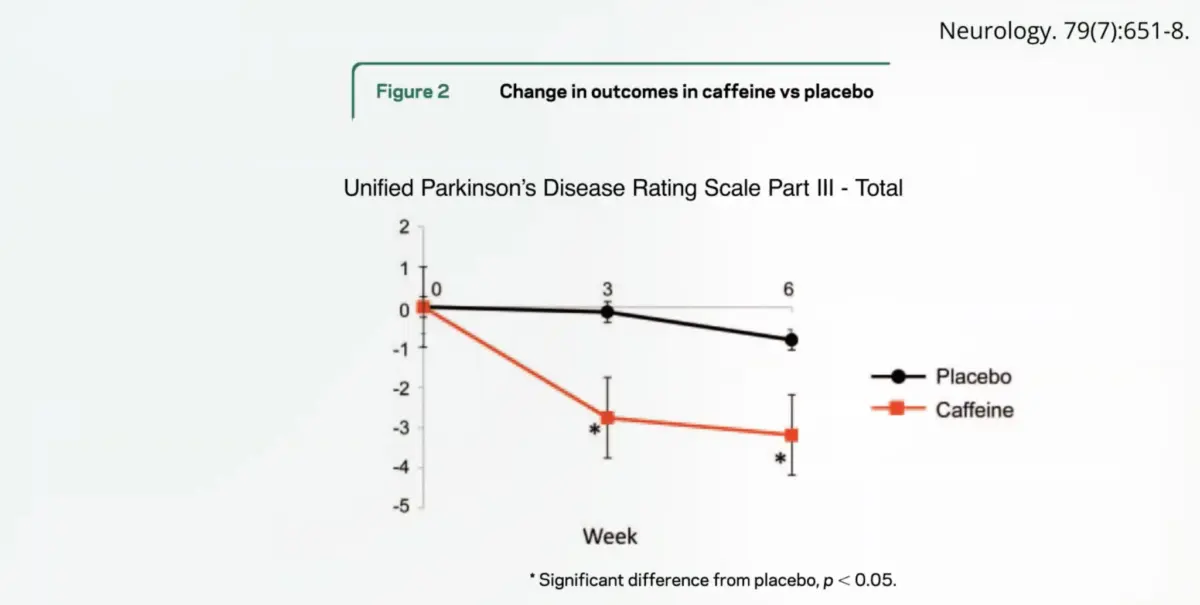
In a landmark six-week study, researchers tested caffeine specifically as a treatment for the symptoms of Parkinson’s disease. The trial was randomized, double-blind, and placebo-controlled—the gold standard for clinical evidence. Participants in the caffeine group were administered an initial dose equivalent to one cup of coffee twice a day, once in the morning and once after lunch. This dosage was then increased to the equivalent of two cups of coffee twice a day, a level of intake comparable to four cups of black tea or six cups of green tea per serving. The findings were initially striking: those in the caffeine group experienced a significant improvement in their Parkinson’s symptoms within just three weeks compared to the placebo group.
These results sparked optimism that coffee might provide a cheap, safe, and accessible intervention for those managing the motor symptoms of the disease. However, the researchers were acutely aware of the study’s limitations, specifically its duration. Caffeine is known for its "tachyphylactic" properties—a pharmacological term indicating that the effect of a substance tends to diminish over time with repeated exposure. This is commonly observed in the context of caffeine’s ability to combat sleepiness; eventually, the body adjusts, and the initial boost fades. The question remained whether the symptomatic relief experienced by the Parkinson’s patients would be durable, or if it was merely a temporary physiological spike.
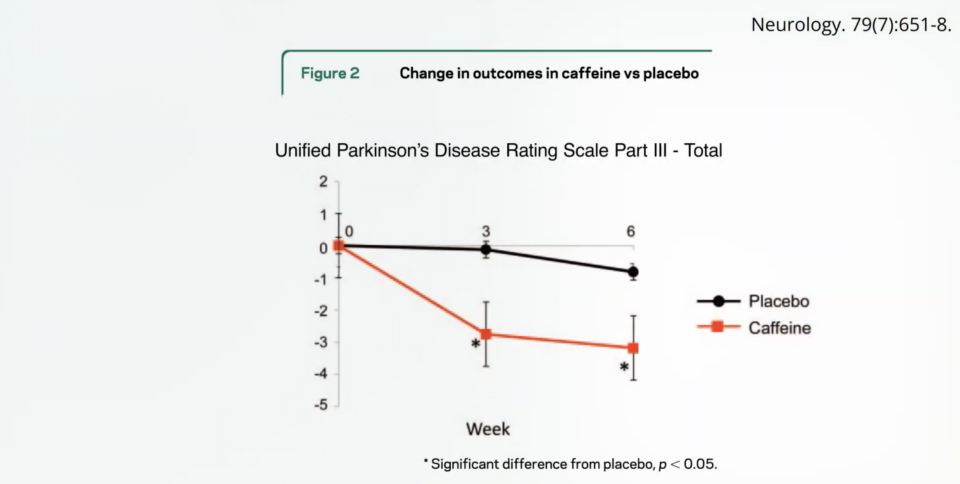
To answer this, researchers conducted a follow-up study five years later, this time extending the observation period significantly. In this longer-term trial, patients with Parkinson’s were randomized to receive the equivalent of two cups of coffee twice a day, not for six weeks, but for over six months. The results were disheartening for those hoping for a simple dietary solution. The study concluded that there was no meaningful benefit of caffeine over the placebo after the extended period.
The contrast between the two studies serves as a sobering reminder of the difference between short-term symptomatic response and long-term therapeutic efficacy. While caffeine may indeed offer a brief, transient improvement in motor symptoms, that benefit appears to dissipate quickly. The conclusion drawn from the evidence is clear: caffeine cannot be formally recommended as a symptomatic therapy for parkinsonism. While coffee remains a fascinating subject of study for its potential role in the long-term prevention of neurodegenerative diseases, its application as a treatment for established disease remains unsupported by sustained clinical data. The journey to understand the role of nutrition in brain health continues, but for now, the promise of coffee as a direct treatment for Parkinson’s symptoms remains unfulfilled.