
A firestorm erupted in the scientific community following the publication of a series of studies in the Annals of Internal Medicine, which suggested that individuals need not concern themselves with reducing their intake of red and processed meats. Despite finding a statistically significant association between lower meat consumption and reduced risks of total mortality, cardiovascular disease, and cancer, the authors of these studies reached a conclusion that sharply contradicted decades of established public health guidance. Rather than advising the public to moderate their consumption, the researchers essentially suggested that people should continue eating meat to their heart’s content.
This surprising recommendation has sparked intense scrutiny, as experts across the globe question how such data could lead to such a permissive conclusion. To understand this disconnect, one must examine the three primary justifications provided by the panel, which, upon closer inspection, reveal a troubling pattern of methodological choices and industry influence.
Taste, Methodology, and the "Small Magnitude" Argument
The first defense offered by the authors was rooted in the concept of taste preference. They argued that because people derive genuine enjoyment from eating meat, dietary guidelines should reflect that reality. However, in the realm of public health, this argument is widely regarded as a significant departure from standard practice. While it is true that many individuals struggle with lifestyle changes—such as quitting smoking, reducing alcohol intake, or increasing physical activity—these personal preferences have never historically been used as a basis to dilute scientific evidence or weaken health recommendations. The consensus among medical professionals is that public health advice must be dictated by the best available science, not by the hedonic preferences of the population.
The second point of contention involves the panel’s use of the GRADE (Grading of Recommendations, Assessment, Development, and Evaluation) approach. Originally developed to evaluate evidence from pharmaceutical clinical trials, GRADE is designed to assess the certainty of evidence for specific interventions, typically drugs. When applied to nutrition and lifestyle research, however, the tool is often considered ill-suited. Critics argue that the meat panel inappropriately applied this framework to nutrition science, a move that could potentially be used to undermine almost any consensus on environmental or lifestyle health risks, from the dangers of secondhand smoke and air pollution to the hazards of trans fats.
The third, and perhaps most controversial, justification for their findings was the claim that the health effects of meat consumption are of a "very small magnitude." The authors argued that even if meat intake is linked to heart disease, cancer, and diabetes, the absolute number of lives affected is not substantial enough to outweigh the perceived benefits of meat consumption. This conclusion, however, ignores the complexity of dietary replacement. Research consistently shows that what individuals eat instead of meat matters immensely. Replacing just 3% of calories from animal protein with plant-based alternatives is associated with increased longevity. Furthermore, data indicates that replacing red meat with plant sources can lower overall mortality by more than 10%, while eliminating egg protein in favor of plant-based options may reduce the risk of premature death by over 20%. Therefore, framing the reduction of meat consumption as a singular, uniform action overlooks the nuanced reality that replacing a burger with a processed egg salad sandwich might not yield the same health benefits as choosing whole plant foods.
The Problem of Cherry-Picked Evidence
The validity of the panel’s conclusion has been further questioned due to allegations that they omitted major bodies of evidence. Critics point out that the researchers appeared to cherry-pick studies that supported a specific agenda, while discarding others that met their own criteria for inclusion. Notably, the panel excluded robust evidence from randomized controlled trials that demonstrated how meat intake elevates critical health markers like cholesterol and blood pressure.

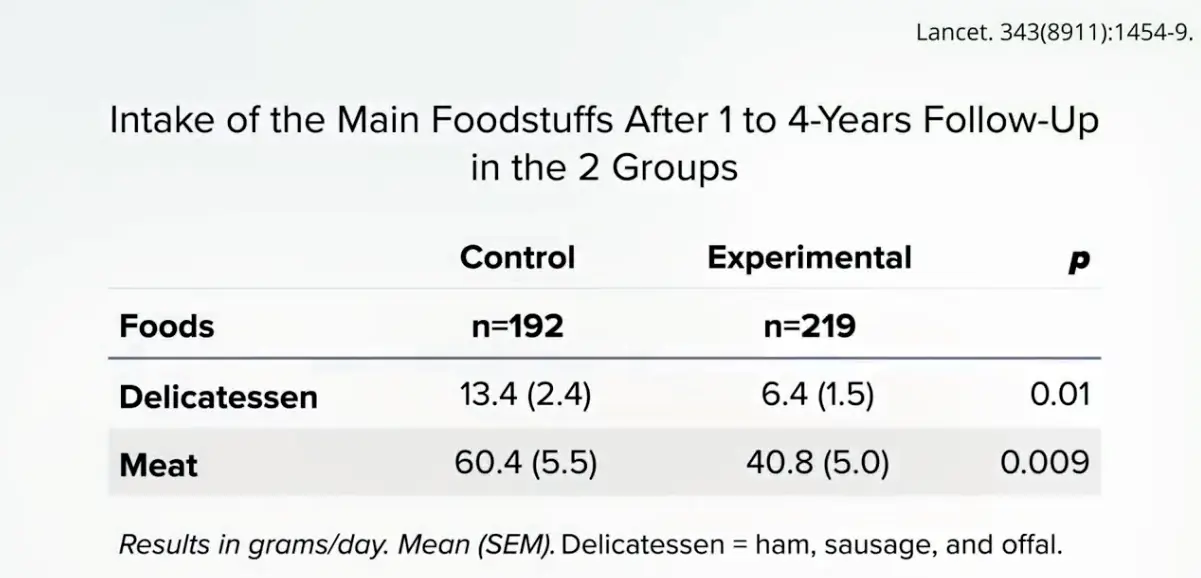
Crucial studies, such as the PREDIMED trial and the extensive body of research surrounding the DASH diet, were largely overlooked. Even more telling was the exclusion of the Lyon Diet Heart Study, which randomized participants to a Mediterranean-style diet featuring a significant reduction in meat consumption. The results were striking, showing a 70% reduction in all-cause mortality compared to the control group. When asked why such a significant study was omitted, the panel justified the exclusion by stating the results reported an "implausibly large treatment effect"—a critique that essentially dismisses evidence simply because the health outcomes were overwhelmingly positive.
This suspicion is deepened by the panel’s financial and institutional ties. The NutriRECS consortium behind these papers was found to be partnered with Texas A&M AgriLife, an institution that receives millions of dollars in funding from the meat industry annually. This conflict of interest casts a long shadow over the panel’s decision to ignore research comparing vegetarians to meat-eaters, focusing instead on "realistic" decreases—such as cutting out just half an ounce of meat per day, or about one-fifth of a hamburger. By relying on studies like the Women’s Health Initiative, which saw only modest reductions in meat intake, the researchers arrived at a "modest" conclusion that ignores the broader, more significant health outcomes observed when more substantial dietary shifts are made.
The Smoking Analogy and Public Health
The situation has drawn inevitable comparisons to the historical battle over tobacco. Dr. Dean Ornish, a prominent advocate for evidence-based nutrition, noted that the panel’s logic is akin to observing that smoking 24 cigarettes a day is only slightly more harmful than smoking 20, and then erroneously concluding that smoking is not inherently dangerous. By carefully avoiding any comparison between smoking 24 cigarettes and smoking none, the researchers ignored the most important data point.
When viewed through the lens of public health, the potential impact of these findings is staggering. The Harvard Department of Nutrition has estimated that moderately reducing red meat consumption could prevent as many as 200,000 deaths in the United States every year. To characterize this as a "small effect" is to ignore the profound impact on those 200,000 families and the wider healthcare system. The population-level data linking meat consumption to disease is remarkably similar to the data used to identify the risks of secondhand smoke. Just as no responsible public health official would argue for the continuation of indoor smoking based on a "small magnitude" of risk, many in the scientific community find it baffling that similar arguments are being deployed to defend meat consumption.
Ultimately, these studies serve as a stark reminder of the influence that industrial interests can have on the interpretation of nutritional science. As one historic 1959 paper on smoking and lung cancer poignantly noted—a sentiment that rings as true today as it did then—if the mountain of evidence linking an agent to disease had been identified in a substance that was not already part of daily consumption for millions, and one that did not support a powerful, persuasive industry, the health risks would be regarded as beyond dispute. The data, despite the attempts to minimize its significance, continues to show that the choices we make at the dinner table have lasting, measurable consequences on our longevity and health.