
When the medical community announces a new chemotherapy drug, the headlines often pulse with words like “breakthrough,” “game-changer,” or “revolutionary.” For patients and their families, these terms carry the weight of hope—the promise of a second chance or an extended life. However, a growing body of clinical data suggests that the reality behind these high-profile approvals is often far more modest, and occasionally, profoundly disappointing.
When researchers aggregate the clinical outcomes of new chemotherapy drugs approved over a span of twelve years, the average overall survival benefit is a startlingly low 2.1 months. This figure stands in stark contrast to the aggressive marketing and the exorbitant price tags attached to many of these pharmaceutical products. The discrepancy between public expectation and clinical reality raises urgent questions about how we evaluate the efficacy of cancer treatments and how that information is communicated to those who need it most.
The Myth of the Clinical Breakthrough
The disconnect between the hype surrounding new cancer drugs and their actual impact on patient outcomes has become a subject of intense scrutiny within the medical community. In the Journal of the National Cancer Institute, experts have pointed to a troubling trend: the majority of new cancer treatments fail to deliver what would be considered a “clinically meaningful” benefit.
A critical failure in the current system is the lack of accountability following initial FDA approval. One might assume that if a drug is found to be ineffective in real-world, post-market studies, it would be swiftly removed from circulation. In practice, this is rarely the case. Even when follow-up studies confirm that a drug offers no significant improvement in survival compared to a placebo or standard observation, these products frequently remain on the market. Furthermore, they maintain price points comparable to the most expensive therapies available.
The financial burden of these drugs is as staggering as their lack of efficacy. Researchers have identified cases where treatments costing nearly $170,000 per year failed to provide any survival benefit at all, while simultaneously degrading the patient’s quality of life. This creates an ethical crisis: why should patients and healthcare systems invest substantial resources into treatments that offer no tangible improvement in health outcomes?
The Problem with Statistical Significance
Even when a drug is shown to "improve" survival, the definition of that success is often buried in statistical jargon that can mislead patients. Pharmaceutical companies frequently design large-scale clinical trials aimed at identifying statistically significant differences in survival endpoints. While a trial may conclude that a drug is effective, the actual difference in time gained can be trivial.

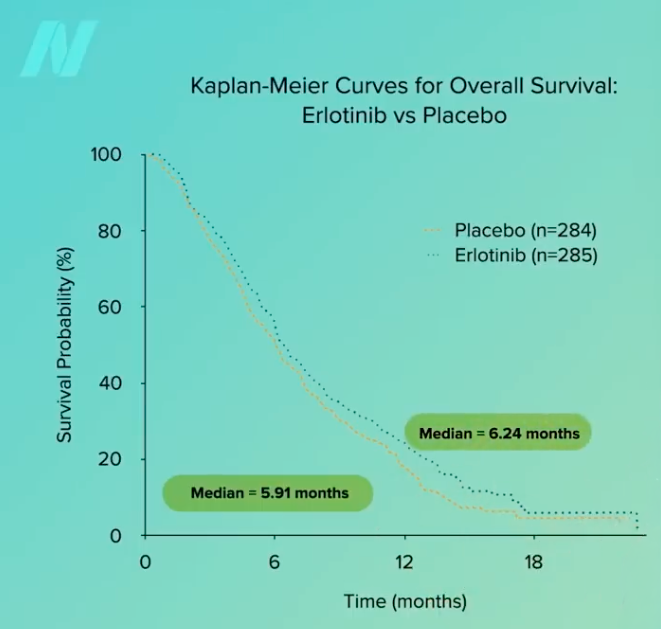
Consider the landmark trial involving the combination of erlotinib and gemcitabine for advanced pancreatic cancer. While the study was touted for finding a "significant" extension in overall survival, the data revealed a much more sobering reality. The group receiving the standard gemcitabine treatment lived for 5.91 months, while those receiving the combination therapy survived for 6.24 months. That is a difference of roughly 10 days.
When a patient is told they have achieved a "statistically significant improvement in survival," they rarely envision a week and a half of additional life—especially when that time is often marred by the increased side effects associated with a second drug. This reliance on technical language can inadvertently obscure the truth, preventing patients from making fully informed decisions about the trade-offs they are willing to accept.
The Communication Gap and Patient Autonomy
The issue of informed consent is perhaps the most pressing concern. Surveys consistently show that patients with metastatic cancers, such as lung or colorectal cancer, frequently harbor the mistaken belief that their chemotherapy treatments are likely to cure them. When, in fact, the treatment is merely palliative—intended to extend life by weeks or months—the failure to clearly communicate this reality is a failure of care.
Research indicates that many patients are not being properly informed about the limitations of their treatment. This lack of transparency deprives individuals of the opportunity to weigh the risks of chemotherapy—such as severe toxicity and diminished quality of life—against the very limited potential benefits. When patients are deprived of the truth, they lose the ability to exercise autonomy over their own bodies and their final chapters of life.
When asked directly, many cancer patients express that they would require at least six months of additional life to justify the physical and emotional toll of chemotherapy. However, everyone’s threshold is unique. Some individuals may find even a few weeks of extra time invaluable, while others would prioritize the quality of their remaining time over an extension that requires intensive, toxic medical intervention. The tragedy is that without an accurate understanding of the prognosis and the true impact of the drugs, patients cannot make the choices that align with their personal values.
The Reality of Toxicity and "Manageable" Side Effects
The medical community itself often holds a different view of these treatments than the public. Oncologists and oncology nurses have been shown to be less willing to undergo intensive, toxic chemotherapy for themselves than they are to recommend it for their patients. This caution is well-founded. Most chemotherapy agents are cytotoxic, meaning they function by killing rapidly dividing cells. While they target cancer cells, they inevitably cause collateral damage to healthy tissue, leading to nerve damage, heart failure, gastrointestinal destruction, and immune system compromise.
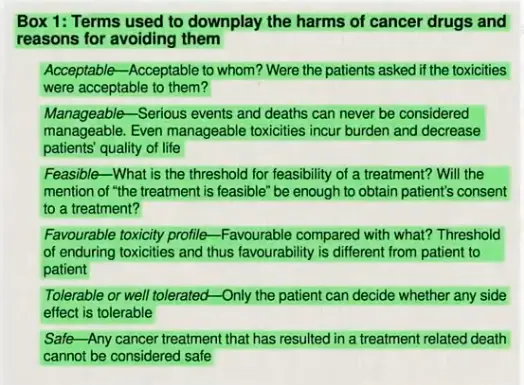
Pharmaceutical companies often use euphemistic language to describe these harsh realities. In medical literature, side effects are frequently described as "manageable," "acceptable," "feasible," or "tolerable." Yet, when scrutinized, the data often tells a different story. In some cases, the rate of serious or life-threatening adverse events is significantly higher in the new drug group compared to the control.
Terms like "manageable" often ignore the perspective of the patient, for whom a life-threatening complication is never manageable. As the medical field continues to push for innovation, there is a clear need for greater transparency. If a drug carries a significant risk of severe side effects, it should be presented as such, rather than hidden behind sanitizing terminology.
Seeking a Balanced Perspective
It is important to acknowledge that chemotherapy has achieved undeniable, life-saving successes. In specific cases, such as testicular cancer or Hodgkin’s lymphoma, chemotherapy has transformed outcomes, providing patients with a high probability of long-term survival. These breakthroughs remain the gold standard of what cancer research can achieve.
However, for the vast majority of common cancers—including breast, lung, colon, and prostate—the five-year survival benefit attributed to chemotherapy is often in the range of only 1% to 2%. While every percentage point represents a human life, the collective data serves as a necessary reality check. The path forward requires a more honest dialogue between doctors and patients, a more rigorous standard for what constitutes a "successful" drug, and a renewed focus on preventative measures. By shifting the focus toward the most effective interventions and ensuring that patients have the full truth, the medical community can better honor the dignity and the limited time of those facing a cancer diagnosis.