
Please note: This article discusses the sensitive and critical issue of weight bias and discrimination, which may be a challenging topic for some readers.
In contemporary society, weight stigmatization is frequently described as the last "acceptable" form of bias. While advocacy groups and public policy have made significant strides in addressing discrimination based on race, gender, and sexual orientation, weight-based prejudice remains rampant, deeply embedded in social, professional, and medical environments. This form of discrimination involves the systemic stereotyping and marginalization of individuals based on their body weight, creating a hostile reality that affects millions of people daily.
To quantify the prevalence of this issue, researchers once tasked fifty overweight women with maintaining a detailed diary of every instance they perceived as weight-based stigmatization over the course of a single week. The results were staggering: more than a thousand instances were recorded within that seven-day window. On average, an overweight woman may face three separate incidents of harassment, physical barriers, or overt discrimination every day. These range from verbal insults and name-calling to structural challenges, such as the inability to fit into standard public seating, or discriminatory treatment in commercial settings like restaurants and retail stores. While the burden is heavy for everyone, men appear to be shielded from some of this vitriol; research indicates that obese men report approximately three times less discrimination than women of similar size, suggesting that for them, these incidents may be a daily, rather than constant, occurrence.
These experiences are not the result of personal paranoia or an overactive imagination; they are backed by empirical evidence. In controlled studies using professional actors—some of whom wore theatrical prostheses to simulate an overweight appearance—researchers found that the same individuals were significantly more likely to face bias when perceived as overweight than when appearing at their natural weight. This employment bias is notably more severe for women, highlighting a gendered intersectionality in how society penalizes those who do not conform to traditional body standards.
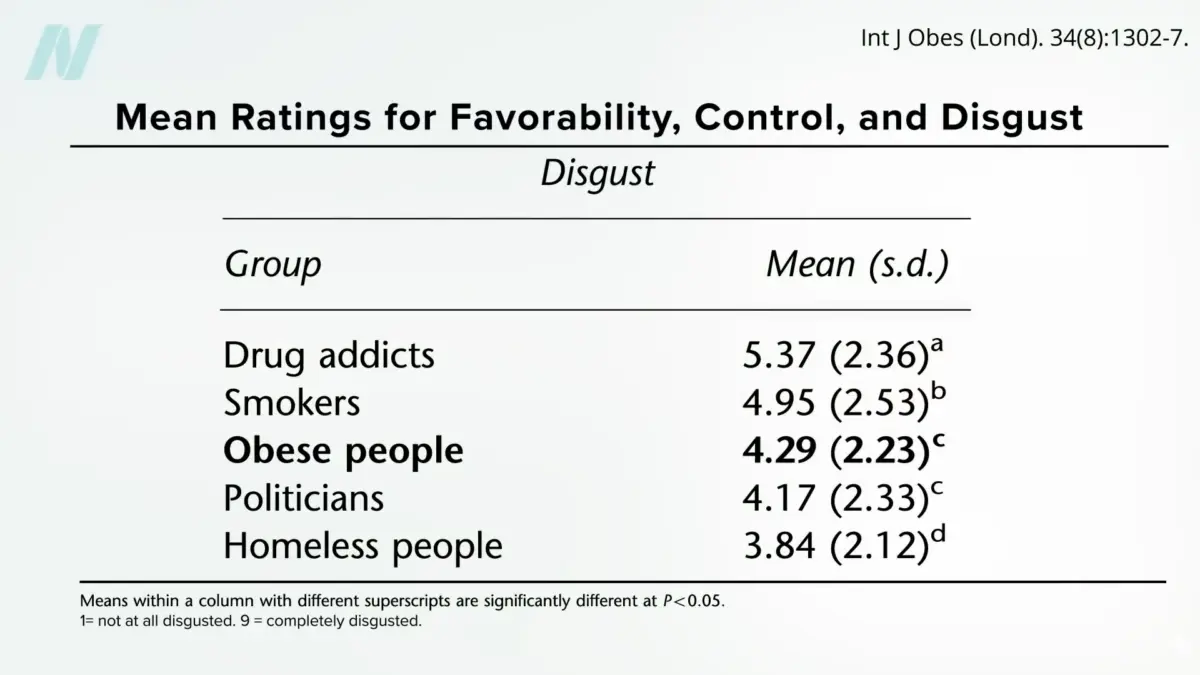
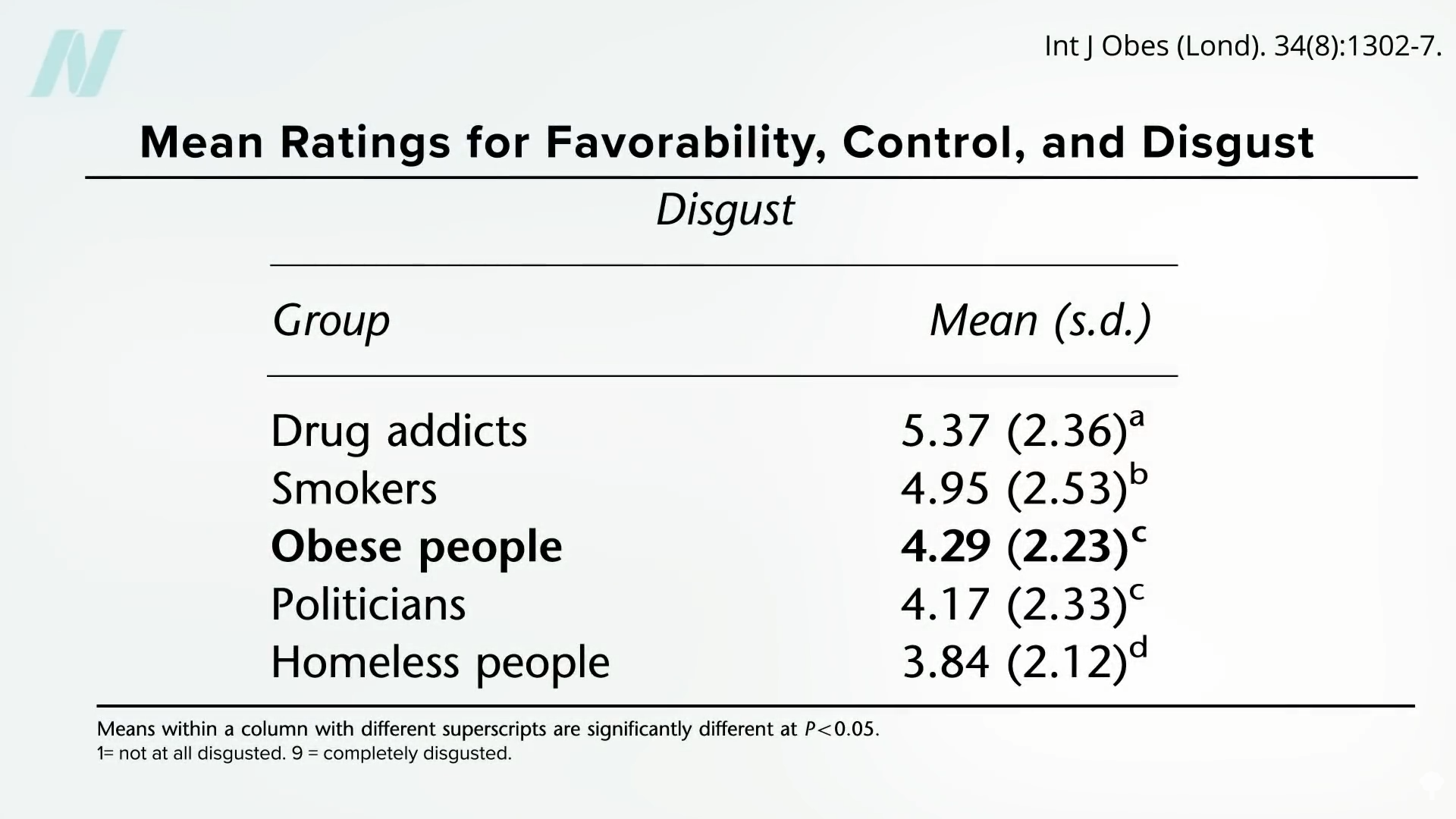
The depth of this prejudice is further illustrated by social surveys comparing various stigmatized groups. When researchers compared attitudes toward sixteen different social categories, including those experiencing homelessness, they discovered that only drug addicts and smokers were viewed with more visceral disgust than obese individuals. Perhaps most strikingly, researchers noted that there was effectively a statistical tie in how society views these groups: obese people were rated as being just as "disgusting" as politicians.
This systemic stigmatization begins at a shockingly young age, suggesting that these biases are learned early and reinforced throughout the development of a child’s worldview. Studies have shown that children as young as three years old begin to describe their overweight peers using derogatory labels such as "mean," "stupid," "lazy," and "ugly." As children grow older, this negative language often intensifies, further isolating overweight youth from their social cohorts.
Historical data reinforces how deeply rooted these attitudes are. A seminal 1961 study conducted across diverse social, cultural, and ethnic backgrounds in California, Montana, and New York asked children to rank images of their peers based on preference. The photos included children with visible disabilities—such as those in wheelchairs, those using crutches, or those with facial disfigurements—alongside an image of an obese child. The results showed a "remarkable uniformity" across every demographic: the obese child was consistently ranked as the least favorite.
Disturbingly, a 40-year follow-up study published in 2003 revealed that these attitudes have not improved; in fact, they have regressed. The follow-up, aptly titled "Getting Worse: The Stigmatization of Obese Children," found that the obese child was even less liked in the 2003 cohort than in the original 1961 study. This trend mirrors broader societal shifts, with national surveys recording a nearly 70 percent increase in perceived weight discrimination since the mid-1990s.
The education system, which should serve as a sanctuary for growth, is also implicated. Surveys of teachers and school staff indicate that more than a quarter of respondents feel that becoming obese is "one of the worst things that could happen to a person." This bias can even permeate the home; research has shown that some parents provide less financial support for college to their overweight daughters compared to their thinner siblings. As noted by prominent obesity researchers, it is a testament to the strength of this prejudice when it manifests as parental discrimination against one’s own children.
Perhaps most concerning is the prevalence of weight bias within the medical community, where it can lead to direct health consequences. A representative national survey found that more than half of physicians viewed obese patients as "awkward, unattractive, ugly, and noncompliant." Even more startling, about a quarter of nurses surveyed agreed or strongly agreed with the sentiment that caring for an obese patient was a source of personal repulsion.
This institutionalized antagonism creates a barrier to essential care. Obese women, for instance, are at a higher risk for developing cervical, endometrial, and ovarian cancers, yet they are statistically less likely to be screened for these conditions. Morbidly obese patients have only about half the odds of receiving recommended pelvic exams compared to their thinner counterparts. While some of this is due to patient avoidance—a reasonable response to the prospect of being shamed—some doctors are actively refusing care. A report from the Sun Sentinel found that one in seven OB/GYN practices in South Florida set specific weight cut-offs for new patients, effectively barring those over 200 pounds from receiving reproductive health services.
Even when obese patients are able to secure appointments, they often receive inferior care. In studies where physicians were provided with identical medical charts for a migraine patient—with the only variable being the patient’s weight—those presented with an obese patient said they would allocate approximately 28 percent less of their time to the consultation. Beyond the reduction in time, the quality of the interaction suffers as well. Recordings of actual doctor-patient visits indicate that physicians build significantly less emotional rapport with patients categorized as overweight or obese.
The bias is so pervasive that even obesity specialists, those ostensibly dedicated to the care of these patients, have shown an increase in explicit anti-fat attitudes. Between 2001 and 2013, surveys showed that these specialists increasingly described obese individuals as "more lazy," "stupid," and "worthless" compared to thin people. This sentiment has even bled into professional medical literature; a 1985 article in the Annals of Internal Medicine once explicitly referred to obesity as an "aesthetic crime" that is "ugly."
There is, however, a curious finding regarding the patient-physician dynamic. In a study titled "Obese Patients Overestimate Physicians’ Attitudes of Respect," researchers found that while doctors often harbor deep-seated disdain for their obese patients, those patients frequently report high levels of satisfaction with their care. The researchers concluded that while physicians may be successfully "playing the part" of a respectful provider, the lack of genuine regard raises profound questions about the authenticity and integrity of the patient-physician relationship. As the healthcare system continues to evolve, addressing this "last acceptable bias" remains a critical, yet largely unmet, challenge for medical professionals and society at large.