
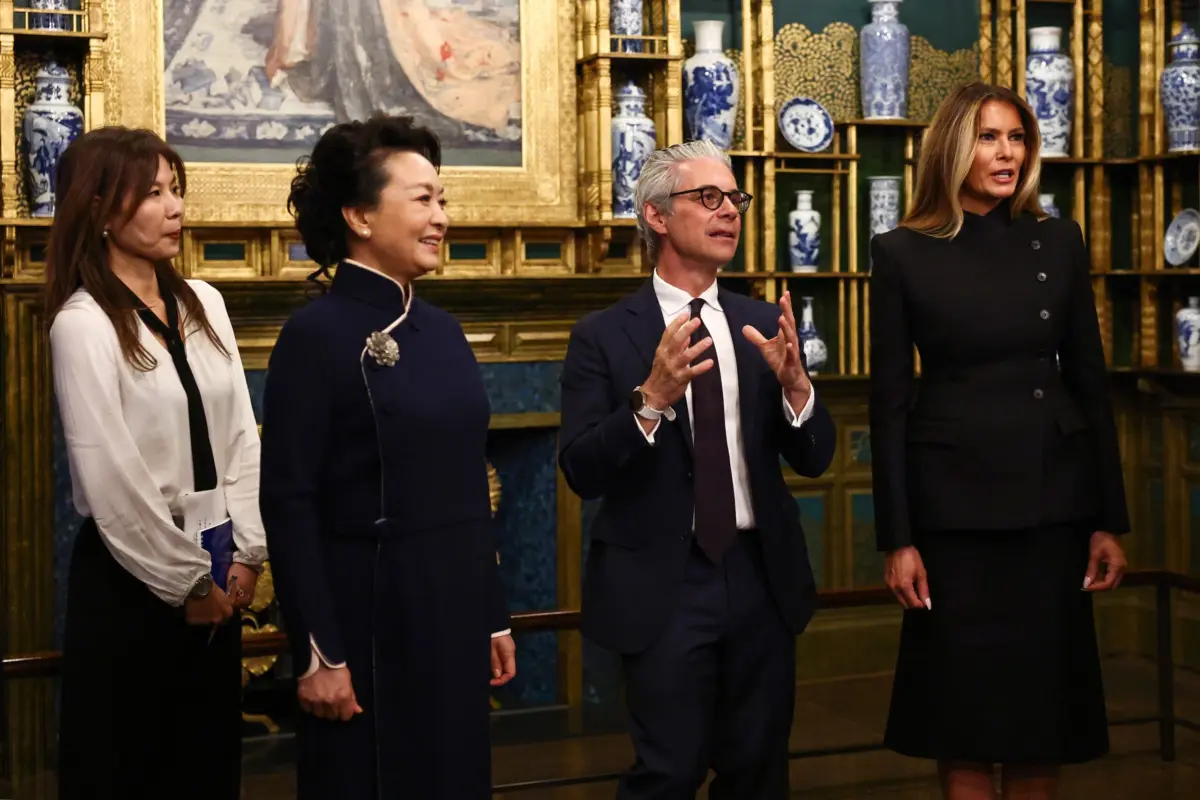
In the realm of international diplomacy, the most significant breakthroughs often occur away from the rigid, high-pressure environments of the Oval Office or formal negotiating chambers. On Thursday, such a moment of cultural bridge-building unfolded in Washington, D.C., as Melania Trump hosted Peng Liyuan, the First Lady of China, for an afternoon of art and history at the Smithsonian’s National Museum of Asian Art. The visit served as a poignant reminder of the power of cultural exchange to soften the edges of complex geopolitical discourse, providing a serene backdrop for the two women to engage in private dialogue while exploring the deep-rooted historical ties between their respective nations.
The tour, which lasted approximately 45 minutes, took the two First Ladies through the corridors of one of the capital’s most esteemed institutions. Their itinerary was carefully curated to emphasize shared history and artistic appreciation, with particular attention paid to the museum’s most iconic installations. Among the highlights of their visit was an extended viewing of the famed Peacock Room—a space that serves as a testament to the long-standing fascination American artists and collectors have held for the aesthetic traditions of the East.
A Historic Setting for Modern Diplomacy
The choice of the Smithsonian’s National Museum of Asian Art for this high-profile meeting was not accidental. As Chase Robinson, the museum’s director, noted in comments to the South China Morning Post, the institution serves as a natural stage for dignitaries navigating the intricacies of high-level international relations. "What better place to introduce the two first ladies to our museum on the occasion of high-level conversations and discussions between our two countries?" Robinson remarked. By positioning the meeting within an environment dedicated to the preservation and celebration of Asian art, the hosts aimed to foster a sense of mutual respect and historical continuity.
The Peacock Room, the centerpiece of the visit, is an architectural and artistic marvel that encapsulates the intersection of Western and Eastern design. Originally commissioned in 1876 and completed in 1877 by the celebrated American painter James McNeill Whistler, the room was designed to showcase the beauty of Chinese porcelain. Its intricate woodwork and vibrant color palette offer a physical manifestation of the 19th-century dialogue between the United States and China.
The room’s provenance is as fascinating as its aesthetic value. It was relocated to the United States in 1904 by the industrialist Charles Lang Freer, a visionary collector who became deeply enamored with Chinese art following his travels to the region between 1910 and 1911. For the two First Ladies, the room served as more than just a decorative space; it acted as a historical lens through which they could view the evolution of Sino-American relations. Reflecting on the significance of the visit, Robinson noted, "I think they were both intrigued by the scale of 19th-century interaction between China and the United States." The encounter highlighted how, long before modern political summits, the exchange of ideas and artistry had already established a profound, albeit complex, connection between the two nations.
Cultural Nuances in Fashion and Protocol
In the meticulous world of diplomatic optics, every detail is scrutinized for symbolic meaning, and the sartorial choices made by the two First Ladies on Thursday were no exception. Melania Trump arrived at the museum in a sophisticated black McQueen tweed jacket, characterized by an asymmetrical collar that many observers noted bore a subtle, respectful resemblance to the traditional Chinese qipao. This nod to Chinese cultural aesthetics was complemented by a matching skirt and black Christian Louboutin heels, striking a balance between high-end Western fashion and a thematic acknowledgment of her guest’s heritage.
Peng Liyuan, a renowned figure in her own right, opted for a traditional navy qipao. Her choice of attire was widely regarded as a graceful representation of her country’s rich sartorial history, maintaining a modest and elegant profile that harmonized with the museum’s curated environment. The visual harmony between the two women—one honoring Chinese tradition through a modern Western silhouette, the other embracing the classic lines of her own culture—provided a poignant visual narrative of mutual respect.
A Day of Symbolic Gestures
The visit to the Smithsonian was part of a broader day of diplomatic activity in Washington. While the First Ladies were engaged in their cultural tour, the focus at the White House shifted toward the formal state dinner and the exchange of symbolic tokens between the two heads of state. During these proceedings, President Donald Trump presented President Xi Jinping with a sculpture of a bald eagle.
The gift was chosen with care, intended to convey a message of national identity and spirit. As the national symbol of the United States and a bird native to the North American continent, the eagle is frequently used in American statecraft to signify sovereignty and resilience. President Trump, in presenting the sculpture, described it as a representation of "the free and soaring spirit of America." This exchange, paired with the afternoon’s visit to the National Museum of Asian Art, underscored a broader diplomatic strategy: balancing the hard power of economic and political negotiation with the soft power of cultural engagement.
The afternoon’s events, from the quiet corridors of the Smithsonian to the grand reception at the White House, illustrated the multifaceted nature of international diplomacy. The Smithsonian visit, in particular, offered a rare glimpse into the personal rapport between the two First Ladies, demonstrating that even in an era of complex and often contentious policy debates, there remains space for common ground. By engaging with the history of the Peacock Room—a room that literally bridges the distance between the industrial ambitions of early 20th-century America and the artistic traditions of the Qing and Ming dynasties—the two First Ladies participated in a long tradition of using cultural institutions to frame the dialogue between their nations.
As the visit concluded, the lasting image was not of political posturing, but of two individuals moving through a space designed to promote understanding. The National Museum of Asian Art, with its commitment to the global appreciation of Asian heritage, proved to be an ideal venue for a moment of quiet reflection, reminding both delegations that the history of their countries is inextricably linked by the shared pursuit of beauty, knowledge, and mutual recognition. This event, while brief, added a significant chapter to the ongoing, century-long conversation between the United States and China, highlighting the enduring role of cultural diplomacy in maintaining the delicate balance of international relations.