
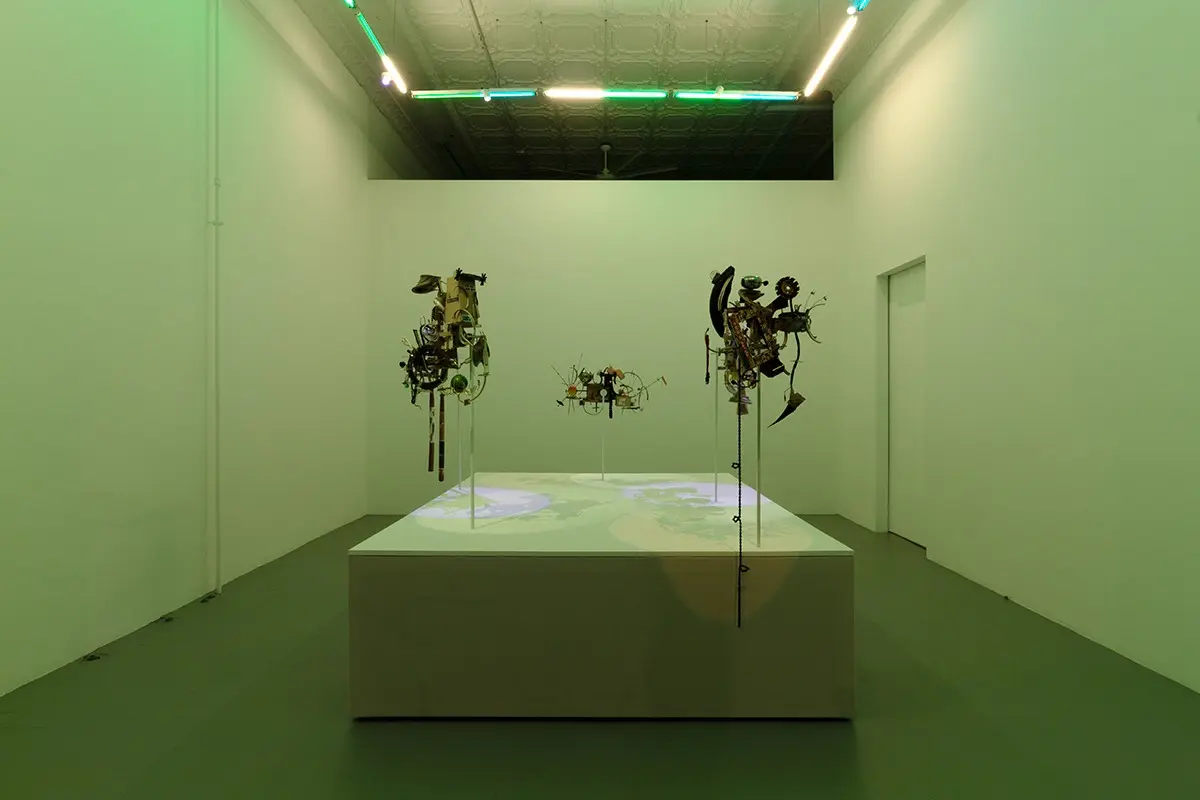
Prairie, the Chicago-based gallery that became a vital incubator for some of the most compelling voices in contemporary art, has announced it will close its doors after nine years of operation. The gallery, which carved out a reputation for identifying and nurturing cutting-edge talent long before they reached the broader institutional spotlight, shared the news on Friday. Its final exhibition, a group show titled “Retrospective,” will serve as the swan song for a space that redefined the possibilities of an artist-run program.
“This will be our last show,” the gallery stated in a post on Instagram, marking the end of an era for a project that has been a cornerstone of Chicago’s alternative art scene since 2017.
A Philosophy Rooted in Ecosystems and Independence
Founded by Tim Mann and Jack Schneider, Prairie was born from a desire to create a space that functioned differently than the traditional commercial gallery model. The name itself was a deliberate choice, intended to honor the native environment that flourished in and around Chicago long before the region underwent the rapid processes of colonization and industrialization. This conceptual grounding was central to the gallery’s identity; it was not merely a white-cube space for commerce, but an intentional ecosystem for ideas.
For nearly a decade, the gallery operated with a philosophy that prioritized artistic integrity over market pressures. As Mann and Schneider often explained, Prairie sought to provide a platform for work that was “free from the pressures of commercial viability.” In an art world frequently driven by the demands of the primary market, art fairs, and the relentless cycle of trend-chasing, Prairie stood as a defiant, quieter alternative—a space where the work was allowed to exist on its own terms.
Beyond the Market: A Legacy of Artistic Impact
While the closure of galleries is a common occurrence in the current economic climate, with many spaces shuttering due to the mounting pressures of rising rents and fluctuating collector appetites, Schneider was quick to clarify that Prairie’s decision was not a product of financial distress.
“We were never a market-oriented space,” Schneider noted in an interview this past Monday. He referenced a phrase coined by his friend and artist Mira Dayal, who has described her own practice as “commercially irreverent.” According to Schneider, that sentiment captures the essence of the gallery’s program perfectly. “We never expected to turn a profit, and we never did. We only ever, through occasional sales, fundraising, and occasional grants, raised just enough money to run the program itself.”
This lack of reliance on the profit motive was not a weakness but a strategic strength. By insulating themselves from the requirement to sustain a commercial business, Mann and Schneider were free to exhibit challenging, experimental, and unconventional works that might have been overlooked by more mainstream institutions. It allowed them to curate with a sense of purpose and intellectual rigor that resonated deeply with the local community and the broader international art world.
Mann added that the decision to close had been in the works for a year. Rather than viewing the shuttering as a failure, the founders characterized it as a deliberate conclusion to a specific chapter. “It is a nice celebratory moment to close on,” Mann said, emphasizing that the end of the physical space is a transition rather than a defeat.
An Incubator for Emerging Talent
Prairie’s most significant legacy lies in its uncanny ability to spot noteworthy talent during the most formative stages of their careers. The gallery functioned as a launchpad for artists who would later go on to achieve significant recognition at the highest levels of the art world.
One of the most prominent examples of the gallery’s foresight is the career of Isabelle Frances McGuire. Her haunting, beguiling sculptures of witches, which commanded significant attention at the recent Whitney Biennial, were first introduced to a wider audience at Prairie. The gallery hosted her inaugural solo exhibition in 2017, providing a crucial platform for her early development.
Similarly, André Magaña, a standout presence at the 2026 edition of MoMA PS1’s Greater New York quinquennial, found an early supporter in the gallery. He held his second-ever one-person exhibition at Prairie in 2019. Beyond these successes, the gallery’s roster reads like a catalog of the most interesting artists currently working in the contemporary sphere, including Kira Scerbin, Craig Jun Li, Max Guy, Katz Tepper, ASMA, ektor garcia, and Amina Ross. By providing these artists with a space to experiment and evolve, Prairie helped set them on the path to the institutional success they enjoy today.
The Influence of the Alternative Space Tradition
Prairie did not emerge in a vacuum. It was established in the studio shared by Mann and Schneider, rooted in a long-standing tradition of “edgy” alternative spaces in Chicago. The founders drew significant inspiration from earlier models of artist-run initiatives in the city, such as New Capital and Queer Thoughts. The latter, which famously operated out of a small apartment in Chicago before relocating to New York to become a major force in the gallery scene, provided a blueprint for how a small, focused project could exert outsized influence on the cultural conversation.
Mann noted that Chicago’s relatively affordable real estate landscape during the gallery’s founding years played a role in their ability to sustain such an ambitious, non-commercial project. By keeping overhead low and keeping the focus on the art and the artists, they were able to create a unique cultural space that occupied a vital niche in the city.
The gallery’s ability to showcase work that didn’t fit neatly into the commercial ecosystem was not just a service to the artists, but a service to the viewers. It challenged audiences to engage with art that was often difficult, site-specific, or purely conceptual—work that demanded time and attention rather than an immediate transaction.
Looking Toward the Future
While the physical space at Prairie is preparing to close, the partnership between Tim Mann and Jack Schneider is far from over. Their shared commitment to the arts remains intact, even as they move away from the day-to-day management of a gallery.
“We want to do curatorial work, just outside the guise of an artist-run space,” Schneider explained. This transition suggests that while the “Prairie” banner may be retired, the collaborative energy that drove it will likely manifest in new, perhaps more expansive forms. Whether through independent curatorial projects, writing, or future collaborations, the duo intends to continue engaging with the art community, carrying forward the same ethos of intellectual curiosity and professional independence that defined their gallery’s nine-year tenure.
As the “Retrospective” exhibition prepares to open, it serves as a final, reflective look at a project that proved, against the odds, that a gallery could be successful without being a business. It stands as a testament to the idea that the most important contributions to the art world are often made by those who are willing to ignore the market and follow their own instincts instead. For Chicago, the closure of Prairie marks the end of an essential chapter, but for Mann and Schneider, it is simply the beginning of the next phase of their ongoing contribution to the contemporary art discourse.