
At the Alte Nationalgalerie in Berlin, a trio of portraits greets visitors to the landmark exhibition "Cassirer: Breakthrough of Impressionism." They are diverse in origin and subject, yet bound by a single, invisible thread: the influence of Paul Cassirer. There is Edgar Degas’s rhythmic Miss La La (1879), Pierre-Auguste Renoir’s luminous Lise with a Parasol (1867), and a 1901 portrait of the dealer’s own daughter, Suzanne Aimée Cassirer, painted by Max Slevogt. These three works—two French, one German—serve as a microcosm of the dealer’s career. Paul Cassirer was not merely a purveyor of fine art; he was the primary engine behind the infiltration of French Impressionism into the German cultural consciousness, a task that required him to balance the radical aesthetics of the avant-garde with the commercial realities of a burgeoning private market.
For too long, the historical narrative of art has attempted to surgically separate the museum from the market, treating canonical collections as if they emerged in a vacuum, untainted by the financial transactions and complex social dynamics that brought them into existence. The Alte Nationalgalerie’s current exhibition, and its accompanying catalog, courageously dismantle this artifice. By tracing the mechanisms by which art crossed borders and changed hands, the curators illuminate a pivotal moment in art history: the shift away from state-sponsored academies and toward the private dealer as the primary arbiter of taste.
While history books often lionize the French dealer Paul Durand-Ruel for his role in championing the Impressionists, his German counterpart, Paul Cassirer, was the essential catalyst for the movement’s success east of the Rhine. Durand-Ruel himself once remarked that Cassirer was exclusively responsible for ensuring that the vibrant, light-drenched canvases of the French school found a home among German collectors. In doing so, Cassirer did more than sell paintings; he fundamentally altered the trajectory of German art, fostering a generation of artists who would eventually push the boundaries of the avant-garde themselves.
The Rise of the Kunstsalon and the New Aesthetic
The late 19th century was a period of intense cultural protectionism in Germany, where the state sought to promote a distinctly "German" national style. Into this climate, Paul Cassirer stepped with an agenda that was unapologetically international. Alongside his cousin Bruno, he founded the Kunstsalon in 1898. By 1901, Paul had assumed sole control, transforming the gallery into a temple of the new. Located in the fashionable Tiergarten district, the gallery was a marvel of modern design, featuring a sophisticated, minimalist interior crafted by the renowned Art Nouveau architect Henry van de Velde.

The physical environment of the gallery was as revolutionary as the art it housed. At a time when the prevailing taste favored the "salon-style" hang—where walls were covered floor-to-ceiling with paintings—Cassirer opted for sparse, single-row arrangements. This allowed the viewer to engage with each piece individually, treating the gallery not as a warehouse, but as a curated space for aesthetic contemplation.
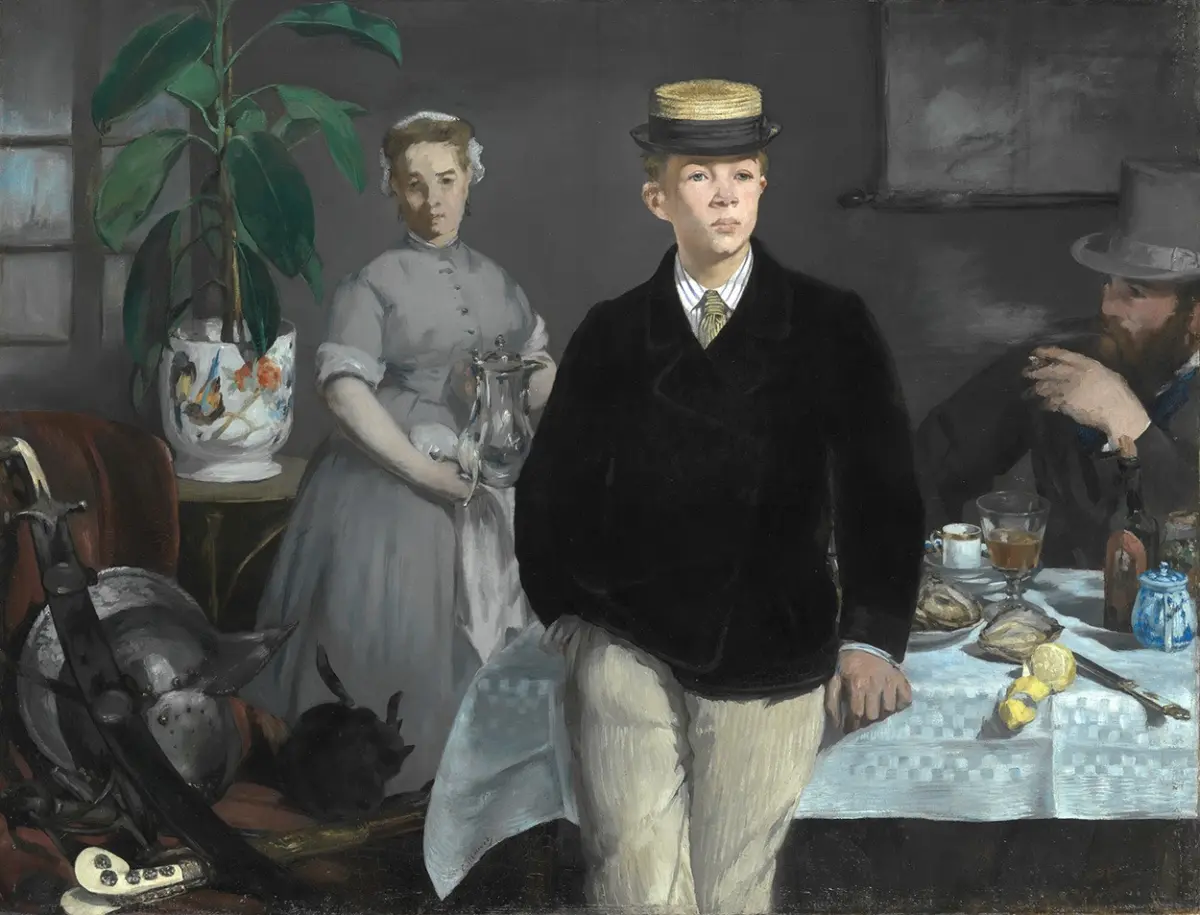
Cassirer’s inventory was a "who’s who" of the revolutionary movements of his day. He exhibited works by Monet, Manet, Cézanne, and van Gogh, alongside the moody, psychological landscapes of Edvard Munch. His motivation was a complex blend of genuine passion and calculated business acumen. A contemporary caricature of the dealer famously quipped, "from Monet and Manet to money," a jab that acknowledged both his role in the rise of Impressionism and his undeniable success as a businessman.
His strategy was methodical. Cassirer used his training in art history to construct a coherent lineage for the Impressionists, showing early, more accessible works alongside radical, groundbreaking pieces. For instance, he exhibited Claude Monet’s 1866 Jar of Peaches—a work defined by its domestic restraint and subtle textures—in the same context as the more explosive Impression, Sunrise (1872). By showing these earlier still-lifes, he gave his patrons a bridge, helping them reconcile the traditional expectations of the past with the radical vision of the future. Similarly, he took on the challenge of exhibiting Edouard Manet’s Déjeuner sur l’herbe (1863), a painting that had previously sparked a public scandal, though it notably remained unsold in his gallery.
Challenging the Nationalist Guard
One of Cassirer’s most enduring tactics was his refusal to be discouraged by slow sales. When a work failed to find a buyer, he simply exhibited it again, betting that persistent exposure would eventually acclimate the public to the new aesthetic. This tenacity reached its zenith in 1914, when he hosted what remains the largest exhibition of Vincent van Gogh’s work ever held, featuring a staggering 151 pieces.

The current exhibition at the Alte Nationalgalerie presents a more modest selection, with only two van Gogh paintings on view. However, these pieces serve as a poignant reminder of the tension between the dealer’s vision and the state’s hesitation. The inclusion of van Gogh’s Boulevard de Clichy (1887)—which Cassirer had previously showcased in 1905 and 1908—alongside Curt Hermann’s Snow-Covered Roofs (1908/09), creates an intentional dialogue. Both urban scenes are characterized by the application of vivid, broken color, providing a visual argument for the profound influence of French technique on German practitioners.
This influence was not welcomed by everyone. In 1911, the landscape painter Carl Vinnen penned a "Protest by German Artists," a manifesto decrying the "un-German" influx of French art. The document gathered 140 signatures from artists who felt their national identity was being diluted by foreign trends. Cassirer did not remain silent; he became a central figure in a counter-manifesto, "Reply to a Protest by German Artists," organized by luminaries like Wassily Kandinsky and Franz Marc, who championed an internationalist perspective.
The political stakes were high. Three years prior to the protest, Hugo von Tschudi, the director of the Nationalgalerie, had been forced out of his position due to his aggressive acquisition of French art through Cassirer. Kaiser Wilhelm II, who favored a rigid, patriotic vision for the national collections, exerted immense pressure to curb these "subversive" acquisitions. The struggle to keep the museum a space for universal artistic exchange, rather than a vehicle for state-mandated nationalism, is a theme that remains uncomfortably resonant in the contemporary era, as museums across the globe—including in the United States—face renewed pressures to align their programming with political agendas.
A Legacy of Transparency
Paul Cassirer’s life ended in tragedy, with his death by suicide during a period of intense personal and professional turmoil. Yet, his legacy is not defined by his final days, but by the indelible mark he left on the cultural landscape. By bringing the avant-garde into the heart of Berlin, he forced a nation to confront the changing nature of art, taste, and the market.

The current exhibition at the Alte Nationalgalerie serves as more than a retrospective of Impressionist masterpieces. It is a necessary exercise in historical transparency. By openly acknowledging the role of the dealer, the financier, and the lobbyist, the exhibition provides a clearer picture of how art history is actually written. It reminds us that every great collection is the result of a series of choices, negotiations, and personal convictions. Cassirer’s story serves as a testament to the fact that the "breakthrough" of any movement is never purely aesthetic; it is always, at its core, a human endeavor, shaped by the people who believe in art enough to stake their reputations—and their fortunes—on it. As we look at the works he once shepherded through the turbulent waters of the early 20th century, we are invited to consider not just the paintings themselves, but the motivations, both spoken and unspoken, that continue to shape the museums of today.