
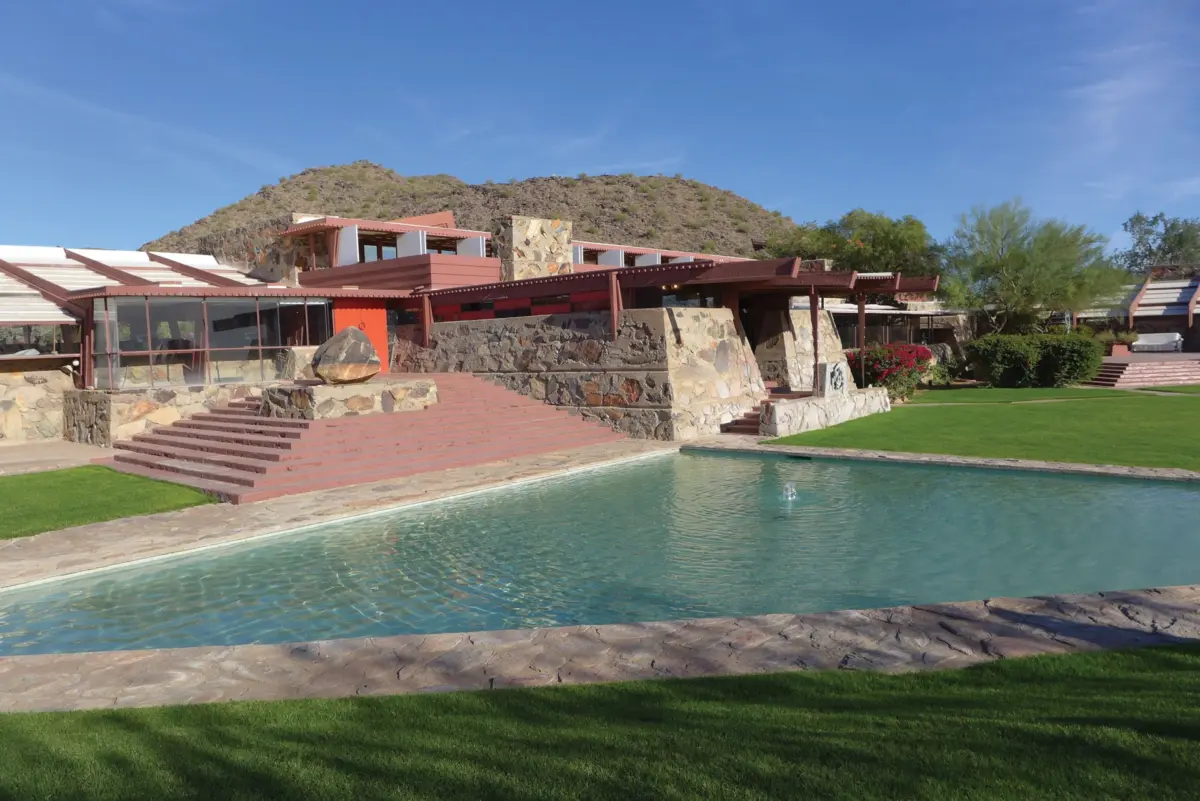
Taliesin West, the iconic Scottsdale, Arizona, desert home and studio of legendary architect Frank Lloyd Wright, has suspended all public operations following a tragic accident that resulted in the death of a visitor on Friday afternoon. The site, a National Historic Landmark and UNESCO World Heritage site, announced that it would remain closed to the public until further notice as local authorities conduct a thorough investigation into the circumstances surrounding the fatality.
The victim was identified as Rogério Renato Mateucci, a prominent academic serving as the rector of the Pontifical Catholic University of Paraná in Brazil. According to reports from the Scottsdale Fire Department, the incident occurred at approximately 2:00 p.m. local time while Mateucci was participating in a group walking tour of the sprawling 491-acre property.
Witnesses and authorities indicated that the tragic event was triggered by severe weather conditions that impacted the Scottsdale area on Friday. Strong, high-velocity winds reportedly dislodged heavy roofing material from one of the structures on the site. Mateucci was struck by the debris, and officials have confirmed that he died instantly. The Scottsdale Fire Department is currently treating the incident as a weather-related accident, noting that no other individuals participating in the walking tour sustained injuries or were otherwise harmed during the event.
Meteorological Context and Safety Alerts
The incident occurred during a period of heightened weather concern in the region. At the time of the tragedy, local television news outlets had issued a "First Alert Weather Day," a designation used by meteorologists to warn the public of impending weather events that have the potential to cause significant disruptions to travel, daily activities, and general safety.
Data provided by the National Weather Service corroborated the severity of the conditions, recording sustained east winds of 22 miles per hour in the Scottsdale vicinity. Perhaps more critically, the area experienced powerful gusts reaching up to 32 miles per hour. While such winds are often managed in modern construction, the unique architectural nature of Taliesin West—a complex designed to integrate seamlessly with the desert environment—presents distinct maintenance and structural considerations, particularly regarding the integrity of roofing materials during extreme gusts.
Foundation Response and Ongoing Investigation
The Frank Lloyd Wright Foundation, which oversees the stewardship and public programming of Taliesin West, has moved quickly to address the aftermath of the tragedy. Joe Spector, the CEO of the Foundation, issued a formal statement expressing the organization’s profound grief.
"The Foundation extends its deepest condolences to the family and loved ones of the individual," Spector stated in comments provided to AZ Family. "No further details will be shared out of respect for privacy and to allow officials to complete their work."
In the hours following the incident, the Foundation utilized its social media platforms to inform the public of the closure, confirming that the Scottsdale Police Department is fully aware of the situation and is leading the investigation. The organization emphasized that the site will remain shuttered to all visitors until further notice, prioritizing the needs of the investigation and the privacy of those affected by the loss.
As the investigation proceeds, questions regarding the safety protocols and structural maintenance of the historic site are expected to be addressed by local authorities. For now, the focus remains on the tragic loss of Mateucci, whose death has sent shockwaves through both the architectural community and the academic circles of Brazil.
A Legacy in the Desert
The tragedy marks a somber moment in the history of Taliesin West, a site that has served as a center for architectural education and public appreciation for nearly nine decades. Frank Lloyd Wright, one of the most influential architects in American history, first began construction on the studio and home in 1937. Seeking a winter refuge from the harsh winters of Wisconsin, where he had established his primary Taliesin estate, Wright spent the remainder of his life refining the Scottsdale property until his death in 1959.
The architecture of Taliesin West is renowned for its organic design, characterized by the use of local desert stone and a complex system of sloped roofs and expansive terraces. Wright famously designed the structures to mirror the rugged beauty of the McDowell Mountains, which form the backdrop of the estate. The design philosophy emphasized the "indoor-outdoor" lifestyle, with many areas of the campus being intentionally open to the elements to foster a connection with the Sonoran Desert.
The property’s historical significance is profound. By 1940, only three years after construction began, the complex had garnered enough international acclaim that New York’s Museum of Modern Art (MoMA) mounted an exhibition featuring a scale model of the property. In 1947, further photographic displays solidified its status as a pinnacle of American modernist architecture.
For many decades, the Foundation has operated the site as an educational facility and a destination for architectural enthusiasts from across the globe. Thousands of visitors traverse the pathways of Taliesin West each year, participating in the very types of walking tours that were underway when Friday’s accident occurred.
The Path Forward
The sudden closure of Taliesin West serves as a stark reminder of the challenges inherent in preserving and operating historic structures, particularly those built with unconventional materials and designs that reflect a different era of construction. The Foundation is now tasked with balancing its mission of public education and historic preservation with the immediate necessity of ensuring the safety of all who enter the gates of the estate.
As of the latest updates, no date has been set for the reopening of the property. The Scottsdale Police Department continues to gather information, and the Foundation has committed to full cooperation with local officials as they seek to understand exactly how the roofing material was compromised.
For the academic community in Paraná, Brazil, the loss of Rogério Renato Mateucci is felt deeply. As the rector of the Pontifical Catholic University, Mateucci was a significant figure in higher education, and his presence in Arizona for a tour of such a culturally significant site speaks to his appreciation for design and history. The international community, along with the staff at the Frank Lloyd Wright Foundation, remains in a state of mourning as the investigation into this rare and tragic accident continues.
The silence currently enveloping the grounds of Taliesin West stands in contrast to the usual activity of a busy tourist season, marking a period of reflection for the institution as it navigates the aftermath of an event that has irrevocably changed the atmosphere of the historic desert home.