
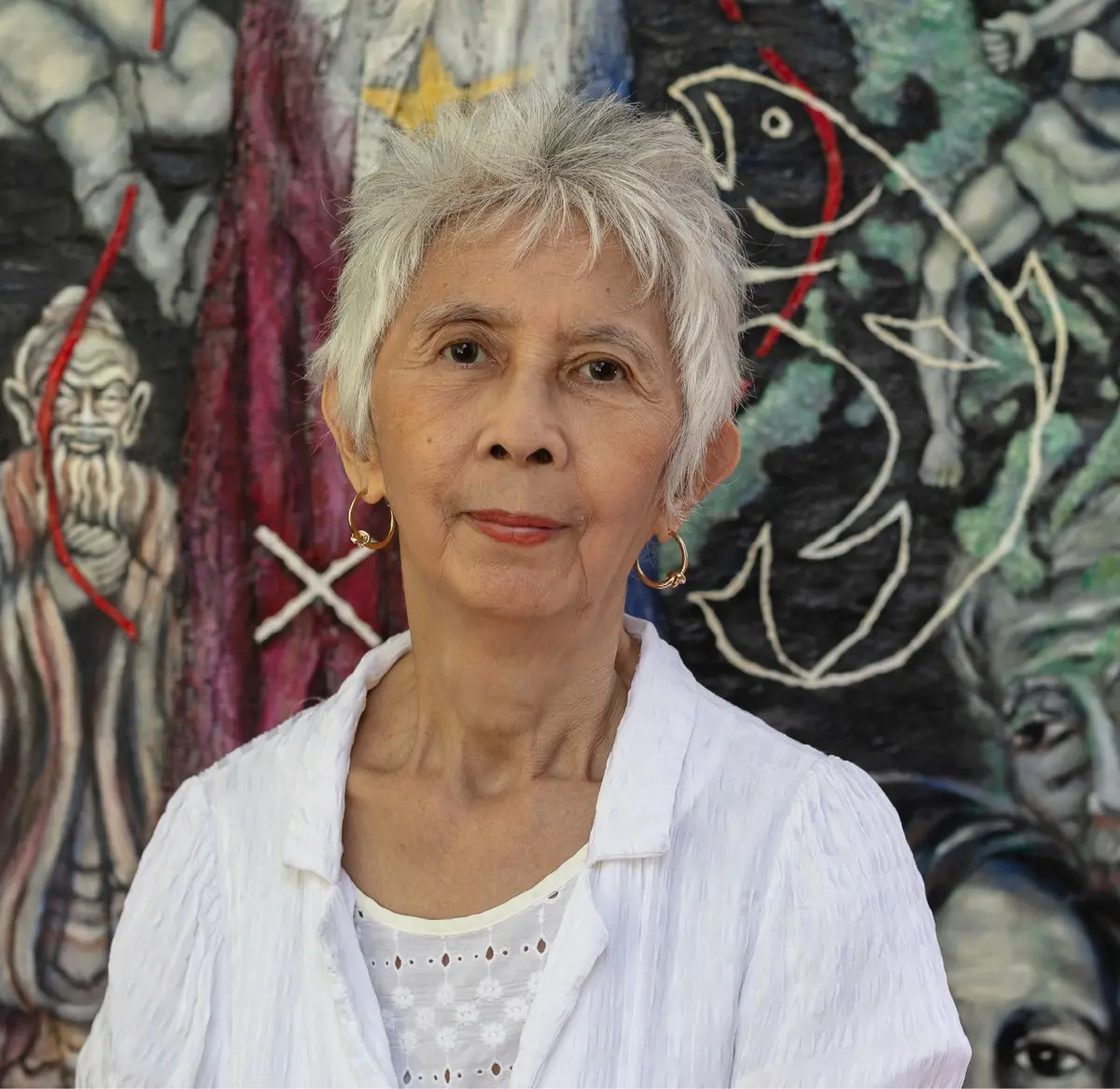
At the age of 77, the trailblazing Filipina artist Imelda Cajipe Endaya has been conferred the Order of National Artists of the Philippines for Visual Arts, marking a historic milestone in the nation’s cultural history. This prestigious recognition, the highest honor bestowed upon Filipino citizens for their contributions to the arts, acknowledges an extraordinary career spanning over five decades. Most significantly, Endaya’s induction makes her the first woman to ever receive the award in the Visual Arts category, a fact that has resonated deeply across the Philippine art community and beyond.
The Order of National Artists was established in 1972 under Proclamation No. 1001 to identify and celebrate those who have elevated the Filipino aesthetic and enriched the national consciousness. The selection process is rigorous, involving recommendations from the Cultural Center of the Philippines (CCP) and the National Commission for Culture and the Arts (NCCA). On September 1, the government officially recognized Endaya, solidifying her status as a titan of Philippine contemporary art.
Five Decades of Socially Engaged Art
The accolade serves as a long-overdue validation of Endaya’s pioneering efforts in feminist and socially engaged art. Since the 1970s, her practice has functioned as both a mirror and a critique of the Philippine sociopolitical landscape. Through a diverse range of mediums—including social realist paintings, intricate printmaking, and expansive installations—Endaya has consistently interrogated the fractures within society.
Her work does not shy away from the difficult realities of the Filipino experience. She has spent her career dissecting the complexities of gender and labor inequality, cultural identity, the nuances of migration, and the precarious nature of life for diasporic communities. Her art is not merely aesthetic; it is a form of advocacy. By giving visual form to the struggles of the marginalized, particularly women and the working class, she has carved out a unique space in the history of Philippine modernism.
Discussing her creative process, Endaya noted the importance of grounding her work in the tangible reality of the world around her. In an interview with Artforum regarding her exhibition at the Silverlens gallery in New York, she remarked, “I wanted to insert a part of my reality into the painting.” This philosophy explains the raw, visceral quality of her pieces, which often incorporate found objects and domestic imagery to bridge the gap between high art and the lived experiences of everyday Filipinos.
A Career of Institutional Impact
Endaya’s influence extends far beyond the canvas. Throughout her prolific career, she has balanced her role as an artist with the duties of a writer, curator, and educator. Her commitment to the institutional growth of the arts is evident in her extensive curriculum vitae. She was a key figure in the Philippine Association of Printmakers during the mid-1970s, a formative period for the local graphic arts scene. Furthermore, her tenure on the NCCA Committee on Visual Arts from 1995 to 2001 allowed her to shape policy and support the broader artistic community.
Perhaps her most lasting contribution to the organizational landscape of Philippine art was her role as a cofounder of Kasibulan, a collective of women artists dedicated to advancing gender equality in the creative sector. This collective has been instrumental in providing a platform for female voices that have historically been sidelined or ignored by the patriarchal structures of the art world. Additionally, her work with Pananaw: Philippine Journal of Visual Arts helped professionalize art criticism and documentation in the country, ensuring that the history of Filipino creativity is recorded with the rigor and respect it deserves.
A Legacy of "Refusal and Hope"
The recognition of her life’s work was perhaps most tangibly manifested in her 2022 landmark retrospective, Pagtutol at Pag-asa (Refusal and Hope), held at the Cultural Center of the Philippines. The exhibition served as a comprehensive survey of her evolution as an artist and an activist, bringing together decades of work that challenged the status quo. The title itself—Refusal and Hope—captures the duality of her practice: a refusal to accept injustice and a steadfast hope in the possibility of change.
Her reach has also been notably international. Her work is held in prestigious public and private collections, including the Bangko Sentral ng Pilipinas, the Cultural Center of the Philippines, the Philippine National Art Gallery, the National Gallery of Singapore, the Metropolitan Museum Manila, the Okinawa Prefectural Museum, and the Fukuoka Asian Art Museum. Recent years have seen a resurgence of international interest in her work; in 2026, her pieces were prominently featured at S.E.A. Focus in Singapore and Art Basel Hong Kong, signaling that her influence continues to transcend geographical boundaries.
Breaking the Glass Ceiling
The announcement of her status as a National Artist has prompted widespread celebration, not only for the merit of her work but for the symbolic weight of the honor. By becoming the first woman to receive the award in the Visual Arts, Endaya has effectively shattered a glass ceiling that has stood for over half a century. The gender disparity within the highest tiers of the National Artist awards has long been a subject of discussion among scholars and observers of the Philippine cultural sector.
In a statement following the announcement, Endaya expressed profound gratitude for the honor, though she was quick to pivot the conversation toward the future of the field. Her response reflects the selfless nature of her career—always looking for ways to foster the next generation. “People say I have just broken a glass ceiling,” she said. “There should be more successful women artists after me.”
For the younger generation of Filipina artists, Endaya’s win is more than a personal triumph; it is a beacon of possibility. It validates a lifetime of work that prioritizes social conscience over commercial viability and highlights the essential role that women have played in shaping the nation’s cultural narrative. As the Philippine art scene continues to evolve, the legacy of Imelda Cajipe Endaya remains a foundational pillar, reminding the country that art, at its most potent, is a tool for liberation and a testament to the resilience of the human spirit. With this recognition, her contributions are now permanently etched into the canon of Philippine history, ensuring that the dialogue she sparked decades ago will continue to inspire and challenge future generations for years to come.