
This year marks a pivotal juncture for Independent, the art world’s perennially favored contemporary art fair, and its sister exhibition, Independent 20th Century. As the fair landscape in New York undergoes a period of recalibration, Independent has demonstrated a distinct strategy of expansion and refinement. Following a significant transition earlier this year—when the contemporary fair moved from its long-standing home at Spring Studios in Tribeca to the expansive, industrial backdrop of Pier 36 on the Lower East Side—the 20th Century edition is now embarking on its own ambitious relocation.
Opening to the public today, Independent 20th Century has traded its former Lower Manhattan venue for a site of immense cultural gravitas: the 1960s brutalist masterpiece on Madison Avenue and East 75th Street designed by Marcel Breuer. Once the iconic home of the Whitney Museum of American Art and currently serving as the headquarters for Sotheby’s, the building offers a stark, sophisticated contrast to the traditional "white cube" tent structures that dominate the global art fair circuit.

An Evolution of Scale and Intimacy
The move to the Breuer building has provided the fair with more than just a prestigious address; it has facilitated a necessary structural evolution. Independent 20th Century has seen its participating exhibitor count swell from 31 in 2025 to 57 this year. Despite this nearly two-fold increase in size, the organizers have managed to maintain the fair’s hallmark intimacy. By leveraging the unique layout of the Breuer space, the fair mimics a museum experience more closely than a standard commercial event. Visitors are treated to a series of discrete, carefully curated "galleries" that foster focused engagement, a deliberate departure from the exhausting, corridor-heavy layouts found in many of its competitors.
This deliberate approach to scale serves as a quiet rebuke to the "bloated" nature of larger regional events. While the Armory Show, which runs concurrently, attempts to capture the entire market with an overwhelming roster of over 230 exhibitors, Independent 20th Century doubles down on a more manageable, viewer-friendly philosophy. It suggests a growing fatigue among collectors and curators toward the sheer volume of contemporary fair programming, positioning Independent as a sanctuary for those seeking a more deliberate, thoughtful viewing experience.

Redefining the Art-Historical Canon
While New York’s competitive ecosystem includes established giants like TEFAF and the ADAA—both of which maintain strong footprints in historical work—Independent 20th Century has carved out a specific, niche focus. The fair concentrates on art produced in the century between 1900 and 2000, with an explicit mandate to challenge and expand the traditional art-historical canon. This mission aligns with a broader, systemic impulse within the global art world toward greater inclusivity.
For years, the market has been criticized for its historical blind spots, often favoring a Western, male-dominated narrative. In response, recent museum exhibitions, international biennials, and auction house sales have begun to correct this, placing increased emphasis on the contributions of female artists, outsider artists, queer practitioners, and the vast, under-represented creative output of the Global South. Independent 20th Century acts as a commercial reflection of this academic shift, providing a platform where these voices are not merely added to the periphery but are placed at the center of the conversation.

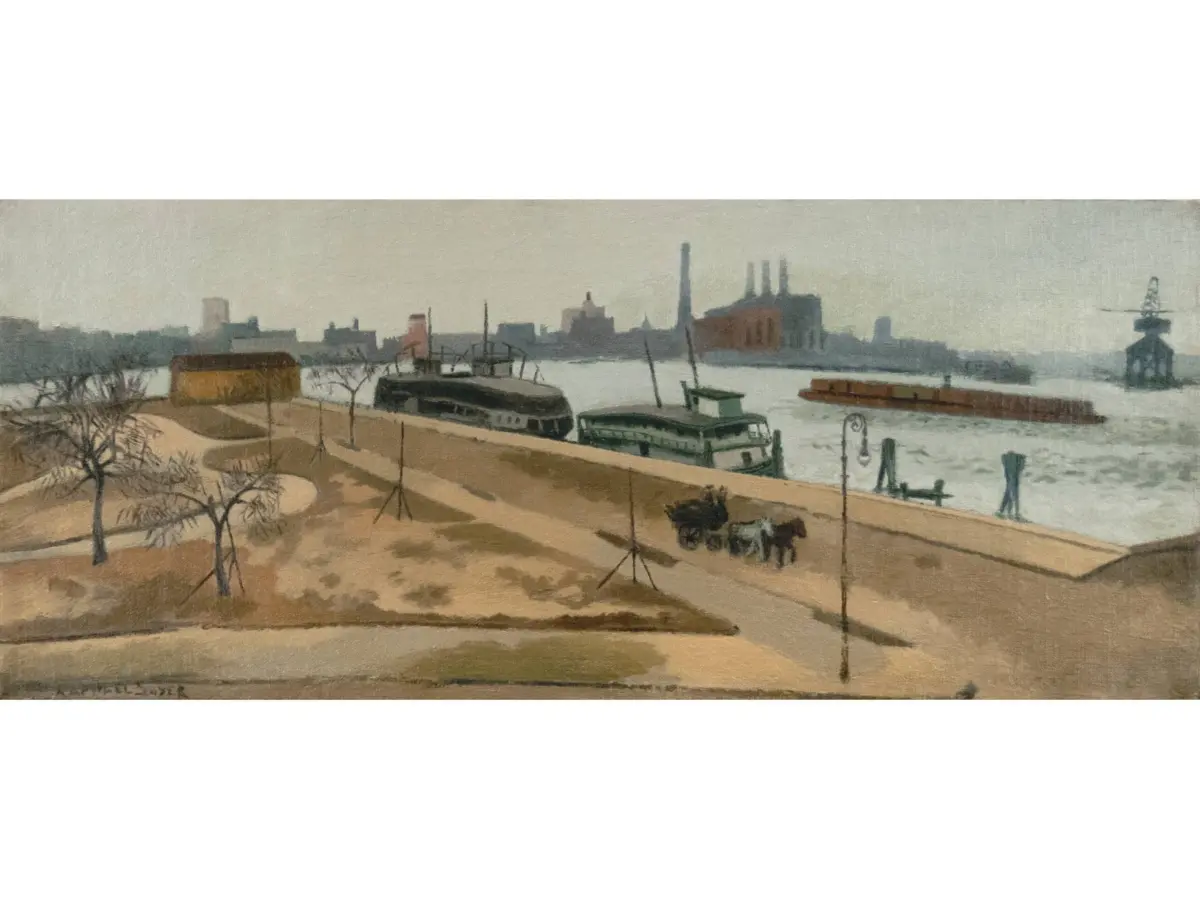
The fair is equally adept at disrupting the rigid boundaries that typically separate the "historical" from the "contemporary." It is not uncommon to find booths that juxtapose vastly different temporal and stylistic movements. At the fair, visitors might see the conceptual rigor of Jenny Holzer, presented by Sprüth Magers, or works rooted in Relational Aesthetics at Esther Schipper, occupying the same spatial orbit as the high-modernist works of Picasso, showcased by John Szoke, or the evocative social realism of Raphael Soyer at Forum Gallery. This fluidity encourages a cross-pollination of ideas, prompting viewers to consider how contemporary practice is perpetually in dialogue with its precursors.
Standout Presentations and Curatorial Depth
The caliber of the presentations this year is particularly high, marked by a commitment to deep research and thematic coherence. One of the most anticipated highlights is "Black Soho," a collaborative effort curated by the galleries Ryan Lee and Salon 94. The exhibition offers a compelling window into the vibrant, often overlooked creative energy of New York City between 1961 and 1984. It brings together a powerful roster of African-American artists—including Emma Amos, Jean-Michel Basquiat, Camille Billops, Frederick J. Brown, Vivian Browne, Ed Clark, David Hammons, and Norman Lewis—whose work defined a specific cultural moment of resistance and innovation in the city.

In a similar vein of historical recovery, the gallery Berry Campbell is dedicating its booth to the women artists of the Stable Gallery, which operated between 1953 and 1970. The presentation spotlights key figures such as Elaine de Kooning, Joan Mitchell, Charlotte Park, and Janice Biala, reasserting their influence on the development of mid-century abstraction. The presence of Joan Mitchell’s work is a significant draw; she is also featured in a thoughtful pairing with the artist Kimber Smith at Bueno & Co. The Mitchell works on display here represent some of the most significant and high-value items available at the fair, further cementing her status as a titan of the era.
The solo booth presentations provide an even more granular look at the careers of individual artists. Nahmad Contemporary has curated a display of works by the visionary Luciano Fontana. Rather than focusing solely on his iconic slashed canvases, the presentation highlights his earlier, experimental work involving punctured surfaces, Murano glass, and sand-sprinkled compositions. Elsewhere, Alison Jacques offers a deep dive into the surrealistic output of the self-taught artist Bona de Mandiargues (1926–2000), a figure whose work bridges the gap between outsider art and the European avant-garde.

Furthermore, Mitchell-Innes & Nash is presenting a cohesive group of works by the conceptual collective General Idea. Known for their darkly humorous, media-savvy, and deeply political interventions, the collective’s work resonates with contemporary audiences as much today as it did during their active years, offering a biting commentary on the commodification of the art world itself.
As the fair continues to bridge the gap between historical scholarship and the demands of the contemporary market, it reinforces the value of its new, museum-adjacent home. By moving into the Breuer building, Independent 20th Century is signaling that it is not merely a venue for trade, but a site for the meaningful reassessment of the 20th century’s creative legacy.

The Independent 20th Century art fair remains open to the public through September 27 at 945 Madison Avenue in New York, offering a unique opportunity to engage with art history in a setting that is as structurally significant as the work on its walls.