
Untangling the Provenance of a Pissarro
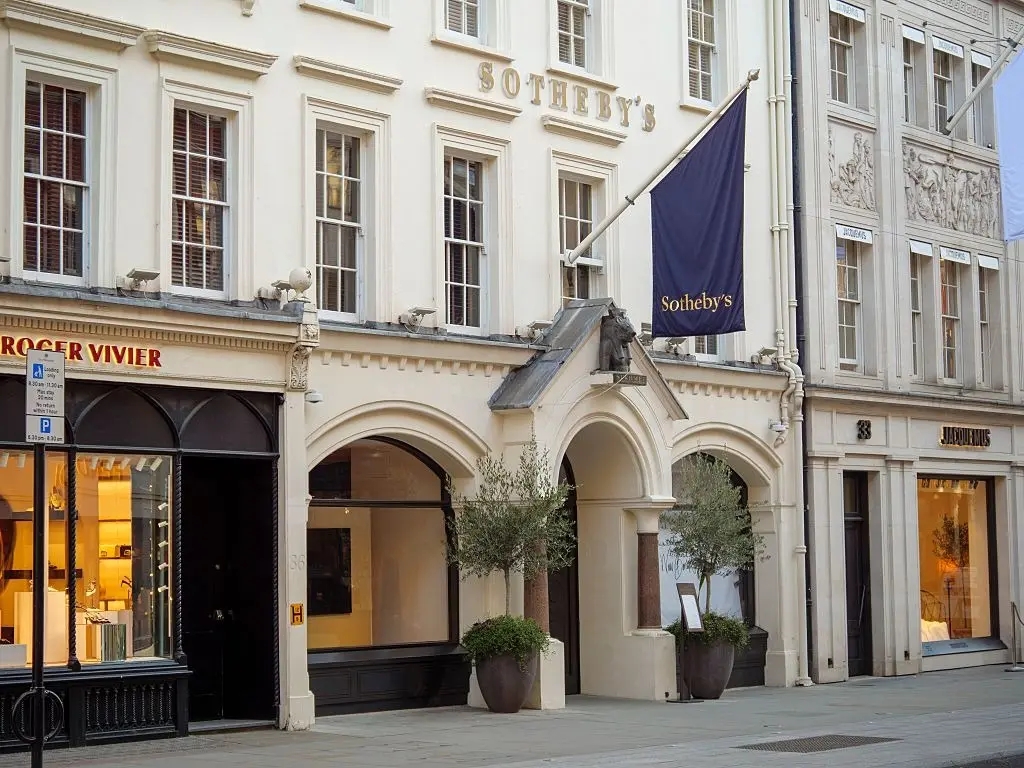
The provenance of a 1902 Camille Pissarro painting has become the center of a complex legal dispute in a Paris courtroom, highlighting the persistent difficulties in resolving claims related to Nazi-looted art. The work in question, Darse de pêche et bassin Duquesne (Fishing Dock and Duquesne Basin), was sold at a Sotheby’s auction in London on June 25, 2024. Descendants of the original Jewish collector, Salomon Flavian, are now seeking to annul the sale, alleging that the piece was looted during the Nazi era and should have never entered the open market.
The legal proceedings have become notably murky due to conflicting narratives regarding ownership. Sotheby’s has mounted a defense based on the assertion that two other relatives of Flavian—who are not part of the current lawsuit—had previously signed away their ownership claims. These individuals were represented by the Toronto-based Mondex Corporation, a firm that specializes in heritage recovery. According to reports from The Art Newspaper, members of the Flavian family who were not signatories to that settlement were reportedly unaware of the sale until it had already occurred.
Adding a layer of profound contradiction to the proceedings, Mondex Corporation has reportedly claimed in court that the painting was never looted by the Nazis. This stance creates a significant logical gap: if the work was not considered stolen property, it remains unclear why the firm would have brokered a financial settlement with the heirs in the first place, as such settlements are typically predicated on the recognition of a legitimate claim to property seized during the Holocaust. Furthermore, the venue of the trial itself has become a point of contention. Lawyers for Sotheby’s have argued that the case lacks standing in France, noting that the transaction took place in London and that the involved parties have no substantive connection to the French legal jurisdiction.
A Historic Milestone for Imelda Cajipe Endaya
In a landmark moment for the Philippine arts scene, 77-year-old artist Imelda Cajipe Endaya has been named a recipient of the Order of National Artists of the Philippines for Visual Arts. First established in 1972, this prestigious honor recognizes individuals who have made significant contributions to the cultural heritage of the country. Endaya is the first woman to receive the award in this specific category, a milestone she acknowledges with both pride and a call for continued progress.
Endaya’s career, spanning several decades, has been defined by her dedication to examining the complex social fabric of the Philippines. Through a diverse range of media, including painting, printmaking, and installation art, she has consistently interrogated issues of gender inequality, labor rights, migration, and the impact of globalization on local communities. In a statement following the announcement, Endaya reflected on the significance of the award, stating, "People say I have just broken a glass ceiling. There should be more successful women artists after me." Her recognition serves as a testament to the power of art to catalyze social dialogue and challenge systemic disparities.
Global Cultural Policy and Institutional Challenges
The global arts community is currently navigating a series of high-stakes political and economic pressures. In Germany, Culture Minister Wolfram Weimer has issued a stern warning regarding the distribution of a significant federal funding package. The German government has proposed a €2.9 billion ($3.3 billion) investment to support the Berlin arts scene over the next decade. However, Weimer has cautioned that these funds must not be used to prop up cultural policies that threaten to systematically exclude Jewish artists. He emphasized that the government reserves the right to withdraw subsidies if institutional practices fail to uphold the necessary standards of inclusivity and non-discrimination.
Meanwhile, in the Philippines, a coalition of writers, artists, and designers has mobilized to protest a proposed U.S.-led AI manufacturing hub, known as Pax Silica. The group has voiced concerns over the impact of such industrial developments on local creative ecosystems and the broader cultural landscape. These protests underscore a growing tension between rapid technological expansion and the preservation of indigenous cultural spaces.
In the United States, the San Francisco art community is grappling with the recent closure of several prominent art schools. In the absence of traditional academic infrastructure, independent, artist-led initiatives are stepping in to fill the void. Notable examples include the "Present Company" project, an experimental education initiative held this summer at the Headlands Center for the Arts in West Marin, and the expansion of educational programs at the Mission District’s Southern Exposure. Both organizations are providing tuition-free instruction and, in some cases, offering stipends to participants, signaling a grassroots movement to democratize art education in the region.
In South America, the cultural sector is facing a different kind of challenge. Hundreds of arts and culture workers recently staged protests in Colombia to oppose government plans to slash the national cultural budget by 30 percent. Demonstrators argue that such drastic cuts would cripple the country’s artistic infrastructure and jeopardize the livelihoods of countless creators who rely on state support to maintain programming and community engagement.
Architectural Triumphs and the "Cursed Island"
The Fondation Beyeler in Switzerland has recently unveiled a significant expansion designed by the renowned architect Peter Zumthor. The project includes a new gallery, a cultural space, and an office building, all integrated into a sprawling landscape of roughly 108,000 square feet of gardens. The expansion represents a major architectural investment intended to enhance the visitor experience and provide more capacity for the foundation’s growing collection.
As the Fondation Beyeler celebrates its growth, Paris is preparing for a much more contentious opening. Next month, the city will welcome a new art center called Le Large, situated on the Île Seguin, an island in the Seine River. The island has long been a site of frustration for real estate developers and arts organizations; it served as the headquarters for Renault car manufacturing until 1992, and in the decades since, numerous ambitious cultural projects—including a much-discussed attempt by collector François Pinault—have failed to materialize there.
The site has acquired such a reputation for ill fortune that some have dubbed it the "cursed island." In an unconventional effort to overcome this history, Laurent Dumas, the collector and developer behind Le Large, reportedly sought to cleanse the site of "negative energy." According to a report in Le Monde, Dumas employed a diverse array of consultants, including a Native American leader, a shaman, and a voodoo priest, to address the lingering "spirit forces" he believes have hindered previous developments. "I’m extremely sensitive to spirit forces," Dumas told the publication. Whether these efforts will translate into long-term stability for the center remains to be seen. The public will have its first opportunity to judge the space on October 17, when Le Large debuts with the exhibition "Moteur imaginaire," curated by Cecilia Alemani. The exhibition will serve as a litmus test, not only for the quality of the art being presented but for the viability of a location that has, until now, proven notoriously difficult to tame.