
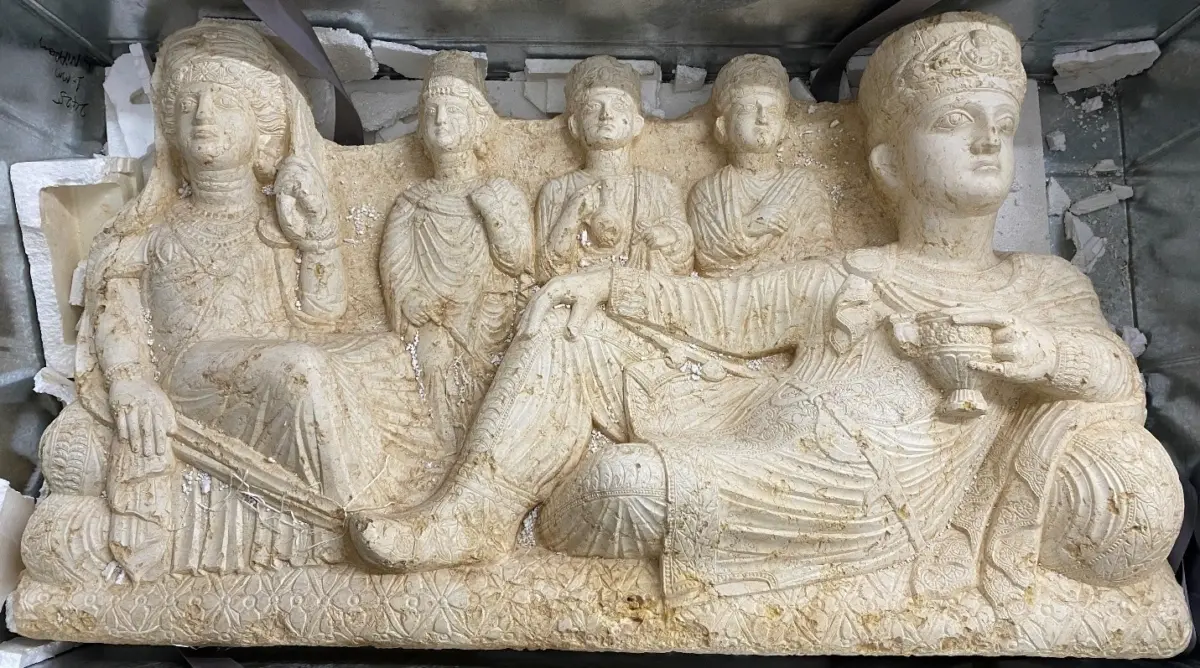
In a significant move toward the preservation of cultural heritage and the restoration of national treasures, New York authorities announced on Wednesday the successful repatriation of 36 antiquities to Syria. The collection, which boasts a cumulative valuation exceeding $5 million, includes artifacts of profound historical and artistic importance, most notably a rare stone relief that was violently looted from the ancient site of Palmyra.
The announcement, spearheaded by Manhattan District Attorney Alvin L. Bragg, Jr., underscores the ongoing commitment of the Manhattan District Attorney’s Antiquities Trafficking Unit to dismantle the global black market for stolen heritage. The recovered items represent a cross-section of Syrian history, spanning eras from the Roman occupation to the late antiquity period, and their return marks the conclusion of years of intensive investigative work.
The Role of Georges Lotfi and the Trafficking Web
Among the most significant portions of the recovered shipment are 14 "extraordinary" mosaics, which investigators describe as having been pilfered from a Roman-era villa in Syria. The provenance of these mosaics is inextricably linked to the disgraced antiquities dealer Georges Lotfi. A figure who once operated as a trusted source for the Manhattan District Attorney’s office, Lotfi’s fall from grace represents one of the most dramatic developments in recent art crime history.
Once considered an authority on Middle Eastern antiquities, Lotfi is now a fugitive. In 2022, he was officially charged with criminal possession of stolen artifacts taken from Syria and Lebanon. Currently, he remains a target of New York authorities and is the subject of an Interpol red notice. The discovery of these mosaics, which were seized from a storage unit owned by Lotfi in 2021, highlights the sophisticated, albeit illicit, supply chains that move stolen heritage from conflict zones into the hands of private collectors and auction houses in the West.
The most prized item among the seized artifacts is a monumental section of flooring dating to the 3rd century BCE. The intricate mosaic depicts the wedding of the god Telete and Eros, surrounded by the presence of Aphrodite and the Three Graces. Its recovery from a dark, nondescript storage locker in New York stands in stark contrast to the grandeur and historical significance the piece held in its original setting.
The Tragedy of Palmyra
Perhaps the most poignant piece in the returned collection is a limestone relief originating from the desert city of Palmyra. The sculpture, which weighs in excess of 1,000 pounds, features a reclining male figure attended by women and children, a classic motif in the funerary art of the ancient city. Dating to the late 2nd century CE, the relief was originally designed for a burial chamber, serving as a silent witness to the rituals and lives of the Palmyrene people.
Manhattan investigators believe the relief was brutally hacked from the wall of a tomb by looters long before the city was famously ravaged by ISIS between 2015 and 2017. Despite the destructive nature of its removal, the figures themselves remained miraculously intact. The sculpture’s journey—from the walls of a Syrian tomb to the black market in Dubai, and finally into the hands of illicit dealers before its seizure—is emblematic of the thousands of artifacts currently caught in the gears of the illegal antiquities trade.
The return of this relief to the Syrian people is not merely a bureaucratic victory; it is a symbolic restoration of a history that has been systematically dismantled by both looters and the forces of conflict.
The Metropolitan Museum of Art and Ongoing Scrutiny
While the repatriation of the 36 items to Syria serves as a major success for the District Attorney’s office, the scope of the office’s broader investigation into the New York art market continues to widen. In conjunction with the announcement of the Syrian repatriation, District Attorney Bragg revealed that his office had seized 13 additional pieces from the Metropolitan Museum of Art.
These seizures are part of a larger, years-long initiative that has seen the Metropolitan Museum of Art surrender more than 402 antiquities since 2017. The estimated value of these recovered items is staggering, totaling more than $98.7 million. These developments have placed the museum, one of the world’s most prestigious cultural institutions, at the center of an uncomfortable reckoning regarding the ethical standards of its past acquisitions.
The relationship between the Metropolitan Museum of Art and the Manhattan D.A.’s office has evolved from one of scrutiny to one of collaboration. In July, the museum issued a statement framing the seizures as a necessary, cooperative effort to cleanse its vast collection of items that were acquired through unethical or illicit means.
Lucian Simmons, who leads the Met’s dedicated team of 12 provenance experts, has been vocal about the museum’s shift in policy. “The Met doesn’t want any stolen art in our collection,” Simmons stated. He emphasized that the museum has found the District Attorney’s office to be an “invaluable partner” in this corrective work. According to Simmons, the D.A.’s office possesses specialized capabilities—including access to intelligence and documentation—that allow them to unlock information that would otherwise remain inaccessible to the museum’s own researchers.
A Global Effort Toward Restitution
The seizure of these artifacts from a major institution like the Met, coupled with the repatriation of the Syrian items, highlights the complexity of the current landscape. Museums are increasingly under pressure to account for every object in their possession, particularly those with origins in regions that have suffered from geopolitical instability, war, or colonial-era extraction.
For countries like Syria, which have faced the near-total destruction of many archaeological sites, the return of these artifacts provides a rare opportunity to reclaim a fragmented identity. The work of the Antiquities Trafficking Unit has effectively transformed the New York art market, sending a clear message to dealers, auction houses, and private collectors that the era of "no-questions-asked" collecting is drawing to a close.
As the investigations continue, the focus remains on the provenance of every item and the ethics of possession. The 36 items currently returning to Syria represent more than just archaeological data or monetary value; they are a fragment of a national narrative that is slowly being reassembled. Whether through the pursuit of individuals like Georges Lotfi or the audit of world-class collections, the efforts in Manhattan are proving that even decades later, the pursuit of truth regarding these artifacts remains a vital imperative for the global community.
The repatriation of these pieces serves as a reminder that the story of an artifact does not end when it is smuggled across a border. Through the diligent work of investigators and the shifting priorities of cultural institutions, these silent witnesses to history are finally beginning their long journey home.