
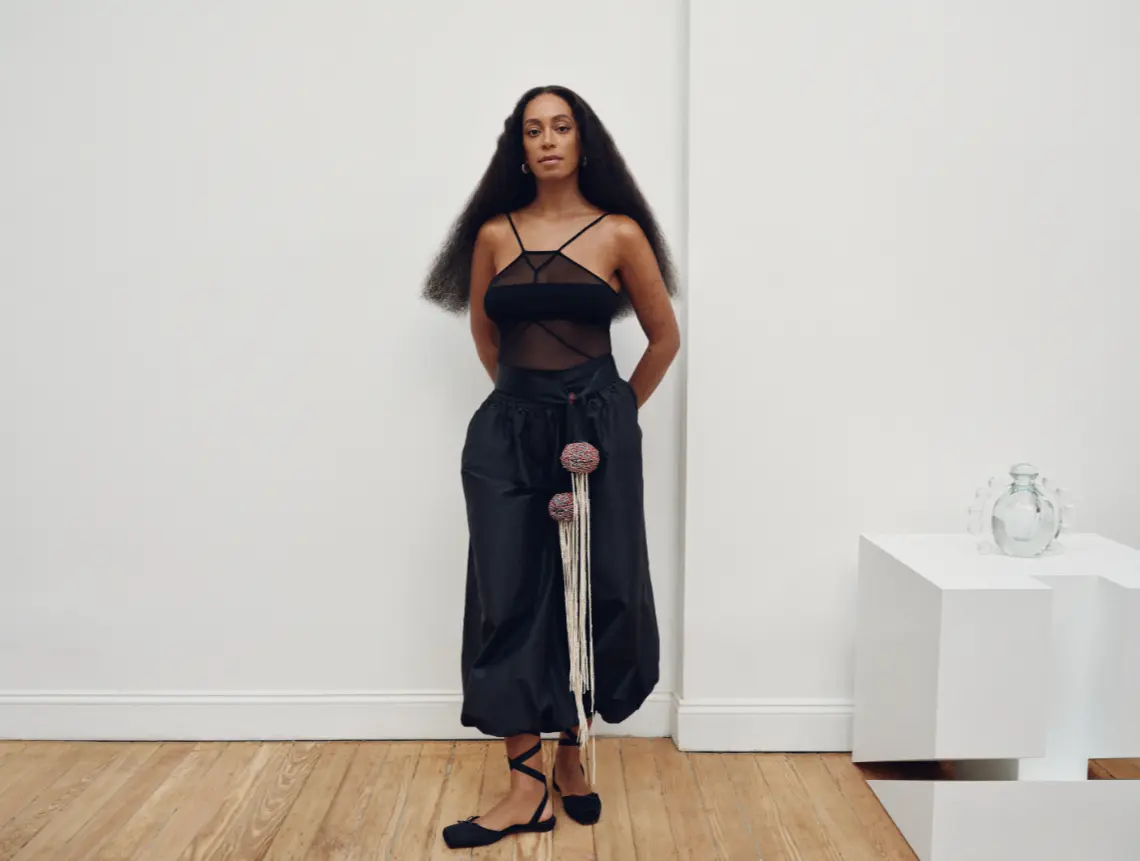
Solange Knowles, the multi-disciplinary artist and musician whose career has long transcended the boundaries of traditional pop music, is set to make a significant mark on the New York City public art landscape. Later this week, Knowles will unveil a large-scale sculpture situated on the High Line, the celebrated elevated park that has become a premier venue for contemporary art. The installation is part of an expansive creative initiative titled "Unfinished Projects," a program staged by Google that aims to bridge the gap between digital ideation and physical realization.
The program, which is being realized with the strategic assistance of Google Chrome, will occupy the High Line’s Chelsea Market Passage from September 24 through September 27. While Knowles’s sculpture serves as a centerpiece for the event, the "Unfinished Projects" initiative is a broader showcase of creative experimentation. The exhibition will also feature a collection of ballet flats designed by the genre-bending musician PinkPantheress and a custom-designed chess set envisioned by NFL star and Cincinnati Bengals quarterback Joe Burrow. By bringing together figures from the worlds of music, athletics, and art, Google intends to highlight the potential for digital tools—specifically the Chrome browser—to act as a catalyst for artistic development.
The Evolution of a Dormant Idea
For Knowles, this installation is the culmination of a creative journey that began nearly seven years ago. The sculpture, which has been in gestation since she first conceived the initial sketch, represents a transition from a private, conceptual drawing to a tangible, public-facing structure. According to a spokesperson for the project, the partnership with Chrome was instrumental in bringing this "dormant project" back to life.
The collaboration allowed Knowles to utilize Chrome as a primary research and production partner. Throughout the development phase, the browser’s interface served as a digital studio, helping the artist navigate the technical complexities of large-scale fabrication. This involved intensive study of material properties, structural integrity, and the logistical challenges of translating a two-dimensional sketch into a three-dimensional, site-specific work. By leveraging digital resources to manage the workflow, Knowles was able to bridge the gap between her initial creative vision and the physical requirements of public art installation.
Bridging Form, Energy, and Human Interaction
A website dedicated to the project offers insight into the conceptual framework of the sculpture. Describing the work as a study in conductivity and presence, the site notes that the sculpture is "designed to charge electrical conductivity through form and survey the shift in material over time when interacting with light, touch, and human energy."
This focus on the interplay between materials and the environment is a hallmark of Knowles’s artistic practice. Rather than positioning the sculpture as a static object meant only for passive viewing, she has approached the work as an extension of the performance art she has developed throughout her career. By integrating the sculpture into the High Line—a space defined by the daily movement of thousands of pedestrians—Knowles aims to invite viewers into a new relationship with their surroundings.
The project description elaborates on this intent, stating that Solange has "contemplated public sculpture as a means to extend performance to the viewer, but through the everyday, mundane gestures of occupancy." In this context, the sculpture is not meant to demand attention in the way a traditional monument might. Instead, it is designed to be experienced in "conversation with quiet contemplation." It is intended to function as a backdrop for the ordinary rhythms of urban life—a space for reading, a place to watch the sunset, or a quiet site for a dialogue between two people. By allowing the piece to exist "amongst" the public, Knowles is prioritizing the "mundane" over the spectacular, encouraging a sense of stillness within the frantic pace of the Chelsea Market area.
A Career Built on Multivalent Creative Practice
The debut of this sculpture marks the latest chapter in a career characterized by its refusal to adhere to a single medium. While Knowles rose to global prominence as a musician, her creative agency, Saint Heron, has served as a platform for a wide range of artistic endeavors that challenge the traditional role of the pop star.
Over the past decade, Knowles has successfully navigated the institutional art world with the same intensity she brings to her music. Her performance pieces have been commissioned by some of the most prestigious cultural institutions in the world. She has staged site-specific works at the Guggenheim Museum in New York, where her performance art utilized the museum’s iconic rotunda to explore themes of movement and architecture. Her presence at the 2019 Venice Biennale further solidified her reputation as an artist capable of commanding space in a fine-art context. Additionally, her work with the Chinati Foundation in Marfa, Texas—a site founded by the minimalist artist Donald Judd—demonstrates a deep-seated interest in the relationship between sound, space, and land art.
These experiences have prepared her for the challenges of the High Line installation. By moving away from the stage and into the public square, Knowles continues to explore how art can function as a bridge between the artist’s intent and the audience’s lived experience. The "Unfinished Projects" initiative provides a unique window into this process, showcasing how the modern artist uses digital tools to refine and execute visions that might otherwise remain confined to a sketchbook.
As the installation prepares to open in the Chelsea Market Passage, the focus remains on the synthesis of these various elements: the history of the original sketch, the technical support provided by the partnership with Google, and the ultimate desire to create a work that serves as a living, breathing participant in the public sphere. For those visiting the High Line between September 24 and September 27, the sculpture will stand as a testament to the ways in which a long-dormant idea can be reignited, refined, and finally shared with the world through the quiet, steady persistence of creative labor. Whether through the lens of performance, sculpture, or digital inquiry, Solange Knowles continues to redefine the scope of her artistic identity, ensuring that her work remains in constant, evolving dialogue with the people who encounter it.