
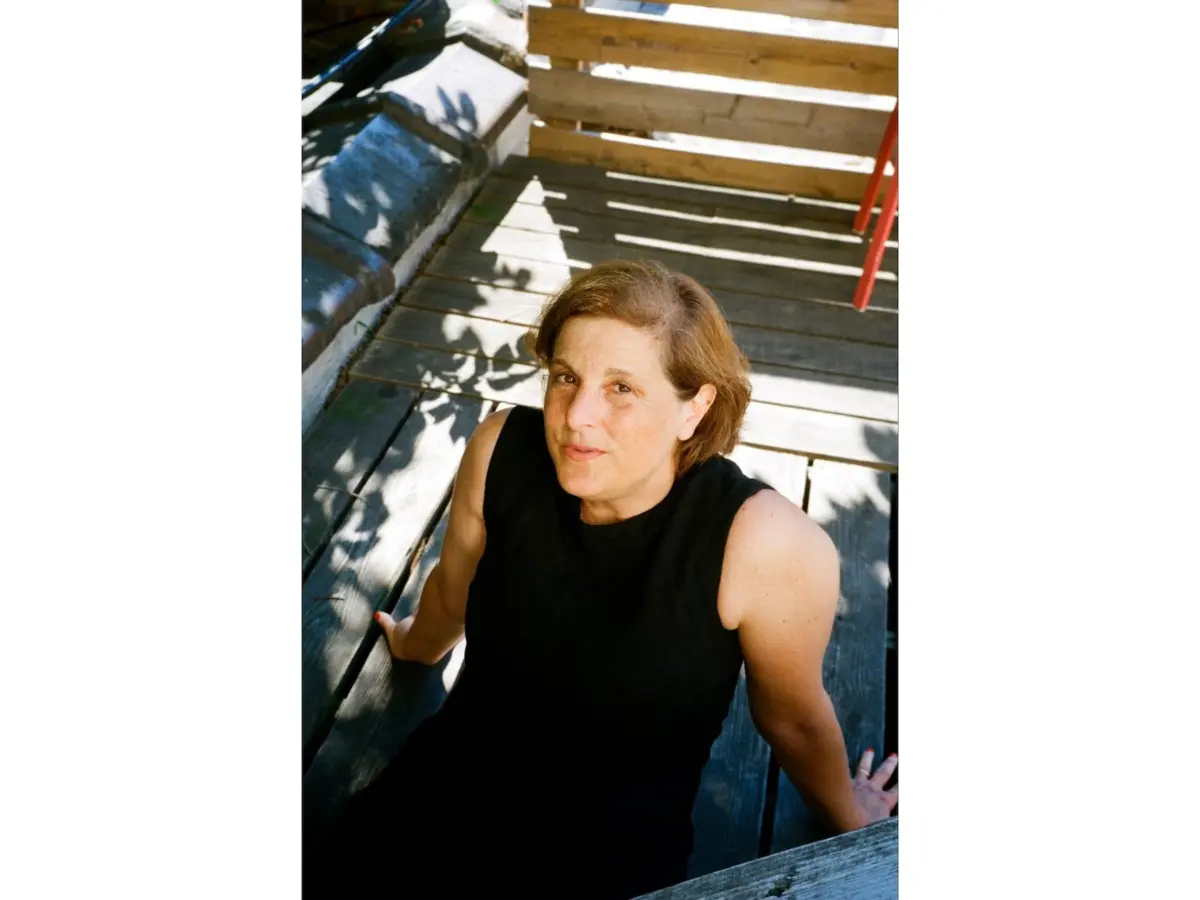
The Center for Curatorial Studies at Bard College (CCS Bard) has announced that Laura Hoptman, the executive director of New York’s Drawing Center, is the recipient of the 2027 Audrey Irmas Award for Curatorial Excellence. The prestigious honor, which recognizes individuals who have made transformative contributions to the field of contemporary art, carries with it a $25,000 prize. Hoptman will be formally recognized for her decades of rigorous, imaginative, and often provocative work during the institution’s annual spring gala, scheduled to take place this coming April.
The selection of Hoptman serves as a testament to her enduring influence on the art world, spanning some of the most respected institutions in the United States. Since 2018, Hoptman has led the Drawing Center in Manhattan, guiding the institution through a period of critical re-evaluation of how drawing functions as a medium. Her tenure there builds upon a long, storied career characterized by an unwavering commitment to both established masters and emerging voices.
A Career Defined by Institutional Impact
Hoptman’s trajectory in the arts is marked by a series of influential roles at major museums, each of which provided a platform for her to challenge traditional art historical narratives. Her most recent long-term museum appointment prior to the Drawing Center was at the Museum of Modern Art (MoMA) in New York. Serving for eight years in the Department of Painting and Sculpture, Hoptman became known for exhibitions that were as intellectually demanding as they were visually striking.
During her time at MoMA, Hoptman spearheaded major traveling exhibitions that helped reshape public and academic discourse surrounding key figures of the late 20th century. Notably, she organized the 2013 retrospective of the German artist Isa Genzken, a show that highlighted the artist’s sprawling, multi-disciplinary practice. Similarly, her 2016 survey of Bruce Conner brought renewed critical attention to the American artist’s pioneering work in film, assemblage, and drawing.
Perhaps one of the most significant—and certainly one of the most discussed—projects of her tenure at MoMA was the 2014–2015 exhibition, "The Forever Now: Contemporary Painting in an Atemporal World." The show was a lightning rod for debate, stirring intense conversations among critics and collectors alike regarding the state of contemporary painting. By assembling works that resisted linear historical progress, Hoptman forced the art world to confront the "atemporal" nature of current creative production, where styles from different eras coexist in a flattened, digital landscape. The exhibition remains a touchstone for discussions regarding the challenges of curating the "now."
Foundations in Drawing and Contemporary Discourse
Hoptman’s professional roots run deep within the New York gallery and museum ecosystem. She began her career as an assistant curator at the Bronx Museum of the Arts, an experience that provided an early foundation for her interest in community-focused and intellectually rigorous exhibition design. Following her time in the Bronx, she served as an assistant curator in the Department of Drawings at MoMA from 1996 to 2002. It was here that she began to cement her reputation as an expert on the medium that would later define her leadership at the Drawing Center.
Her affinity for the medium was showcased in the 2003 guest-curated exhibition, "Drawing Now: Eight Propositions," presented at MoMA QNS. The exhibition featured more than 200 works by 26 artists, illustrating the breadth of contemporary representational practice. By focusing on drawing—often relegated to a secondary status compared to painting or sculpture—Hoptman argued for its continued relevance as a primary site of artistic invention.
Hoptman’s curatorial reach has also extended beyond the museum walls of New York. In 2004, she served as the director of the 54th Carnegie International in Pittsburgh, a significant role that allowed her to curate on a global scale. Her work between 2006 and 2010 as a senior curator at the New Museum in New York further demonstrated her ability to capture the zeitgeist. At the New Museum, she co-organized "Unmonumental: The Object in the 21st Century" (2007–2008), which examined the rise of assemblage and "bricolage" in a post-minimalist era, and "The Generational: Younger than Jesus" (2009), a wide-ranging survey that sought to define the aesthetic and thematic concerns of a new generation of artists born after 1976.
The Audrey Irmas Award Legacy
The Audrey Irmas Award for Curatorial Excellence, established in 1998, is widely considered one of the highest honors in the curatorial field. According to CCS Bard, the award is intended to celebrate "groundbreaking visionaries" who have not only curated exceptional exhibitions but who have also fundamentally altered the ways in which art is studied, displayed, and understood by the public.
Hoptman joins a distinguished roster of past recipients who have shaped the trajectory of contemporary art, including Adriano Pedrosa, Connie Butler, Carolyn Christov-Bakargiev, Thelma Golden, and the late, influential critic and curator Okwui Enwezor. The inclusion of Hoptman in this list highlights the award’s focus on curators who balance the administrative demands of institutional leadership with the intellectual labor of groundbreaking scholarship.
Recognition from CCS Bard
In announcing the award, Tom Eccles, the executive director of CCS Bard, emphasized that Hoptman’s contributions extend far beyond the specific exhibitions she has organized. He noted that her career is marked by a rare combination of historical scholarship and institutional bravery.
"Laura’s longstanding curatorial practice has furthered new art historical analysis and international recognition of drawing as a creative medium and social practice," Eccles said in a statement. "Her international projects have reexamined the legacies of an array of artists through new and creative frameworks. What is often forgotten is how consistently Laura has demonstrated a boldness and bravery in championing artists across many institutional structures."
For the curatorial community, the award acknowledges the often-invisible labor required to sustain a career of such high caliber. Hoptman’s ability to move between the established, canon-focused world of a major institution like MoMA and the more experimental, medium-specific environment of the Drawing Center serves as a model for modern curators. Her work consistently challenges the assumption that institutions must be stagnant, instead proving that they can be sites of radical inquiry and ongoing discovery.
As Hoptman prepares to accept the award this April at the CCS Bard spring gala, the art world looks back on a body of work that has successfully bridged the gap between historical preservation and contemporary provocation. Through her deep engagement with the complexities of drawing and her willingness to tackle difficult, sometimes divisive, themes in contemporary art, Hoptman continues to shape the discourse of the 21st-century museum. The award serves as both a recognition of her past achievements and an anticipation of her future contributions to the field.