
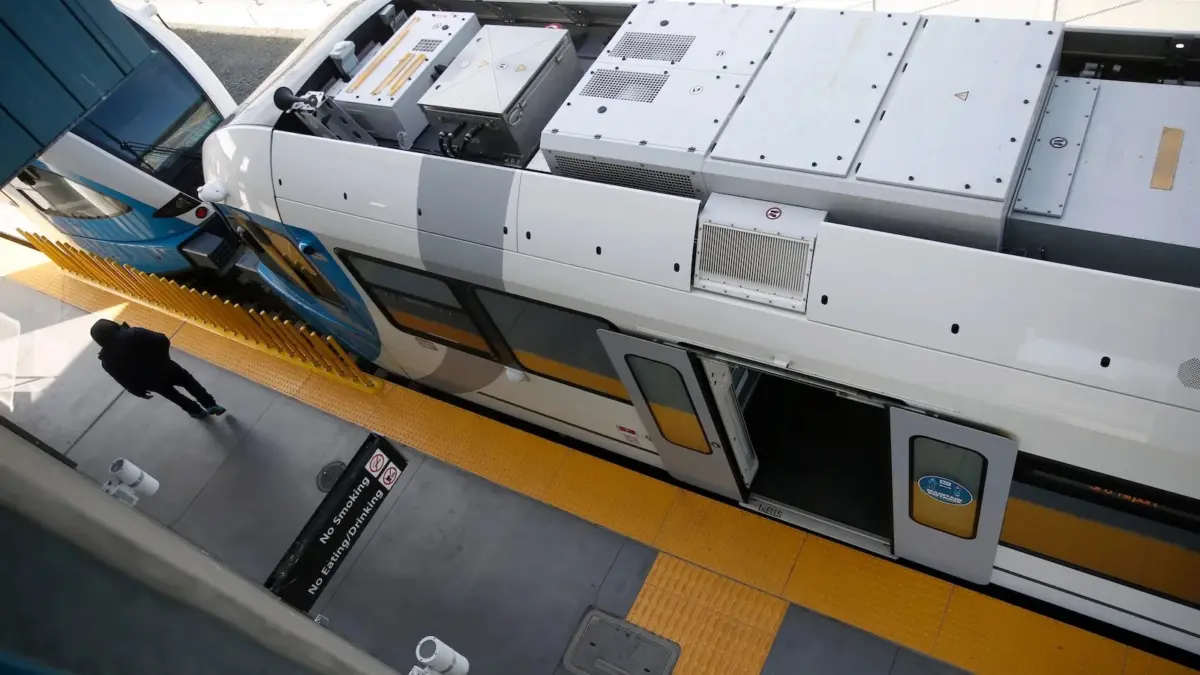
In an election cycle heavily dominated by voter anxiety over rising living costs and overall economic affordability, communities across the United States delivered a resounding message at the ballot box: they are willing to pay more in taxes to preserve, rescue, and expand public transportation networks.
Out of 27 distinct ballot measures supporting transit put before the American public, an overwhelming 22 successfully passed on November 3. This wave of approval represents a staggering $27.4 billion in new funding dedicated to rescuing financially faltering transit systems, preventing catastrophic service cuts, and building out new mobility infrastructure. Among the most notable victories of the night were voters in the San Francisco Bay Area stepping up to stave off immense budget shortfalls for the Bay Area Rapid Transit (BART) and other regional systems. Meanwhile, Coloradans strongly backed new regional rail initiatives, and residents in Seattle alongside nearby Pierce County voted decisively in favor of expanding local bus service.
This widespread grassroots support signals a fascinating shift in voter priorities, according to transit policy experts. Sohail Husain, a policy analyst at the Eno Center for Transportation, noted that the results demonstrate a clear public willingness to invest in structural improvements. "It’s an indication that the public is willing to pay for these public transit improvements," Husain said. "That’s very telling — especially in a world like today where people are concerned about affordability. I think people are still also concerned about mobility and having options to move."
A Consistent Trend Across Political Divides
Public transit investments have managed to fare remarkably well regardless of broader political shifts. The success follows a similar trend seen during the 2024 red wave, when 19 out of 25 transit-supporting measures passed, and continues through the outcomes of this year’s blue wave. Although mass transit rarely served as a centerpiece issue in major candidate campaigns, the collective weight of these ballot measures and legislative shifts could fundamentally alter national and regional transportation policy.
At the state level, transit advocates now see crucial windows of opportunity to advance long-stalled projects or simply encourage state governments to clear regulatory hurdles. Simultaneously, shifting majorities in Congress are set to shape a major transportation infrastructure law currently facing renewal. Combined, these results could substantially remake how Americans travel, commute, and move goods.
States retain broad discretion over how they fund and prioritize transportation infrastructure. Consequently, political realignments—such as Democratic legislative and gubernatorial control established across 22 states—have left public transit advocates intensely optimistic about future policy directions.
New Opportunities in Pennsylvania
Pennsylvania serves as a prime example of a state poised for transformation after years of bitter legislative gridlock. The state has endured a protracted battle over the financial stability of the Southeastern Pennsylvania Transportation Authority (SEPTA), which serves the greater Philadelphia metropolitan area. When the agency faced the grim prospect of 45 percent service cuts last year, Governor Josh Shapiro intervened, directing the state Department of Transportation to allow SEPTA to shift nearly $400 million from its capital budget to its operational budget. He also made an additional $220 million available to stabilize the system.
Now, with Democrats taking control of both chambers of the state legislature, local transit advocates emphasize that SEPTA can finally look beyond immediate self-preservation and toward long-term growth. Stephen Bronskill of Transit Forward Philadelphia pointed to a slate of previously sidelined initiatives, including trolley modernization, fleet replacements for vehicles dating back to the 1970s, more frequent regional rail service, and fully accessible station upgrades.
"This is a once-in-a-generation moment to invest in public transit — safe, reliable, accessible transit that Philly needs, but all of Pennsylvania deserves," Bronskill said.
Shifting Landscapes in Texas and Georgia
The political prospects look somewhat more complex in Texas, where Republicans maintain control of the state Senate. Jay Blazek Crossley, executive director of the urban mobility nonprofit Farm&City, has spent more than a decade attempting to nudge GOP lawmakers toward transportation options that prioritize safety and reduced emissions. Every legislative session, Crossley has unsuccessfully championed measures making it easier for municipalities to reduce speed limits on residential streets.
However, Crossley sees renewed hope for those safety measures and, more broadly, for a future that includes expanded public transit funding. Currently, public transit accounts for a meager 0.72 percent of the Texas Department of Transportation’s budget. Historically, state Republicans have favored highway expansion to move vehicular traffic faster while often pushing back against city-led mass transit initiatives.
"At the very least, the state, I believe, will get out of the way on things like building good light rail and transit," Crossley said.
More ambitious high-profile projects are also finding renewed momentum. State Representative John Bucy III has once again filed legislation directing the Texas Department of Transportation to pursue a public-private partnership for a high-speed rail line connecting Dallas and San Antonio. Bucy believes the proposal will resonate with lawmakers whose constituents suffer from chronic congestion along the heavily traveled Interstate 35 corridor.
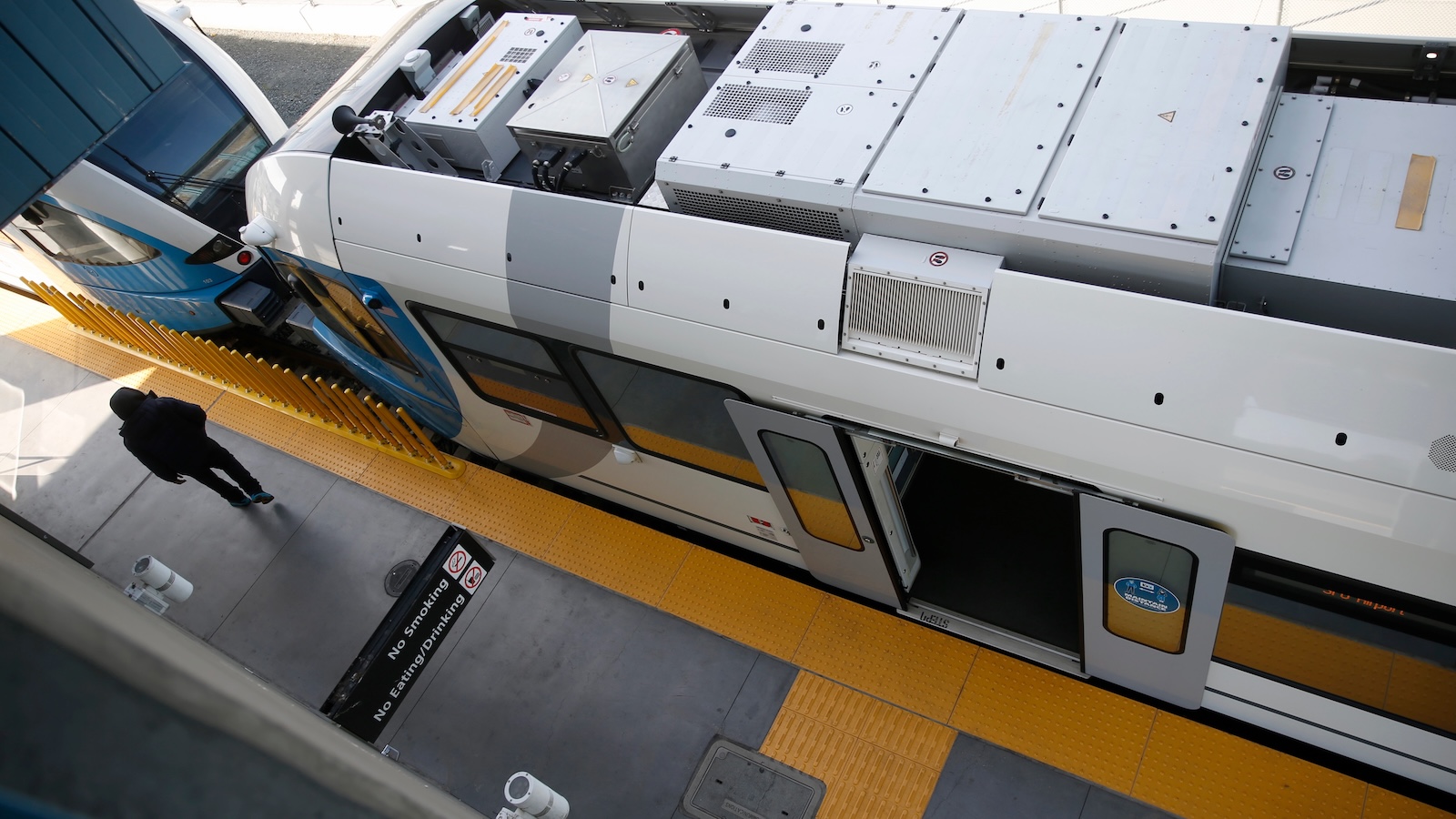
"I think the voters spoke loud and clear that they want a Texas government that is going to work on kitchen table issues," Bucy said. "I think that’s healthcare, education. It’s also mobility and transit, and how do we get around this big, vast state?"
Georgia presents a similarly nuanced political landscape. While Democrats captured the governorship and flipped the state House, Republicans retained control of the state Senate. That dynamic could pose legislative hurdles for Governor-elect Keisha Lance Bottoms, who has campaigned on establishing dedicated state funding for the Metropolitan Atlanta Rapid Transit Authority (MARTA) and other mass transit networks that have long depended primarily on local and federal subsidies.
Federal Policy and Infrastructure Legislation
The election results carry profound implications at the federal level as well, where Congress must soon determine funding allocations for public transit and passenger rail. The BUILD America 250 Act recently advanced out of a key House committee with bipartisan support, but its initial framework left public transit advocates deeply concerned about potential federal funding cuts.
With shifting majorities in Congress, the final legislation is expected to undergo significant revision. Representative Jerry Nadler of New York, the sole Democrat on the committee to oppose advancing the bill in its current form, views the new political reality as an opportunity to course-correct.
"Unlike the current Republican proposal, next year’s bill should not prioritize one mode of transportation at the expense of others," Nadler said in a statement. "This bill must make robust investments in rail and public transit, to connect communities, create good-paying jobs, lower transportation costs for families, and reduce the cost of moving goods across the country."
Rewriting the sprawling legislation, however, will not happen overnight. Rebecca Higgins, vice president of policy at the Eno Center for Transportation, noted that lawmakers face considerable scheduling pressure because Congress is currently relying on a short-term funding extension to keep transportation programs running. At the same time, she expects congressional leaders to afford newly elected members adequate time to review and weigh in on the package. A central question remains regarding the ultimate fate of dedicated intercity passenger rail funding that was included in the landmark Infrastructure Investment and Jobs Act but subsequently dropped from the BUILD America 250 draft.
Immediate Local Impacts
Regardless of how legislative debates unfold in Washington, the local and regional measures approved by voters at the ballot box will yield immediate, tangible impacts on the ground.
In the San Francisco Bay Area, a newly approved 14-year regional sales tax is projected to generate roughly $1 billion annually. This revenue is earmarked directly to preserve core services on BART and connecting regional systems that were otherwise hurtling toward severe budget cliffs. In Colorado, voters greenlit a 0.333 percent sales tax specifically designed to fund the construction, operation, and ongoing maintenance of an intercity passenger rail corridor linking Pueblo, Colorado Springs, Denver, and Fort Collins.
In the Pacific Northwest, Seattle voters doubled an existing sales tax over the next decade, a move expected to unlock an additional $138 million per year dedicated almost entirely to expanding transit service. In adjacent Pierce County, voters similarly approved a local sales tax increase designed to scale up bus service.
Kirk Hovenkotter, executive director of the Transportation Choices Coalition, noted that the Pierce County victory is particularly historic because local voters had not authorized a public transit investment increase since 2002. As the region grapples with a severe cost-of-living and affordability crisis, proponents emphasize the direct financial relief transit provides. The American Public Transportation Association estimates that replacing car ownership with reliable public transit can save an average household more than $14,000 annually.
Hovenkotter highlights a similar economic equation for residents throughout Washington state. "The average cost of car ownership in Washington state is about $12,000," he said. "The fastest way we can put $12,000 back in someone’s pocket is making it easier for them to live without a car or with one fewer car."
Ultimately, the widespread success of transit measures at the ballot box indicates that for millions of Americans, investing in robust public transportation is not viewed as a competing priority against economic affordability—it is viewed as an essential solution.