
As world leaders gather in Antalya, Turkey, for the United Nations Framework Convention on Climate Change, known as COP31, Indigenous advocates are stepping onto the global stage with a unified and urgent message: the era of empty promises must end. Billed as an “implementation” conference focused less on sweeping new pledges and more on the procedural work of turning previous agreements into concrete action, COP31 serves as a critical test. For Indigenous communities worldwide, the summit is a make-or-break moment to determine whether the historic rhetoric of past gatherings will finally translate into real-world authority, robust funding, and systemic protection.
This year’s negotiations follow the landmark gathering in Belém, Brazil, last year, which drew unprecedented levels of Indigenous attendance and led many participants and observers to dub it “the Indigenous COP.” Yet, that historic presence was frequently overshadowed by profound frustration and vocal protests. Many Indigenous leaders left Belém feeling that the summit was little more than a continuation of a longstanding historical pattern of exclusion from high-level international climate negotiations.
Now, against the backdrop of Antalya, advocates are emphasizing that patience has worn thin. The stakes could not be higher, particularly in the wake of a recent United Nations report warning that it will be virtually impossible to limit global warming to 1.5 degrees Celsius, the foundational goal established under the 2015 Paris Agreement. For Indigenous delegates, this grim scientific reality is deeply frustrating because they view it as the direct result of global decision-makers systematically ignoring traditional knowledge and dismissing the proven environmental benefits of Indigenous stewardship.
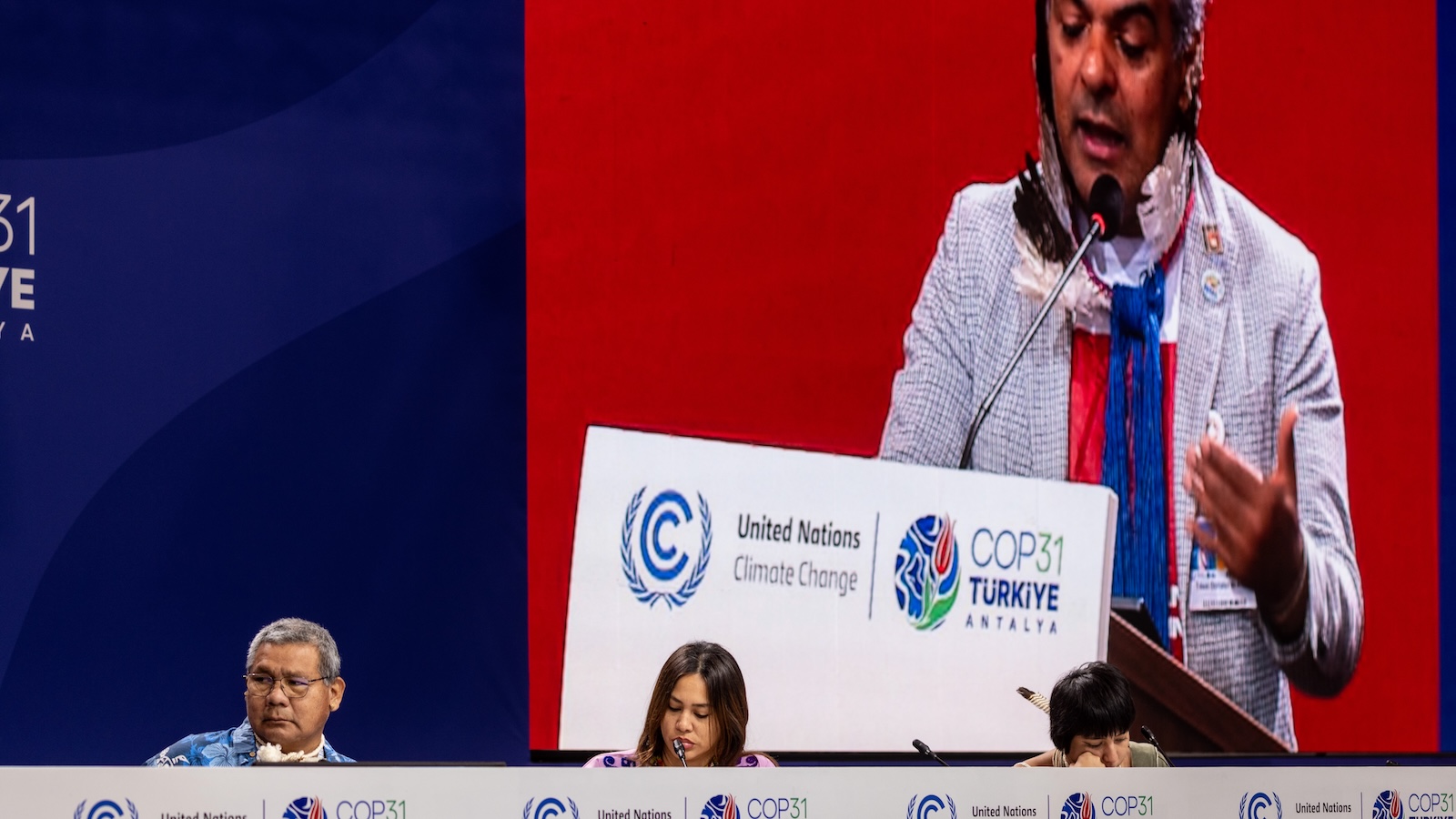
“For over thirty years we have brought Indigenous knowledges and sciences to these negotiations,” said Māori activist Quack Pirihi in an opening statement delivered on behalf of the International Indigenous Peoples Forum on Climate Change. “Yet emissions continue to rise, putting 1.5 degrees Celsius beyond reach.”
Throughout the conference, Indigenous advocates have maintained pressure on national governments to honor outstanding commitments. Key demands include securing and strengthening Indigenous land rights across 400 million acres in tropical forest countries, delivering on a pledged $1.8 billion in climate finance, and strictly respecting the rights of Indigenous communities to free, prior, and informed consent during the global transition to renewable energy.
Despite these high-profile pledges, financial resources have been notoriously slow to reach the communities on the front lines of the crisis. Compounding these delays, Indigenous land defenders report that their fundamental rights and physical safety remain under constant, escalating threat. Edward Porokwa, a Maasai representative and member of the United Nations Permanent Forum on Indigenous Issues, noted that the disproportionate burden of addressing climate change continues to fall unfairly on smaller developing nations and Indigenous peoples, while major emitters lag behind.
“It is still a struggle,” Porokwa said. “I’m yet to really determine whether there will be any more progress that is made in terms of realization of the rights of Indigenous people.”
Porokwa’s skepticism is rooted in a harrowing year of climate-driven disasters that have ravaged Indigenous territories across the globe. In Nepal, catastrophic floods and landslides struck in August, killing more than 1,500 people and completely erasing entire villages. In Canada, a historic and devastating wildfire season scorched millions of acres, forcing thousands of First Nations residents to evacuate their ancestral homes. Meanwhile, in Indonesia, severe wildfire smoke alone has caused thousands of premature deaths, prompting widespread school closures and emergency measures across Southeast Asia.
Further underscoring the escalating dangers, a massive recent mountainside collapse on the border of Nepal and Tibet has added to the alarm. Biswash Chepang, founder of the Institute for Indigenous Affairs and Development in Nepal, emphasized that such catastrophic events should serve as an undeniable wake-up call to the global community. These mounting threats are occurring alongside a historically powerful El Niño weather pattern, which scientists warn could trigger severe famine, heat-related mortalities, and other cascading crises worldwide.
Amid these mounting ecological pressures, securing financial assistance for nations and communities suffering from climate-induced loss and damage remains an urgent priority. In October, the international Fund for Responding to Loss and Damage approved $21.6 million for Nepal. While historic as the fund’s very first disbursement, the amount represents less than 1 percent of the nearly $5 billion in infrastructure and ecological damage the country sustained. Furthermore, the administrative processes required to receive and distribute these funds remain bogged down in bureaucratic delays.
Indigenous leaders argue that the loss and damage mechanism must operate with far greater speed and efficiency, placing renewed scrutiny on wealthy nations that have repeatedly fallen short on their international climate-finance obligations.
“Loss and damage is not simply a question of humanitarian assistance,” Chepang said. “It is also a question of climate responsibility, historical emissions, equity, and the right of affected communities to recover with dignity.”
Beyond demanding financial accountability, Indigenous advocates are actively working to hold major corporate and governmental polluters legally accountable. Bianca Ranson, a Māori board member of the Aotearoa Climate Action Network attending COP31, is utilizing the international platform to draw attention to a landmark climate litigation case led by her father, Mike Smith. The lawsuit, which seeks to hold major New Zealand corporate emitters liable for climate harms using traditional Māori customary law, has faced significant political hurdles and has been blocked by the national government.
Despite the severe logistical, financial, and political obstacles required to navigate and participate in massive international summits like COP, Ranson insists that global spaces retain a vital purpose. She points out that the current geopolitical climate—marked by the rise of far-right authoritarianism, armed conflict, and intersecting crises—makes international solidarity more important than ever for marginalized communities.
“I think that with the geopolitical moment that we’re in, with the rise of the right and fascism and war, and the struggles that Indigenous peoples are facing across the globe, it’s a really important place for us to be able to come together to connect, to strengthen our solidarity,” Ranson said.
As negotiations at COP31 proceed through November 20, Indigenous delegates and their supporters remain resolute in their mission to push for binding, actionable outcomes rather than symbolic gestures. For leaders like Porokwa and his peers, the path forward requires an immediate shift from rhetoric to reality.
“Now I think it is not time only to talk about the commitment,” Porokwa said. “It is time to change the commitment into practice.”