
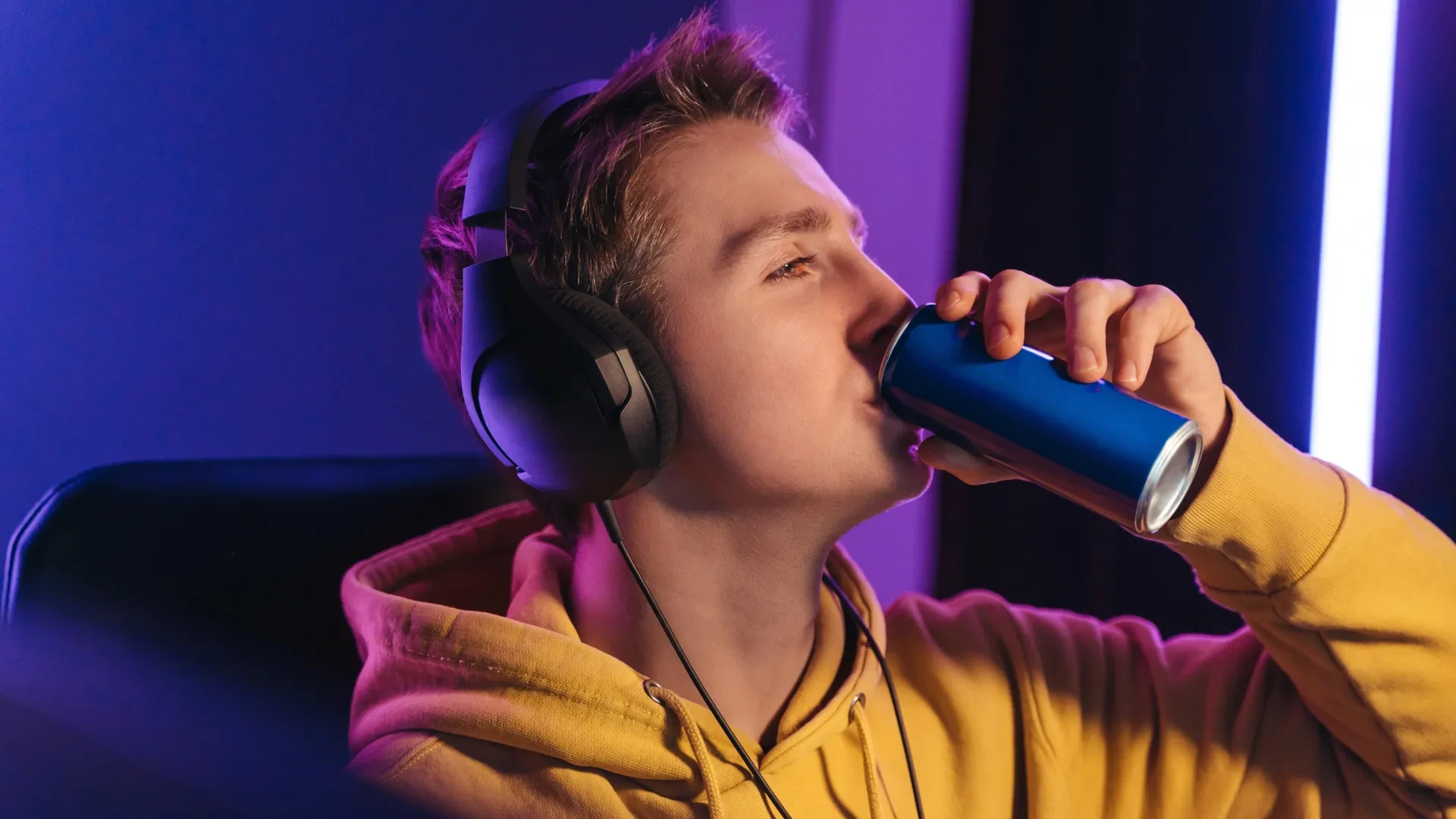
Energy drinks and stimulant supplements are drawing renewed scrutiny from medical researchers following the discovery of a striking pattern in reports of serious cardiovascular emergencies. In a recent independent study, products containing high concentrations of caffeine and other stimulants appeared significantly more frequently in safety reports detailing cardiac arrests, heart attacks, and other acute heart problems than products without these ingredients.
The findings, which were presented at the American Heart Association’s Scientific Sessions 2026, highlighted a particular vulnerability among younger adults. People between the ages of 18 and 34 accounted for a substantial share of the reported cardiovascular incidents involving caffeinated and stimulant-based products.
While researchers were careful to emphasize that the preliminary findings do not establish a direct cause-and-effect relationship between the consumption of these beverages and supplements and the medical emergencies, the unusually high frequency of severe events in federal safety data suggests that these ubiquitous products warrant a closer, more systematic examination by public health officials and medical professionals alike.
Growing Concerns About Energy Drinks and Heart Health
The commercial market for energy drinks has expanded at an extraordinary pace over the past decade. Industry sales have more than doubled during this period, ultimately surpassing $20 billion in 2024. Despite this immense and sustained commercial popularity, the scientific community still possesses relatively limited data regarding the long-term or acute cardiovascular impacts of consuming beverages and dietary supplements packed with potent stimulants.
Existing medical evidence has long suggested that consuming large amounts of caffeine can place undue stress on the cardiovascular system. Healthcare professionals have previously documented troubling cases of arrhythmias—characterized by irregular heart rhythms—and sudden cardiac death following the heavy consumption of such products. Notably, some of these tragic incidents have occurred in young, otherwise healthy adults who possessed no previously identified risk factors for cardiovascular disease.
According to a 2026 American Heart Association Scientific Statement focusing on caffeine and cardiovascular health, most healthy adults can generally consume up to 400 milligrams of caffeine daily without encountering significant safety concerns. This recommended threshold roughly equals five eight-ounce cups of regular, black caffeinated coffee.
However, caffeine concentrations vary dramatically across the commercial marketplace. Certain specialized energy drinks provide up to three times as much caffeine per fluid ounce as standard brewed coffee. Meanwhile, some highly concentrated pre-workout supplements contain more than 12 times the caffeine concentration found in an equivalent amount of coffee, creating a scenario where consumers can easily overshoot daily safety limits with a single serving.
Regulatory classification further complicates the landscape. The U.S. Food and Drug Administration categorizes energy drinks and stimulant supplements as foods or dietary supplements rather than pharmaceutical drugs. Consequently, these items are not subjected to the rigorous pre-market safety testing and clinical trial requirements that medications must successfully clear before reaching store shelves.
"These products are marketed as everyday pick-me-ups and sold next to soda and bottled water, so most people assume they carry no real risk," noted study author Sai Samayamanthula, a fourth-year medical student at the University of Virginia School of Medicine in Charlottesville, Virginia. "For many healthy people, if these products are consumed occasionally, the risk is probably small. However, individuals who consume energy drinks or other stimulant-containing supplements regularly can quickly exceed the recommended daily limit for caffeine, so it’s important for people to know that there may be a risk of cardiovascular harm with these products."
FDA Reports Reveal Striking Differences in Cardiac Events
To investigate potential cardiovascular safety signals, Samayamanthula and his research team conducted a comprehensive review of a federal safety database maintained by the FDA. This database catalogs reports of suspected adverse reactions linked to foods and dietary supplements. The researchers systematically compared products formulated with caffeine and other stimulants against a broad control group of products that lacked these ingredients.
The comparison group comprised a wide variety of commonly consumed items, including soft drinks, smoothies, standard vitamins, protein bars, and meal replacement shakes. The research team analyzed safety reports involving individuals aged 13 and older that had been submitted to the federal repository between 2017 and 2025.
The analysis revealed distinct and notable differences in how frequently serious cardiac events appeared alongside stimulant products versus non-stimulant items. The researchers stressed, however, that these statistical disparities describe the reporting frequency within the voluntary FDA database rather than measuring a consumer’s absolute real-world risk. The findings do not indicate that individuals who consume energy drinks face an exponentially magnified actual risk of experiencing a heart attack or cardiac arrest in their daily lives.
"Our findings support the case for more systematic safety monitoring of caffeine- and stimulant-containing products. In addition, healthcare professionals should remember to ask their younger patients who have palpitations, chest pain, or fainting spells if they recently or regularly consume these products," Samayamanthula said.
Why Young Adults May Be Particularly Vulnerable
One of the most arresting elements of the study was the disproportionately high representation of young adults in the cardiovascular safety reports. While the researchers have not yet definitively established why the statistical link between stimulant products and reported heart problems appeared so frequently within this specific demographic cohort, several potential explanations are currently under consideration.
Younger consumers generally purchase and consume energy drinks and stimulant supplements at higher frequencies than older populations, naturally increasing the statistical likelihood that these products will feature prominently in reports of medical emergencies. Furthermore, patterns of consumption may play a crucial role. Younger individuals are more likely to consume high-caffeine products immediately before engaging in intense physical exercise, or to mix them with alcohol and other recreational substances, creating unpredictable physiological stress on the heart.
Another possibility is that a subset of young consumers may harbor undiagnosed, underlying heart conditions—such as congenital arrhythmias or structural heart defects—that render them exceptionally vulnerable to the acute stimulant effects of concentrated caffeine and related compounds. Because these conditions often remain silent until triggered by an acute stressor, individuals may be unaware of their personal risk profile.
These explanations remain theoretical at this stage, and researchers emphasize that additional, targeted scientific studies will be required to unpack the complex web of behaviors and biological factors that contribute to the elevated reporting frequency among younger demographics.
Do Energy Drinks Actually Cause Heart Attacks?
Although the study results raise pressing questions regarding the safety of products packed with concentrated caffeine and chemical stimulants, medical experts urge caution against misinterpreting the findings as definitive proof of direct causation.
"This study raises concerns that products with very high amounts of caffeine may be harmful to the cardiovascular system," said Gregory M. Marcus, M.D., M.A.S., FAHA, chair of the 2026 American Heart Association scientific statement on caffeine and cardiovascular disease. "Although there are biological reasons why that connection could be possible, the study does not prove that caffeine products cause these events, because other factors may have influenced the results found in this analysis. More research is needed to understand whether these stimulant products are truly responsible for the reported heart-related events."
Marcus, who was not involved in the research, serves as a professor of medicine at the University of California, San Francisco School of Medicine and is the associate chief of cardiology for research at UCSF Health. He noted that because the underlying analysis relied heavily on reports submitted voluntarily to the federal agency, the data inherently lacks the controls necessary to establish whether the consumed products directly caused the cardiovascular episodes. Confounding variables, such as pre-existing health conditions, concurrent medication use, lifestyle habits, and environmental circumstances, could easily have influenced the reported outcomes.
How Researchers Analyzed the FDA Safety Reports
The investigation encompassed a total of 28,345 reports of potential adverse health events submitted to the FDA safety database over an eight-year period spanning from 2017 through 2025.
Out of this extensive dataset, 854 reports specifically involved energy drinks or dietary supplements containing caffeine or other recognized stimulants. The remaining 27,491 reports involved products completely free of caffeine or stimulant additives, forming the baseline comparison cohort.
To maintain methodological consistency, researchers classified products based strictly on their declared ingredient profiles rather than individual commercial brands. The broad stimulant category captured caffeine, methylxanthines such as theobromine, guarana, yerba mate, green tea and coffee extracts, as well as sympathomimetics including synephrine, yohimbine, ephedra, DMAA, and higenamine. By focusing on chemical classes rather than corporate brands, the researchers ensured that the findings applied to generalized categories of stimulant products rather than singling out specific commercial enterprises.
The research team also acknowledged substantial limitations inherent to the dataset. Because adverse event reports are submitted voluntarily by consumers, members of the public, healthcare practitioners, and manufacturing companies, the database cannot be interpreted as a comprehensive accounting of every adverse reaction that occurred nationwide.
Furthermore, the data architecture makes it impossible to determine the total denominator: how many millions of consumers safely ingested these products without experiencing any adverse cardiovascular events, or how many individuals suffered heart problems but never filed or generated a formal report. Without these crucial figures, calculating the absolute statistical probability of a heart attack or cardiac arrest resulting from energy drink consumption remains unfeasible.
Despite these methodological boundaries, the findings succeed in illuminating a potentially vital safety signal. Researchers conclude that more systematic post-market surveillance and rigorous clinical investigations are urgently needed to clarify whether heavily caffeinated and stimulant-laden products actively contribute to severe cardiovascular complications, particularly among the young adults who consume them with increasing regularity.