
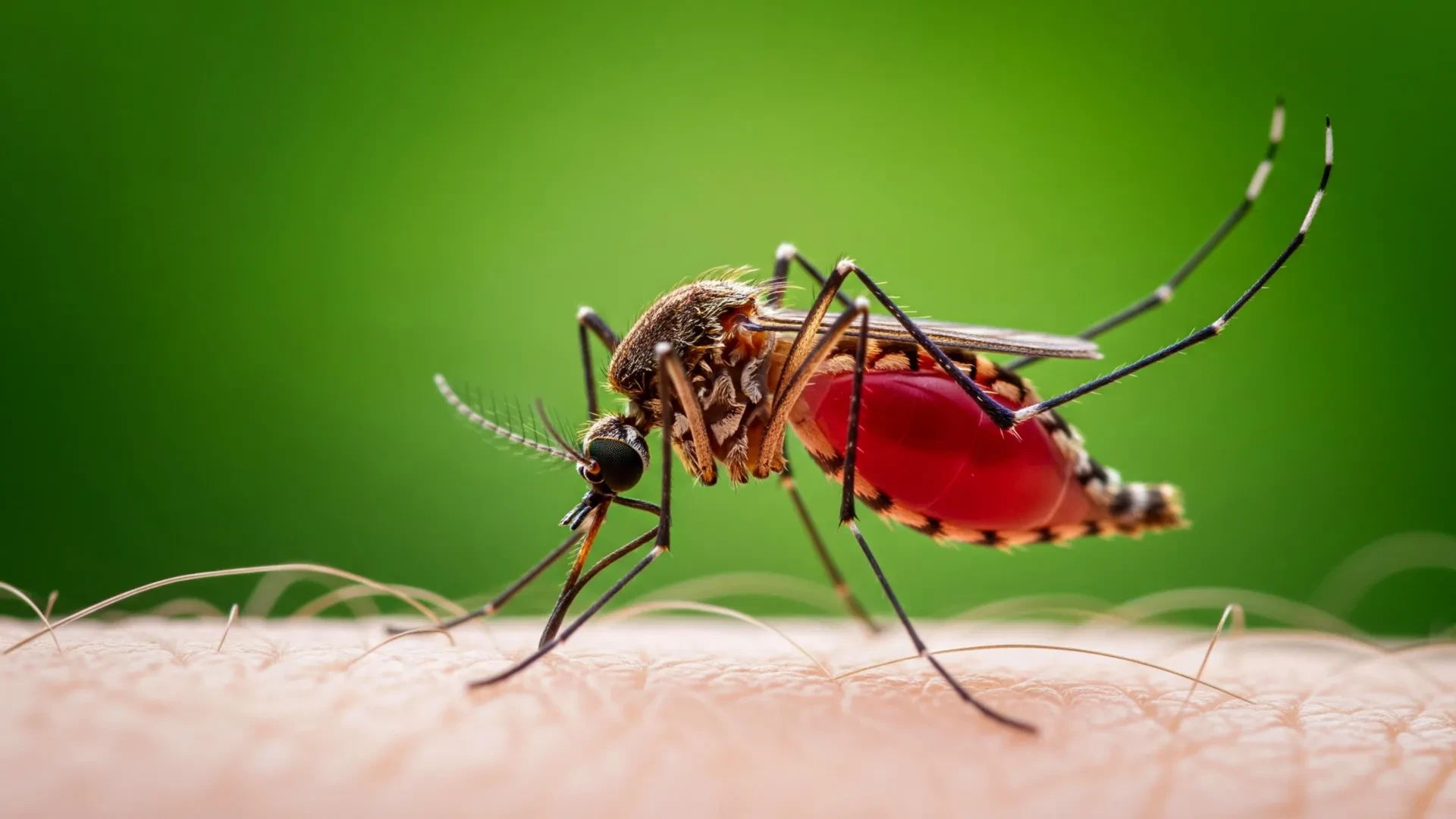
For centuries, individuals who seem to attract mosquitoes wherever they go have resigned themselves to a summer of relentless itching, often wondering why they bear the brunt of the insects’ attention while companions remain untouched. However, groundbreaking new research reveals that being a mosquito magnet is not a universal curse; rather, it depends entirely on which specific species of mosquito is doing the biting.
In a study published in the scientific journal iScience, researchers at Florida International University (FIU) tested how three of the world’s most dangerous and prolific mosquito species responded to a diverse group of 119 human volunteers. Surprisingly, the results showed that not a single participant acted as a universal magnet for all three species. Instead, each individual mosquito species favored a completely different group of people, a preference driven largely by differences in their individual body chemistry and natural skin odors.
This discovery has the potential to fundamentally change how scientists and public health officials approach the prevention of mosquito-borne diseases. Because different mosquito species respond to distinct chemical signals emanating from human skin, researchers may eventually be able to pioneer next-generation, species-specific repellents. These advanced deterrents could offer vastly more targeted and effective protection than the broad-spectrum options available today.
"Isolating the components of human odor that attract or repel mosquitoes could lead to novel strategies to combat vector-borne diseases," said Matthew DeGennaro, a neurogeneticist who leads the research team and directs the Biomolecular Sciences Institute at FIU, Miami’s state university.
Different Mosquito Species Prefer Different People
The comprehensive study investigated three primary mosquito species, all of which are responsible for spreading serious and often life-threatening human illnesses across the globe. These insects vector pathogens responsible for yellow fever, dengue, Zika, West Nile virus, and other debilitating tropical and subtropical diseases. The species evaluated in the laboratory trials were Aedes aegypti, Aedes albopictus—commonly known as the Asian tiger mosquito—and Culex quinquefasciatus, the southern house mosquito.
Led by FIU Ph.D. student Kaylee Marrero, the investigation marked a significant milestone as the first study to directly compare how multiple medically important mosquito species reacted simultaneously to the exact same human participants. The findings revealed unexpected and fascinating differences in the chemical and microbial signals that each individual species appeared to rely upon when choosing which human host to approach and bite.
"We didn’t expect the species to prefer different people when we started the study," Marrero said, reflecting on the intricacies of the laboratory observations. "Each species having a distinct microbial signature that they use as a cue was so surprising to me."
Throughout the rigorous testing process, each of the three mosquito species demonstrated its own distinct and consistent set of preferences among the human volunteers, confirming that the old adage of someone simply being universally "sweet-blooded" fails to capture the complex biological reality of insect host selection.
The Hidden Chemistry Behind Mosquito Attraction
To understand these dynamics, it helps to examine the profound complexity of human body odor, which is far more intricate than it might initially seem. Human skin constantly releases a complex chemical mixture consisting of more than 1,000 volatile organic compounds. Many of these organic compounds are so complex or subtle that scientists have yet to fully identify, catalog, or completely understand them.
During the study, the FIU researchers discovered that the three tested mosquito species did not share a common preference for particular individuals. Instead, each species consistently favored its own distinct subset of volunteers. This clear divergence suggested to the research team that different mosquito species have evolved distinct biological methods for detecting, processing, and interpreting the complex array of human scent.
To investigate what underlying factors made certain people more appealing to specific insects, the team meticulously collected samples of the participants’ body odors alongside their skin microbiomes during the mosquito preference tests. Following the behavioral trials, the researchers examined which specific chemical compounds and microorganisms were present on the skin of the volunteers, measuring their relative abundance to draw correlations.
The subsequent analysis revealed strong, undeniable connections between the mosquitoes’ feeding preferences and the subtle variations in the chemical and microbial makeup found on individual human skin.
"This connected so well with the differences in skin bacteria and odors," DeGennaro noted, emphasizing the clarity of the data. "It is clear to me now that our skin microbiomes define our human odor signature. Each species found its own way to decode that signature."
Could This Discovery Lead to Better Mosquito Repellents?
Gaining a precise understanding of why one mosquito species finds a specific human attractive while another species remains entirely indifferent could unlock powerful new possibilities for preventing dangerous infections on a global scale.
By identifying the exact chemical compounds and unique skin bacteria that either attract or discourage different types of mosquitoes, the FIU researchers are helping to establish a vital scientific foundation. This foundation could soon support the development of more precisely targeted repellents tailored to specific insects or regional pest populations.
Furthermore, these findings could significantly improve broader public health strategies. With this knowledge, communities and vector-control agencies may be able to focus their prevention and eradication efforts more acutely on the particular mosquito species that are actively responsible for spreading disease in their specific geographic region.
Rather than relying on the long-standing assumption that all mosquitoes are naturally drawn to the same people for the exact same reasons, future prevention methods can be thoughtfully designed around the distinct chemical preferences of each individual species, marking a major leap forward in personal protection and public health safety.