
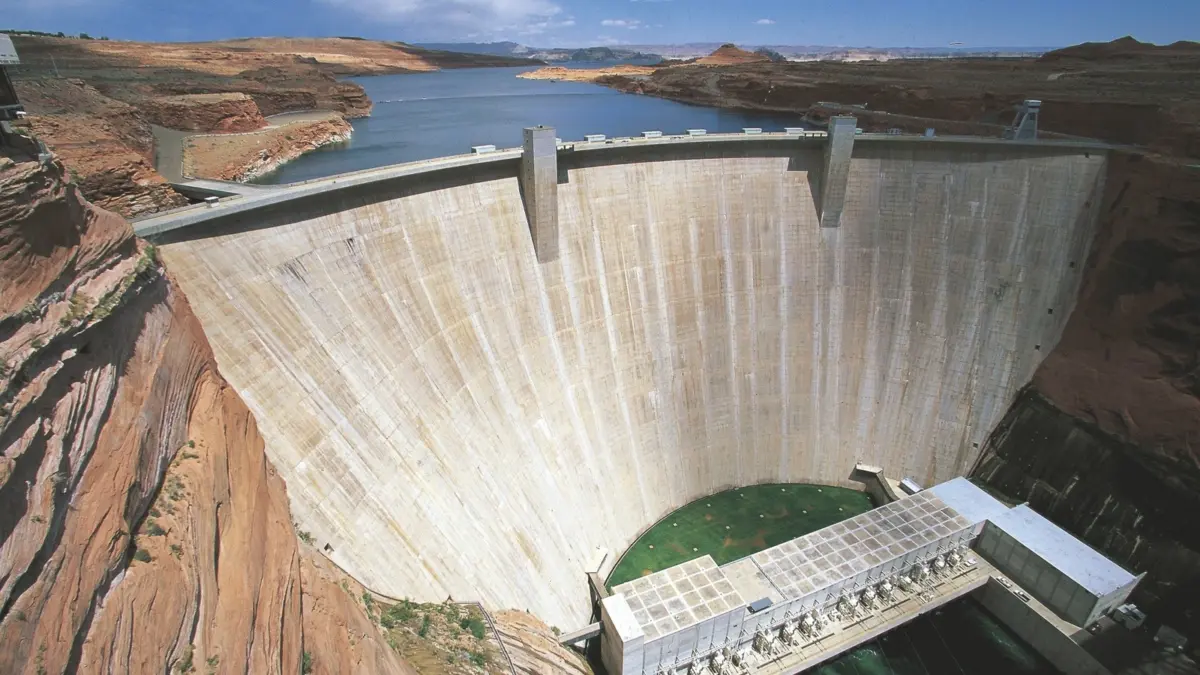
The 27-year-long drought gripping the Southwestern United States—now officially recognized as the longest dry period in the region over the last 1,200 years—is taking an increasingly severe and destabilizing toll on the flow of the Colorado River. Climate change is systematically shrinking the snowpack in Colorado’s Rocky Mountains, historically the source of roughly 80 percent of the river’s annual flow. At the same time, persistently higher temperatures are melting that snowpack much earlier in the year, a phenomenon that saps vital runoff during the late summer and fall months when water is needed most. This warmer weather is also dramatically increasing evaporation rates from the river’s vast network of 40 reservoirs, most notably its two largest and most critical storage vessels: Lake Powell and Lake Mead.
Last month, Lake Powell, situated straddling the Utah-Arizona border, reached a historic record low. Its water levels dropped to less than 150 feet above dead pool—the critical threshold at which water can no longer flow naturally through the Glen Canyon Dam’s bypass tubes to reach Lake Mead, located behind the Hoover Dam some 300 miles downstream. These plummeting water levels have sharply reduced the generation of clean hydropower from both massive reservoirs, severely complicated the management of fragile riverine ecosystems, and triggered deep, painful cuts to water deliveries destined for the Lower Basin states of Arizona, California, and Nevada.
Across the region, the impacts are rippling through local economies and daily life. Farmers are being forced to fallow productive agricultural fields, while real estate developers in rapidly growing municipalities have been compelled to pause new housing construction due to a lack of guaranteed, long-term water supplies. Meanwhile, the U.S. Bureau of Reclamation has been forced to curtail its vital "environmental flows"—carefully managed releases of cold water from Lake Powell that are essential for protecting endangered native fish species and preventing the erosion of sandbars that provide critical wildlife habitat throughout the Grand Canyon. No matter how policymakers choose to manage the river system going forward, environmental observers warn that ecosystems both upstream and downstream will undergo profound and lasting transformations.
Faced with the grim prospect of even lower water levels on the Colorado River, federal and state governments have been scrambling to devise strategies to reconcile the competing and often desperate demands of the disparate interests that rely on its diminishing flow. Proposals under consideration have ranged wildly: from attempting to top off the shrinking Lake Powell with water diverted from upstream reservoirs, to enforcing drastic downstream water delivery cuts of up to 40 percent, to paying agricultural producers financial incentives to keep their allocated water instream. The escalating crisis has even forced water managers, politicians, and scientists to seriously consider a radical fix that was once deemed entirely unthinkable: draining Lake Powell completely.
The Legacy and Limitations of Glen Canyon Dam
When the Glen Canyon Dam was constructed in the 1960s, its proponents heavily promoted its numerous economic and societal benefits. They promised cheap, reliable hydroelectric power, subsidized irrigation water for cotton and alfalfa growers, lucrative real estate opportunities along newly formed shorelines, and a vast aquatic playground for recreational boaters. However, detractors fiercely bemoaned the deliberate drowning of Glen Canyon itself—a magnificent, labyrinthine red-rock wilderness of towering gorges, dramatic spires, sheer cliffs, and hidden grottoes that early conservationists described as possessing an ethereal beauty even surpassing that of the Grand Canyon.
For decades, a dedicated faction of environmental advocates argued passionately for removing the Glen Canyon Dam entirely and restoring the submerged canyon to its natural state. For a long time, however, those proposals were summarily dismissed by mainstream policymakers and water managers as prohibitively expensive and wildly impractical, primarily because removing the dam would entirely wipe out a massive source of regional power generation.
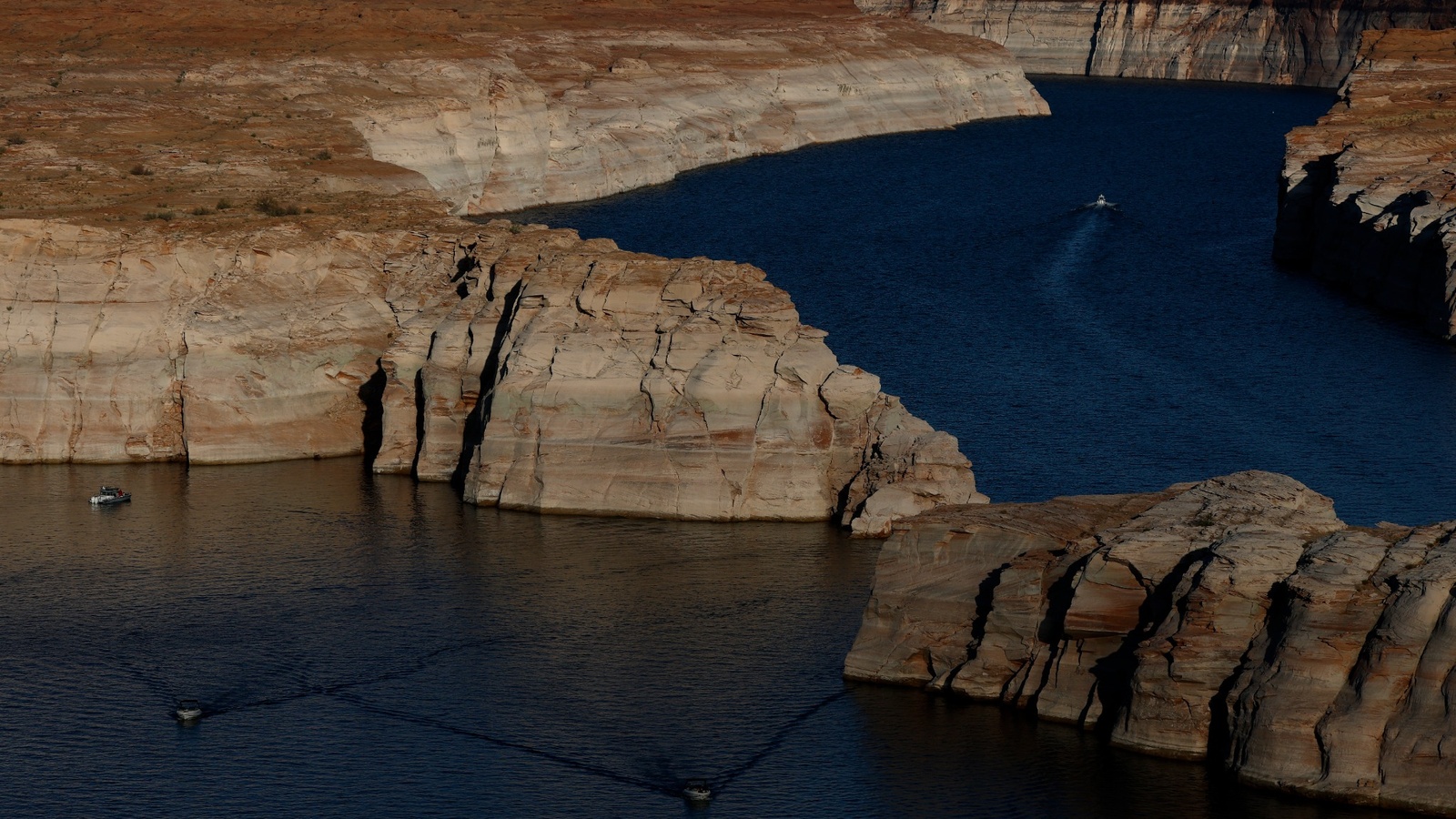
Now, as the structural and hydrological realities of the basin shift, a more tempered and pragmatic approach is gaining traction among scientists and advocacy groups. Organizations like the Glen Canyon Institute are no longer necessarily calling for the complete physical dismantling of the dam structure itself. Instead, they are advocating for draining Lake Powell through newly engineered diversion tunnels that would be drilled deep below the existing bypass tubes, positioned closely to the natural riverbed.
Advocates argue that the potential upsides of this approach, known widely as "Fill Mead First," would be manifold. Relocating the primary water storage downstream would immediately boost hydropower production efficiency at Lake Mead. The stunning geological formations of Glen Canyon, along with countless archaeological sites sacred to Indigenous peoples, would eventually reemerge from the receding waters. Native wildlife would return, and vital riparian habitats both above and below the dam site would be gradually restored.
For more than four decades, the Glen Canyon Dam was widely regarded as an indispensable asset to the entire river basin, according to Eric Balken, executive director of the Glen Canyon Institute. Today, however, Balken notes that the infrastructure is "becoming a liability because it might actually prevent water from flowing downstream. All of the core assumptions around the dam have been turned on their head."
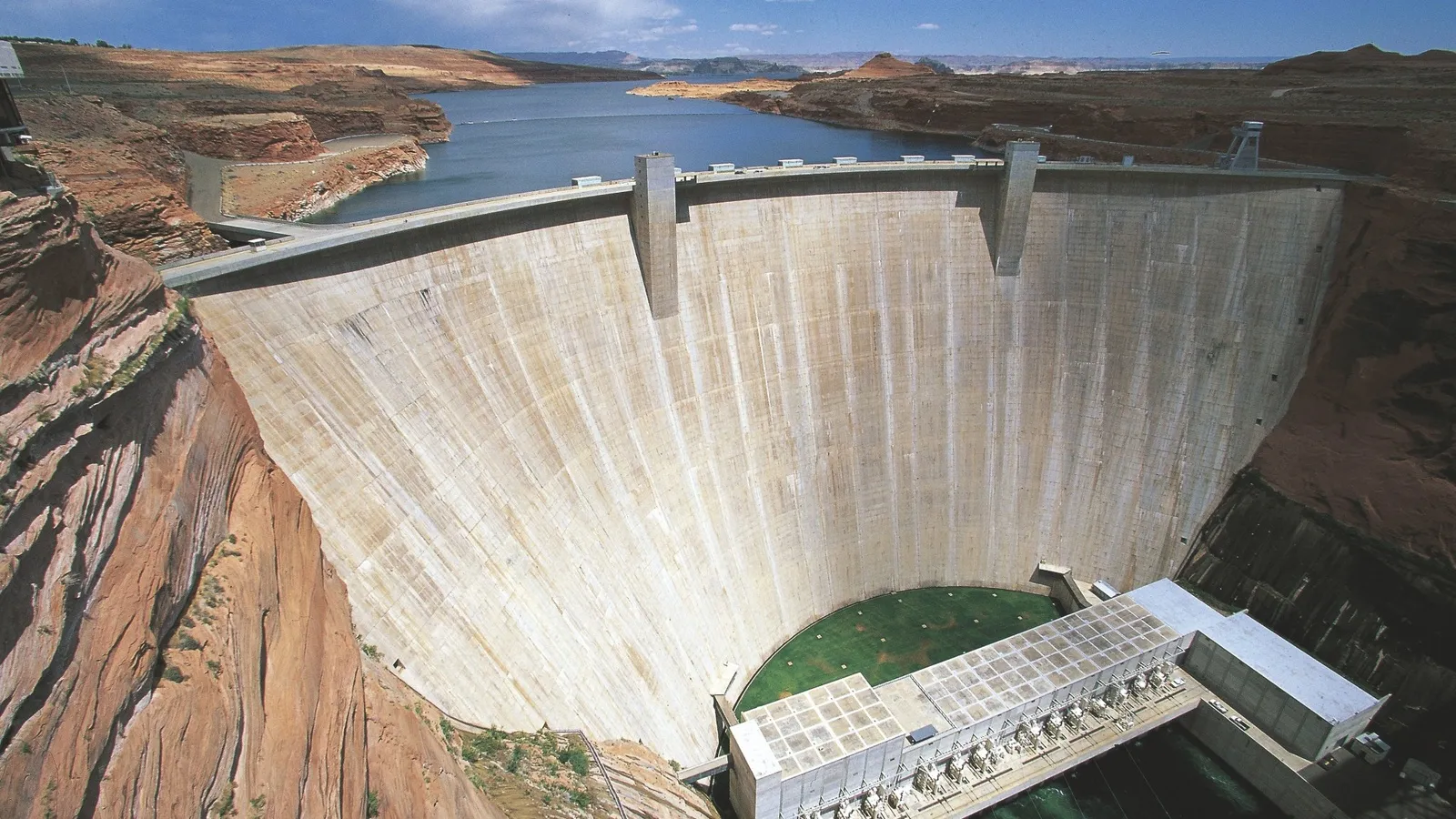
That fundamental vulnerability stems directly from the dam’s rigid structural limitations. If the surface elevation of Lake Powell drops below its minimum power pool, its penstocks—the massive steel pipes that channel water to the dam’s eight power-generating turbines—will be left stranded, high and dry. Lake water would then have to be released exclusively through the dam’s bypass tubes. These tubes sit at a lower elevation than the penstocks, but they possess less than half of the discharge capacity required to move large volumes of water efficiently.
Furthermore, these bypass tubes were never engineered for sustained, long-term operational use. Forcing high volumes of water through them could induce severe vibrations, abrasive scouring, and other mechanical stresses capable of causing irreparable structural damage to the dam. While the Bureau of Reclamation has long issued warnings against relying solely on the bypass tubes for continuous water releases, inspections and relining work completed in 2025 suggested they could function if pressed into emergency service. Yet a major logistical challenge would remain: depending exclusively on these narrow tubes would make it exceptionally difficult for Upper Basin states—Colorado, New Mexico, Utah, and Wyoming—to reliably meet their mandatory water delivery obligations to the Lower Basin states and, under international treaty obligations, to Mexico.
Rethinking the Unthinkable
Allowing greater volumes of water to flow freely through the Glen Canyon Dam infrastructure by systematically draining the lake through existing bypass tubes and newly bored lower diversion tunnels is no longer dismissed out of hand by water policy experts. "That conversation has evolved," notes Kathryn Sorensen, director of research at the Kyl Center for Water Policy at Arizona State University.

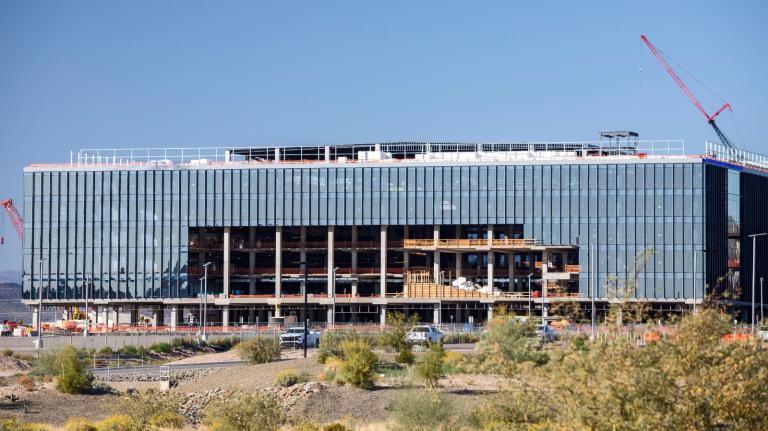
Lower release structures represent "an utterly reasonable idea" that warrants serious inclusion in contemporary planning discussions, according to Jack Schmidt, director of the Center for Colorado River Studies at Utah State University. Regarding the potential loss of hydroelectric generation capacity at Lake Powell, proponents of dam modification point out that those megawatts could be successfully replaced with modern utility-scale solar energy infrastructure. For comparison, the newly constructed Gemini solar installation near Las Vegas boasts a generation capacity of 690 megawatts, roughly comparable to the approximately 730-megawatt capacity of the Glen Canyon Dam.
The Lower Basin states, which rely primarily on Lake Mead for their supplies and have faced painful reductions in their water allocations to help prop up Lake Powell upstream, have actively urged the federal government to consider modifying the dam with lower outlets rather than forcing continuous, disruptive cutbacks on deliveries, as ordered by the federal administration in 2024.
"Addressing the infrastructure limitations may be the one long-term measure that would best achieve operation and management improvements to the Glen Canyon Dam," representatives of the Lower Basin states wrote in a formal letter to Interior Secretary Doug Burgum.
Completely draining Lake Powell "could annually reduce evaporative losses by a couple hundred thousand acre-feet," Sorensen points out, noting that current estimates suggest roughly 11 percent of the reservoir’s total water volume is lost to annual evaporation. "On a river that is much smaller than anyone expected, that water really matters," she explains. Even so, she cautions that while the Glen Canyon Institute’s proposals are gaining newfound traction, the strategy "faces a lot of obstacles."
Chief among those hurdles is the federal government itself. Federal planners did not include the possibility of draining Lake Powell as a viable management option within their recent environmental impact statement—finalized in August—which outlines strategies for governing the Colorado River over the coming decade.
Local resistance is also fierce. Officials in Page, Arizona, a municipality heavily reliant on a thriving water-based recreation industry centered around the lake, have strongly opposed any efforts to drain it. Organized opposition is also spearheaded by groups like the BlueRibbon Coalition, which advocates for motorized and off-road outdoor recreation. The coalition has put forward an alternative legislative model called the Colorado River Abundance Act. This proposal aims to supply treated water to Lower Basin states through nuclear-powered seawater desalination, brine treatment, and "advanced water reuse" technologies that purify municipal wastewater, carrying an estimated price tag of $40 billion.
Time and cost represent additional, formidable barriers. Constructing brand-new diversion tunnels would likely require an entire decade dedicated solely to exhaustive environmental studies, engineering design, and physical construction, with total expenditures running into the billions of dollars.
Ecological Trade-Offs and an Uncertain Future
Meanwhile, the diminished flows of the Colorado River are continuing to inflict severe strain on local riverine ecosystems. Aquatic scientists characterize these environments as "novel" because they have been fundamentally altered by more than 70 years of intensive human intervention, most notably the permanent elimination of natural seasonal flooding cycles. Due to plunging lake levels and operational constraints, the Bureau of Reclamation has been forced to cancel numerous scheduled environmental flows from the Glen Canyon Dam in recent years, depriving the river of the massive, natural pulses of sediment that form the bedrock of its native ecology. These seasonal flows are critical for rebuilding sandbars and beaches utilized by recreational boaters in the Grand Canyon while simultaneously generating shallow-water backwater habitats for threatened and endangered native fish species.
The bureau has historically utilized periodic releases of cold water from the depths of the dam to artificially lower the river’s temperature, deterring invasive, warm-water-loving fish species like bass from establishing permanent populations in the Grand Canyon stretch and outcompeting native fauna. However, the relentless drought—which continues to depress hydroelectric output—has severely restricted the agency’s ability to execute these protective cold-water releases.
Proponents of draining the reservoir argue that emptying Lake Powell would allow the buried Glen Canyon ecosystem to slowly heal as the river naturally flushes out decades of accumulated sediment. Native flora, including cottonwoods and willows, would naturally take root along the banks, helping to crowd out aggressive invasive species like tamarisk. Native fauna, such as river otters, beavers, migratory birds, and various amphibians, would be expected to return to the restored canyon landscape. Simultaneously, long-drowned red-rock arches, natural bridges, hidden amphitheaters, and subterranean waterfalls would gradually emerge from the mud, along with thousands of archaeological and cultural sites held sacred by Native American tribes.
Conversely, a fundamental shift in the regional hydrological regime would also trigger profound and complex ecological consequences across hundreds of miles of river ecosystems situated below the Glen Canyon Dam, including deep within the Grand Canyon. "It would change in ways that are only partially predictable," Schmidt explains. "Suddenly the river would have great fluctuations. The river would have much more sediment. The river would be much more turbid."
Furthermore, the Grand Canyon—long functioning as a fragile refugium for native fish—would likely be inundated with non-native fish species that were originally introduced into Lake Powell for sport fishing. "It just keeps getting more complicated," Schmidt acknowledges. "It’s all a trade-off in this screwy manmade world."
For the time being, the concept of "Fill Mead First" remains a long-shot vision, though one capturing substantially more attention as regional water levels continue their downward trajectory and global temperatures steadily rise. Ultimate authority over the future of the Glen Canyon Dam rests with the federal government. For advocates like Eric Balken, however, adopting a fundamentally new management regime is long overdue, arguing that continuing to artificially prop up Lake Powell is merely "kicking the can down the road."
"But," he warns, "they are running out of road."