
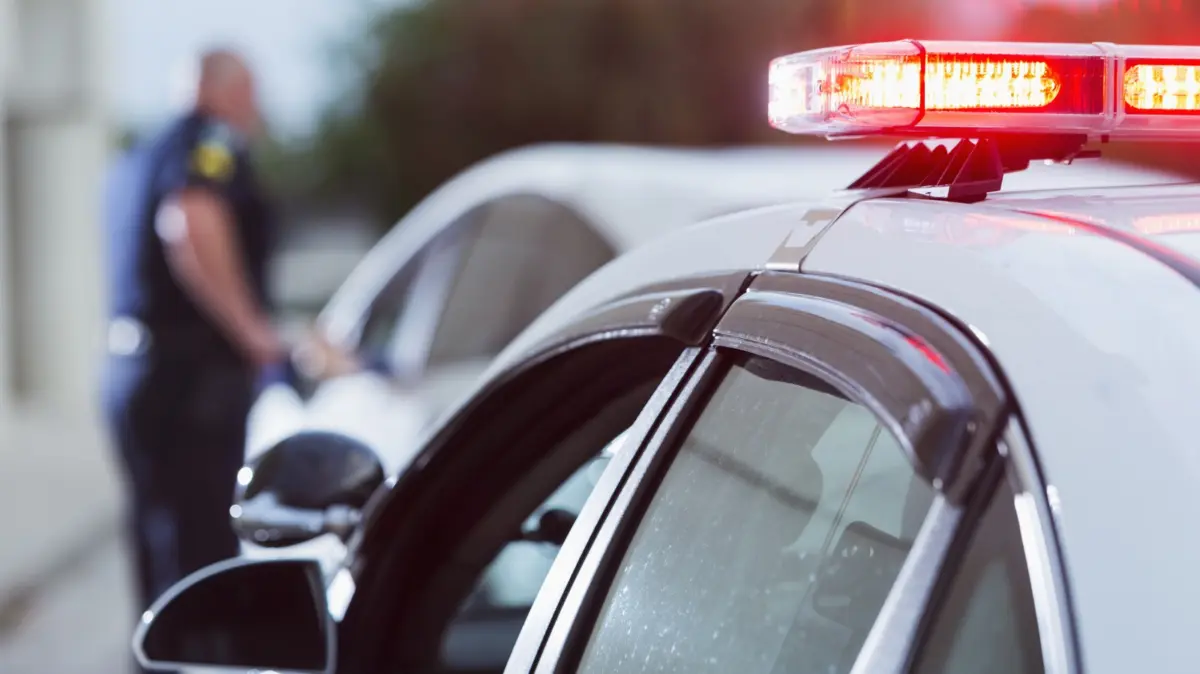
Getting pulled over by law enforcement is rarely a welcome experience for any motorist. The reasons for a traffic stop are seemingly endless, ranging from driving a vehicle that catches an officer’s attention to dangling a small keepsake from the rearview mirror, or even having an automated license plate reader misidentify a car as stolen. Now, imagine going through any of these scenarios while simultaneously navigating a neurological condition that introduces distinct communication challenges, such as autism. For someone dealing with sensory sensitivities, cognitive differences, and verbal difficulties, the already high-stress environment of a traffic stop can rapidly escalate into severe anxiety, trauma, or even a dangerous misunderstanding. Conversely, for a police officer approaching a vehicle completely unaware of a driver’s underlying medical condition, the potential for miscommunication, misinterpretation of behavior, and subsequent mishandling of the situation increases significantly.
To bridge this critical communication gap and foster safer interactions, the Blue Envelope Program was developed. The initiative is specifically designed to improve communication between law enforcement personnel and motorists who require additional accommodations, patience, or time during traffic stops. Conceived as an all-inclusive and straightforward information tool for both the driver and the police officer, the exterior of the envelope features printed instructions and practical guidelines regarding how the two parties should interact. Meanwhile, the inside holds essential documentation required during a police encounter, including a valid driver’s license, proof of insurance, and vehicle registration. By streamlining the exchange of information and immediately alerting the officer to the driver’s needs, the program aims to de-escalate tension from the very beginning of the stop.
How Does the Blue Envelope Program Work, and What States Use It?
To improve public safety awareness and actively reduce stress for drivers with Autism Spectrum Disorder, the state of Connecticut pioneered the first Blue Envelope program through state legislation enacted in 2020. Since its initial implementation, the initiative has expanded significantly across the country. According to data from the Organization for Autism Research, the program had been adopted either statewide or implemented through local municipal initiatives in 30 states by February 2026. Among those jurisdictions, 13 states have transitioned the initiative into a coordinated statewide effort, as reported by the National Conference of State Legislatures. These states include Arizona, Arkansas, Connecticut, Florida, Idaho, Indiana, Mississippi, Nevada, New Hampshire, New Jersey, Rhode Island, Tennessee, and Virginia.

Despite the widespread recognition of the blue envelope concept, the use of color or even the physical envelope format is not entirely universal across all participating jurisdictions. The color scheme chosen to represent specific medical conditions can vary widely depending on local law enforcement policies and regional health guidelines. According to legislative groups tracking these programs, the color blue is generally utilized to signify an autism spectrum diagnosis, while a yellow indicator is frequently displayed for motorists with broader communication impediments, and green is often designated for individuals managing mental health conditions. In Arkansas, for instance, officials provide both blue and green envelopes depending on the precise nature of a person’s condition and individual accommodations.
In addition to paper envelopes, several states distribute specialized decals or stickers to inform police officers and first responders about a driver’s extra needs before an interaction begins. States such as Florida, Idaho, Indiana, Nevada, New Jersey, and Tennessee utilize yellow-dot stickers that can be applied directly to either the driver’s physical license or the rear window of the vehicle. Arizona takes a specific regulatory approach, requiring its program decal to measure three and a half inches in diameter, featuring the phrase "saving lives" imprinted prominently in the center, and affixed to the upper left-hand corner of the vehicle’s rear window. Beyond these specific designs, however, there is often no rigid national standard regarding where these identifying markers must be placed. The primary objective remains ensuring that the indicator is clearly visible to instantly prompt approaching responders to exercise heightened patience, clarity, and care.
What Is Autism?
Autism as a recognized medical and neurological classification was first formally identified and described in 1943 by scientist Leo Kanner. According to the Autism Science Foundation, the term "autism" serves as a broad catchall phrase for a complex neurological condition in which affected individuals may display apparent apathy in social settings, maintain a strict insistence on daily routines, and exhibit repetitive behaviors such as physical rocking or hand-flapping. In some cases, the condition may also involve heightened aggression or self-injury. Furthermore, data from the foundation indicates that approximately 40 percent of autism diagnoses also include an accompanying cognitive disability.

Although contemporary scientific research strongly suggests a genetic origin, there remains no single known cause for autism. The condition is found across all cultures, races, geographic regions, and ethnic groups worldwide. Statistical studies show that boys are diagnosed approximately four times more frequently than girls, yet the outward characteristics and behavioral traits of the condition vary widely from person to person. Because there is often no single distinctive physical trait associated with the spectrum, individuals with autism are not always immediately recognizable. This lack of visible markers underscores precisely why proactive programs like the Blue Envelope initiative are vital as a first line of communication with police officers, emergency medical technicians, and other first responders. Without this crucial context, an autistic person’s lack of sustained eye contact, rapid physical movements, or unresponsiveness to rapid verbal directions could easily be misinterpreted by an untrained observer as deliberate disobedience, hostility, or an attempt to resist lawful orders.
Formal legislation is not strictly necessary to improve traffic stop safety for people with autism or other communication disabilities. Local law enforcement agencies possess the authority to organize and implement Blue Envelope programs independently, without requiring explicit state-level authorization or legislative mandates. Furthermore, for participating motorists, official medical diagnosis documentation is generally not required to obtain a color-coded envelope or an identifying vehicle decal. These resources are made readily available to the public through state motor vehicle registries, local police departments, driving schools, and specialized advocacy groups located within regions that have officially adopted the program.