
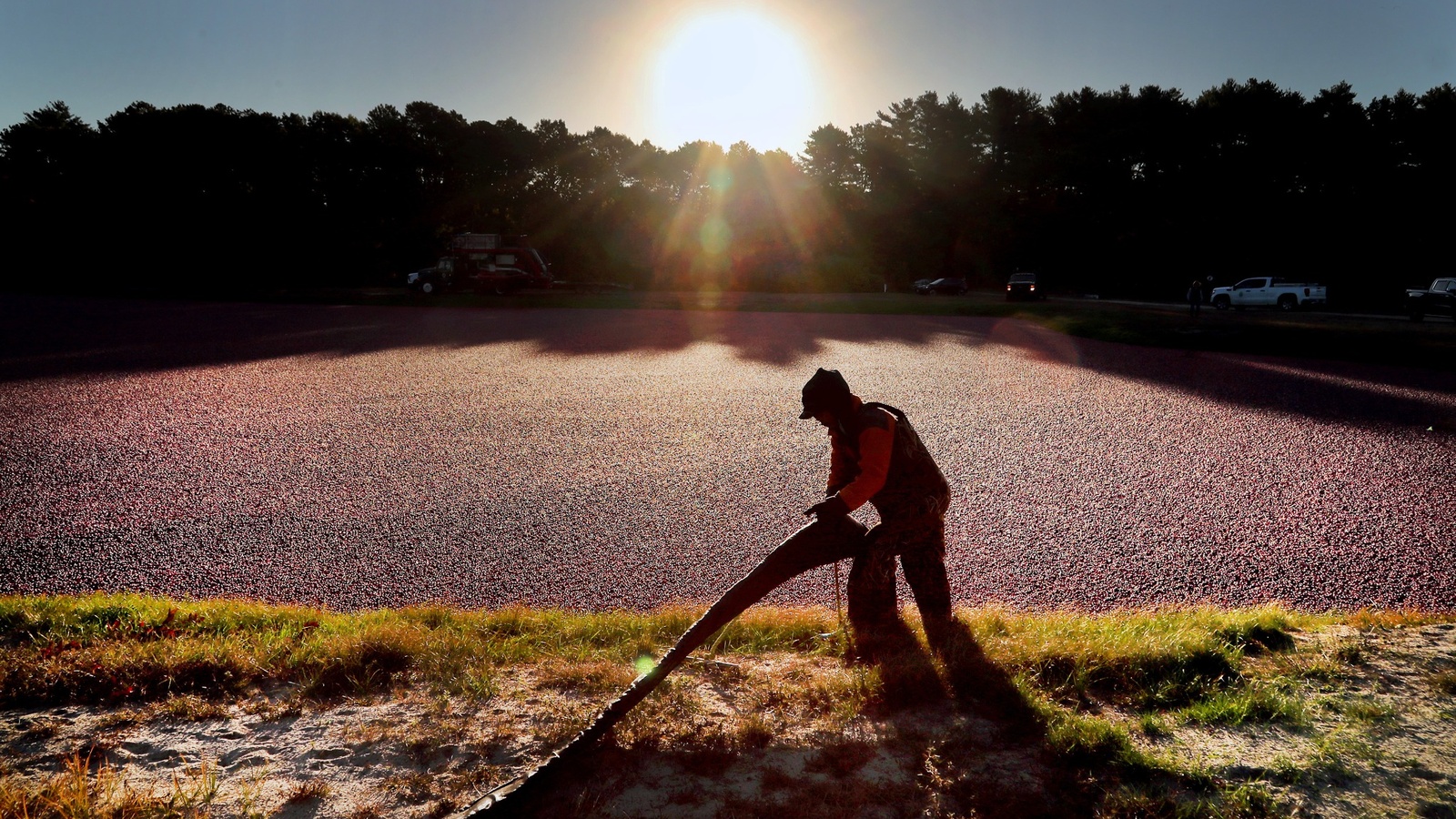
It is the heart of the cranberry harvest season in southeastern Massachusetts, a time when bogs throughout the region come alive with activity as growers collect the vibrant, ruby-red berries destined for holiday tables, juice bottles, and cans of jellied sauce. But at two distinct farms in the region, the traditional harvesting process looks entirely different this year. Farm workers and pickers are navigating specialized equipment around sturdy metal poles, operating comfortably in the cool shade cast by overhead solar panels.
These two working bogs represent a pioneering milestone: they are the first in the United States—and quite possibly the entire world—to successfully cultivate and harvest commercial crops of cranberries from beneath an operating photovoltaic solar installation. This autumn marks the second consecutive season that growers have reaped a successful harvest from underneath the elevated panels, proving that high-tech renewable energy generation and traditional agriculture can not only coexist, but thrive in the same footprint.
“We are literally proving it can be done,” said Prateek Tare, co-founder and executive vice president of Distributed Energy Infrastructure. His firm engineered and constructed the two pioneering projects: a substantial 4.4-megawatt solar array paired with a 13.5-megawatt-hour battery storage system located in the town of Kingston, and a separate 1-megawatt solar array situated in neighboring Plymouth.
The successful harvest arrives as Massachusetts aggressively pursues its ambitious climate roadmap, which targets net-zero carbon emissions statewide by 2050. Expanding solar energy generation is a cornerstone of that strategy. To accelerate progress, the state has offered targeted solar incentives since 2001, continually evolving and expanding those financial frameworks over the decades to spur rapid development across the landscape.
However, finding appropriate and acceptable sites for new solar projects has become a major point of socio-political contention within the densely populated and heavily wooded state. Building large-scale solar arrays on rooftops and parking lots in densely developed urban and suburban areas frequently drives up construction costs and severely limits overall generation capacity. Conversely, proposals to install solar arrays on previously undeveloped, open land routinely spark sharp protests from local residents worried about preserving the rural character of their communities, as well as from environmental advocacy groups fiercely opposed to disrupting local ecosystems and wildlife habitats.
Utilizing pre-cleared agricultural land offers a compelling alternative, but it immediately raises difficult economic and food-security concerns about removing productive agricultural acreage out of food production permanently. Many of these exact same land-use tensions and policy debates are currently playing out in rural and suburban communities across the United States as the clean energy transition accelerates.
To navigate these competing pressures, Massachusetts officials have increasingly encouraged the growth of agrivoltaics, also known as dual-use solar. This innovative strategy involves constructing elevated solar photovoltaic panels above active agricultural operations. The approach, which is rapidly gaining momentum and testing grounds nationwide, allows a single plot of farmland to serve a dual purpose: generating clean electricity while simultaneously allowing livestock to graze or crops to flourish underneath the protective, filtered shade of the overhead arrays.
Recognizing the potential of this approach, Massachusetts made history in 2018 by becoming the very first state in the nation to offer a specialized financial incentive specifically tailored to support dual-use solar projects. Under the state’s current solar incentive framework, participants receive a set base rate for every kilowatt-hour of electricity they generate and feed into the grid. For instance, a medium-sized solar array with a generating capacity between 1 megawatt and 5 megawatts currently commands a base rate of roughly 23.17 cents per kilowatt-hour. However, approved agrivoltaic projects qualify for a significant financial bonus, earning an additional 9 cents per kilowatt-hour.
For many traditional farmers facing mounting economic pressures, that financial boost can make all the difference. It is often enough to attract renewable energy developers interested in leasing land for solar arrays or, on rarer occasions, purchasing the property outright under a legally binding agreement to keep the land in active agricultural production. Furthermore, farmers who agree to lease their land are typically retained and paid separately for their specialized services in managing and maintaining the landscape, vegetation, and equipment around the panels and supporting poles.
In Kingston and Plymouth, the dual-use model took shape when clean energy developer Greenbacker Renewables purchased the properties—which had operated as productive cranberry-growing sites for decades—from generational farmers who were ready to retire from the business. Greenbacker subsequently partnered with Distributed Energy Infrastructure to construct the custom solar arrays. To ensure the agricultural side of the enterprise remained viable, they hired Iain Ward, a seasoned solar consultant and longtime local cranberry farmer, to manage the day-to-day growing operations. Both installations utilize a community solar model, selling clean electricity directly to local customers interested in securing lower utility bills and supporting regional renewable energy initiatives.
Solar development can be uniquely advantageous for cranberry farmers in Massachusetts, which produces more of the tart fruit than any other state in the country outside of Wisconsin. While conventional family farms specializing in sheep grazing or corn cultivation can often be sold off easily to residential or commercial real estate developers when farming becomes unprofitable, cranberry bogs carry strict legal protections as sensitive wetlands. Even if a bog ceases commercial production and falls into abandonment, local and environmental regulations dictate that it cannot be built upon or converted into housing developments. While not every wetland bog is geographically or logistically well-positioned to connect directly to the regional electrical grid, for the ones that are, integrating solar infrastructure can serve as an invaluable financial lifeline.
“This is a farm viability opportunity,” Ward said, emphasizing how the dual-use model helps preserve open space and agricultural heritage.
How to put solar on a cranberry bog
Figuring out the precise engineering required to build a massive commercial solar array directly over a water-saturated, spongy cranberry bog presented an entirely unique set of technical puzzles, according to Tare. The primary challenge centered on the structural foundations. For a typical solar array installed on standard dry soil, foundation pilings are driven roughly 8 to 10 feet deep into the earth. However, in a specialized cranberry bog, engineers had to drill and drive piles significantly deeper to locate a bedrock or sediment layer solid and stable enough to anchor the heavy steel structures securely. It required a considerable amount of trial and error, alongside specialized heavy machinery, to sink the support piles to the necessary depths without destabilizing the wetland. Additionally, because electrical wiring could not be safely or legally buried within the shifting, water-logged ground of the bog, engineers had to design and install an overhead wiring architecture.
“You’re trying to figure it out from a farmer’s perspective,” said Tare, who worked in close collaboration with Ward throughout the design and construction phases of both installations.
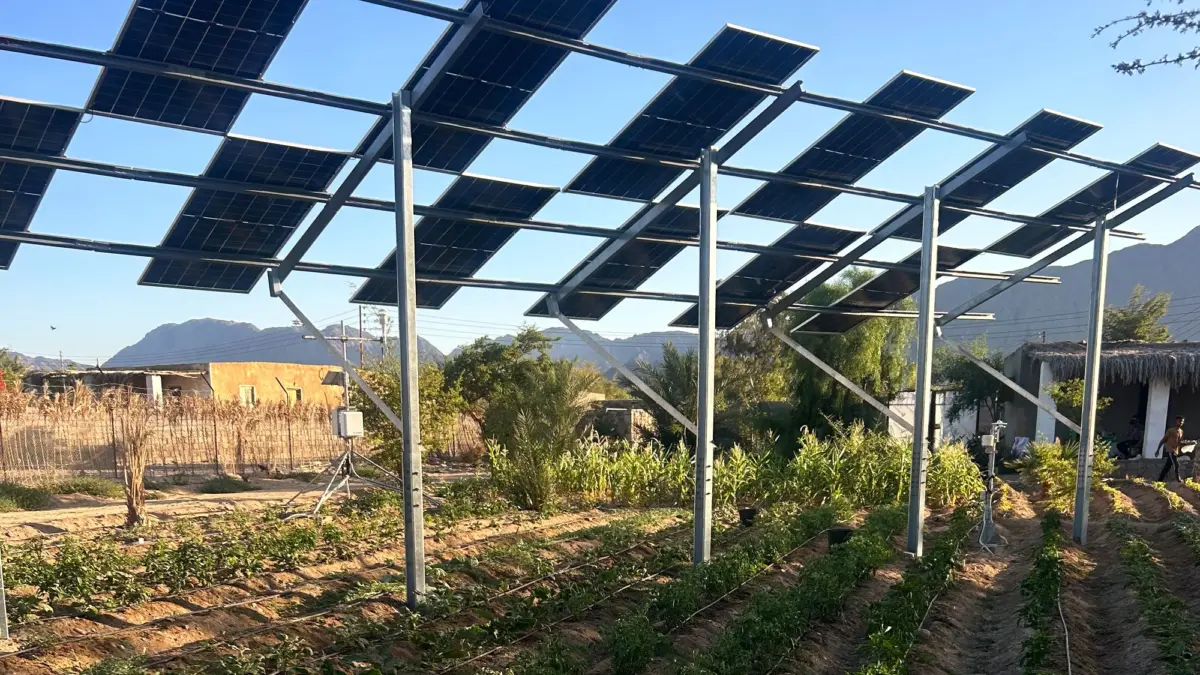
The resulting custom installations feature photovoltaic panels mounted a full 10 feet off the ground. The panels are placed on a tracking axis that allows them to slowly tilt throughout the daylight hours, optimizing their exposure to the sun. Furthermore, the vertical support pilings were deliberately spaced much farther apart from one another than standard solar engineering practices dictate, ensuring that heavy agricultural harvesting equipment could still be driven freely and safely through the flooded bog channels.
The tangible successes realized in Kingston and Plymouth have since opened doors to broader agrivoltaic opportunities for Tare’s company, leading to the development of similar dual-use arrays in apple orchards, working cattle pastures, and even a Christmas tree farm. Meanwhile, preliminary engineering and environmental assessment work is already underway for yet another regional cranberry bog.
At the same time, a long-stalled cranberry solar project located in the nearby town of Carver may soon be resuscitated. Five years ago, a different pair of commercial bogs in Carver were slated to become the nation’s very first cranberry agrivoltaic operations. The physical solar arrays were successfully constructed, and crops began growing beneath them, but the original corporate developer went bankrupt before the project could secure final interconnection approvals and officially begin generating power. Today, the new owner of the property holds every intention of completing the unfinished infrastructure.
“They’re not a failure,” Ward said regarding the stalled Carver site. “There is an opportunity for them to be finished.”
Looking ahead, Tare expects future cranberry solar projects to become progressively smoother as his engineering team carries forward the valuable lessons learned from these early hurdles. Although industry momentum has moved at a deliberate pace thus far, Ward is confident that development will accelerate as agricultural communities become more familiar with the concept.
“It is picking up steam, and the lessons learned have been significant,” Ward said. “When you change a paradigm, it takes a little time.”