
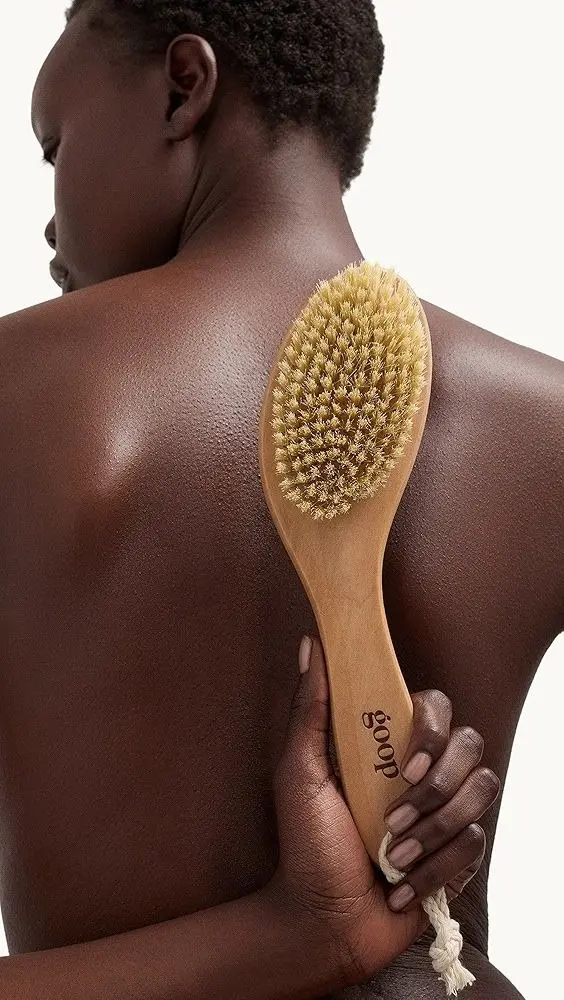
It seems that every time a "get-ready-with-me" video surfaces on social media, the initial step of the routine is rarely a serum or a cleanser. Instead, it is the rhythmic, deliberate sound of a bristled brush moving across bare skin. While dry brushing has long been a fixture in the wellness archives, its transition from a niche Ayurvedic practice to a mainstream morning ritual is now undeniable. It is a habit championed by celebrities ranging from Gwyneth Paltrow to Tracee Ellis Ross, yet its legitimacy is bolstered by a chorus of functional health doctors and medical professionals who argue that the practice offers tangible physiological benefits.
At its core, dry brushing is a remarkably simple, low-tech procedure: the act of running a firm-bristled brush across the skin in long, sweeping motions, always working toward the heart or torso. By working against gravity, the practice is designed to stimulate the body’s lymphatic system. Unlike the circulatory system, which relies on the heart to pump blood throughout the body, the lymphatic system lacks a central pump. It depends entirely on physical movement, deep breathing, and manual stimulation—such as massage or dry brushing—to facilitate the flow of lymph, a fluid that carries white blood cells and helps the body eliminate toxins.
The enthusiasm surrounding dry brushing is multifaceted, with proponents citing a wide range of health advantages. Enthusiasts often point to its ability to physically exfoliate the skin, helping to alleviate conditions like "strawberry skin"—the appearance of small, dark, or bumpy pores—and smoothing away the dull, grey layer of dead skin cells that often accumulates between seasons. Beyond the aesthetic improvements, practitioners suggest that the brisk friction increases blood flow and invigorates the body, making it a popular choice for those looking to jumpstart their energy levels at the beginning of the day.
While the practice is rooted in ancient traditions—specifically Ayurvedic medicine, which emphasizes the opening of detox pathways to support immunity, and traditional Chinese medicine—it is currently enjoying a modern resurgence. Lauren Berlingeri, co-founder of HigherDose, characterizes the practice as a powerful, time-tested tool. For those skeptical of the "wellness trend" label, the fact that these techniques have survived for centuries suggests they hold genuine utility beyond the ephemeral nature of social media fads.
The physiological arguments for the practice are compelling. Sophie Bolvary, a licensed massage therapist at Sanara, notes that the manual stimulation of the skin can be vital for immune health. Because the lymphatic system only functions when the body is in motion or being stimulated, dry brushing acts as a manual catalyst. Bolvary also distinguishes between types of brushes, noting that while boar-hair bristles are the gold standard for daily exfoliation, brushes with ionic-copper bristles offer an additional layer of benefit. In traditional medicine, copper is believed to sweep negative ions across the body, offering antiviral and antibacterial properties. Beyond the biological, Bolvary emphasizes the sensory experience, describing the brisk, rhythmic motion as a "sensory reset" that provides both grounding and energy, potentially sharpening mental alertness and brightening one’s mood. For an added sensory lift, some practitioners suggest adding a drop of citrus-based essential oil to the brush to further stimulate the senses.
Despite the anecdotal fervor, it is important to separate scientific reality from hyperbole. For instance, while some claim that dry brushing is a cure for cellulite, current evidence remains largely inconclusive, and such claims should be viewed with a degree of healthy skepticism. Similarly, while the practice is highly invigorating, it does not serve as a panacea for systemic issues like a hangover, regardless of how much one might wish for a simple brush-based remedy.
For those curious about incorporating the practice, the reality of the experience is often marked by an initial sensation of itchiness or tingling, accompanied by mild redness. This is generally a normal response, signaling that blood flow has been increased and is circulating closer to the skin’s surface. With consistent use, the skin often becomes accustomed to the sensation, and the initial sensitivity diminishes. It is also common to feel as though the skin is "dusty" after a session; this is merely the accumulation of the dead skin cells that have been sloughed off, which is why the practice is best performed immediately before hopping into the shower to wash the debris away.
In terms of frequency, professional guidance varies based on individual skin tolerance. For those with sensitive skin, board-certified dermatologist Dr. Marisa Garshick of MDCS Dermatology recommends limiting the practice to one or two times per week. Over-brushing or applying excessive pressure can lead to irritation or even micro-tears in the skin barrier. Consequently, those with conditions such as eczema, psoriasis, or broken, inflamed skin should approach dry brushing with caution or avoid it entirely. For those whose skin can tolerate it, however, a daily ritual can be highly effective.
The distinction between at-home dry brushing and professional treatment is also worth noting. A professional practitioner can reach areas of the body that are difficult to access, and they can provide personalized guidance on the correct pressure and technique. However, for those practicing at home, the barrier to entry is low. A simple "lymphatic glow map"—often available through basic research—can provide a reliable guide on how to sweep the brush toward the main lymph ports of the body. Once the technique is mastered, the process requires only a few minutes to complete, making it an accessible and affordable addition to a wellness routine.
Maintaining the tools of the trade is equally important for efficacy and hygiene. Because dry brushes are typically constructed from natural materials, they require gentle care. Bolvary recommends cleaning the brushes every two weeks by soaking the bristles—and only the bristles—in a bowl of warm water mixed with a few drops of tea tree oil for approximately 30 minutes, followed by air-drying in a well-ventilated area, preferably near a window rather than on a damp shower ledge where bacteria may thrive. It is also important to recognize that these tools are not permanent. Over time, bristles will soften and eventually begin to shed, signaling that the brush has reached the end of its functional life and should be replaced.
The choice of tool can significantly influence the experience. The market offers a variety of options, ranging from the high-end, copper-bristled brushes favored by those seeking the ionic benefits mentioned by practitioners, to compact, ergonomic brushes designed for ease of use in hard-to-reach areas. Whether opting for a long-handled brush or a palm-held design, the focus remains on the quality of the bristles and the texture they provide.
Ultimately, dry brushing serves as an intentional, meditative act. While it may not provide a dramatic, overnight transformation, the cumulative benefits—smoother skin, increased morning vitality, and the mental clarity that comes from a dedicated daily ritual—are tangible. In a fast-paced world, carving out a few minutes each morning to perform a practice that is both grounding and invigorating is an underrated investment in one’s personal well-being. Whether one is looking to polish the skin or simply wake up the body, the practice of dry brushing offers a simple, effective, and deeply satisfying way to start the day.