
Suzuki has long occupied a unique and polarizing space within the global motorcycle industry. For better and for worse, the Japanese manufacturer has built a reputation as a company that prefers to keep its tried-and-true assembly lines running indefinitely rather than constantly chasing clean-sheet redesigns. While the firm does occasionally surprise the market with something genuinely revolutionary, it is far more likely to approach product development by creatively recombining components and engines that it already has resting comfortably on the shelf.
Therefore, as motorcycle enthusiasts and industry insiders gathered for the massive EICMA exhibition, it came as little surprise that Suzuki’s major announcements were anchored by powerplants old enough to legally drink in most of the world. Yet, true to form, those venerable engines have been packaged into what appear to be remarkably compelling motorcycles, bridging the gap between nostalgic mechanical heritage and modern regulatory and electronic demands.
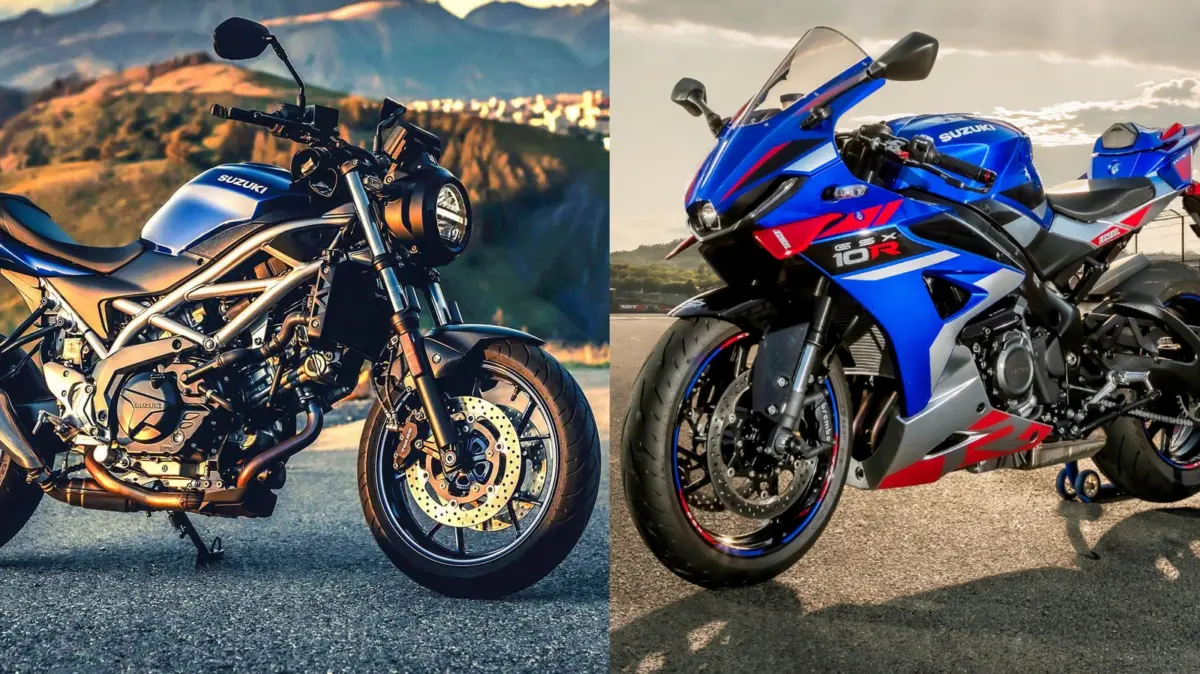
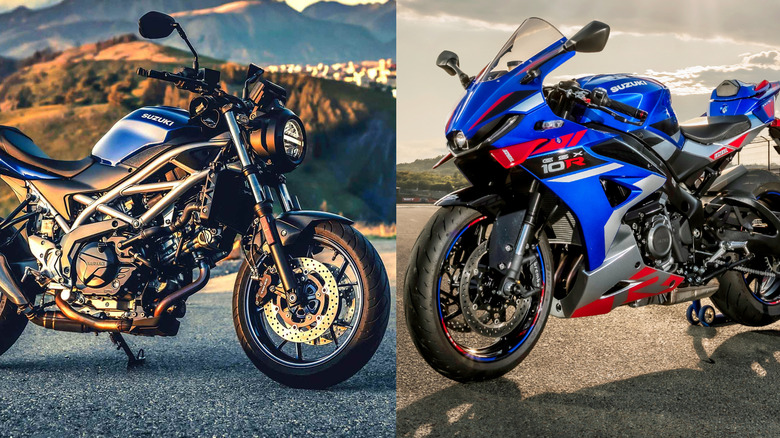
The focal points of Suzuki’s showcase this year are the newly introduced SV-7S and the GSX-10R. These machines are built around two of the most celebrated and enduring engines in modern motorcycling history: the 27-year-old SV650 V-twin and the 21-year-old K5 GSX-R1000 inline-four. The former serves as a thoughtful, evolutionary update to the outgoing SV650, incorporating contemporary lighting systems, updated emissions equipment, a modern quickshifter, and a sophisticated ride-by-wire throttle assembly wrapped securely around the foundational frame and engine layout of its predecessor.
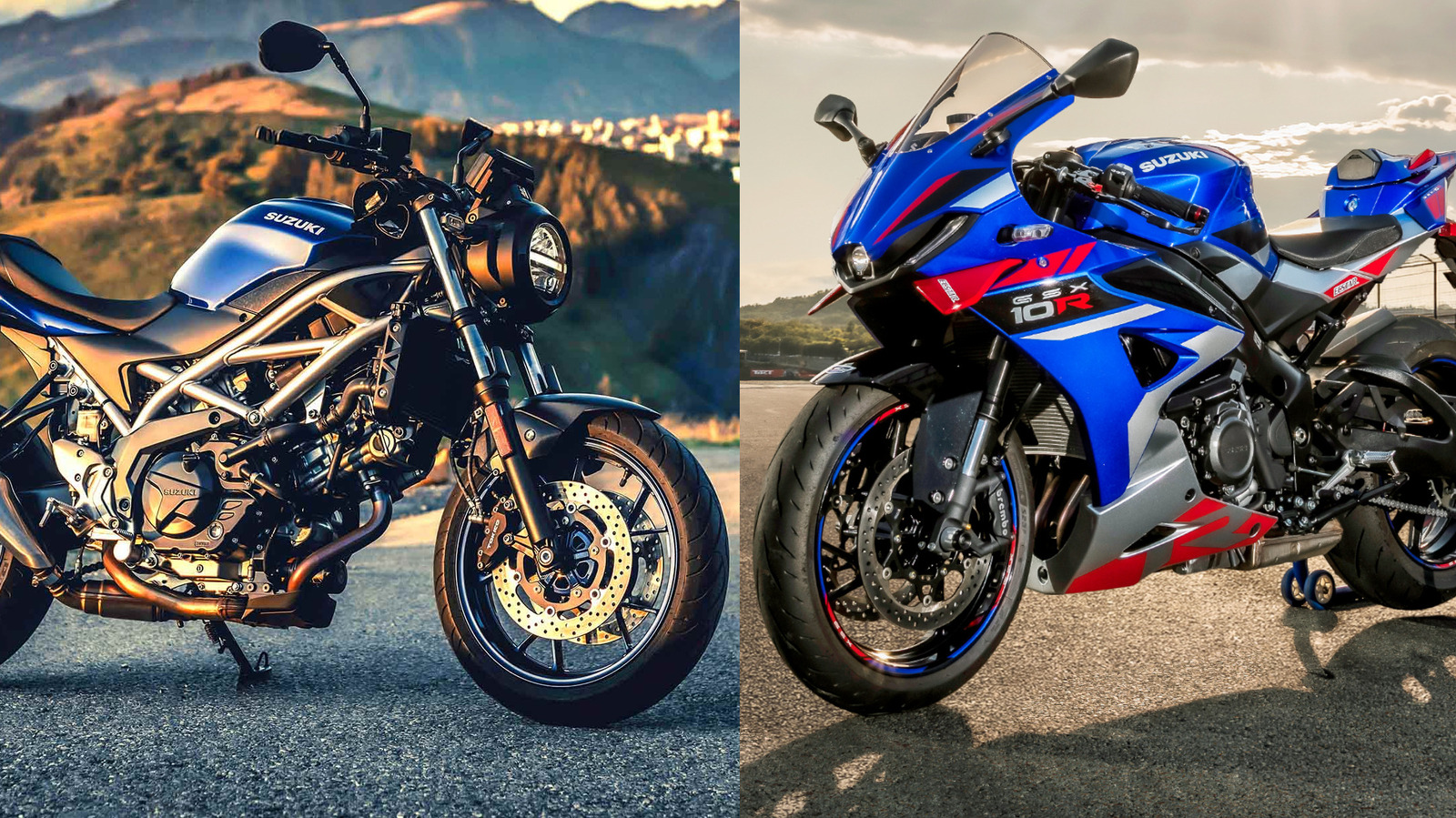
Most importantly for riders in European markets, the debut of the SV-7S ensures that the characterful 645 cc V-twin lives on, successfully navigating the stringent hurdles of Euro 5+ emissions regulations. While official corporate spec sheets from Suzuki do not explicitly list new power figures for the updated platform, the machine is widely expected to produce the same responsive 73 horsepower that the platform has delivered since time immemorial. By keeping the mechanical heart intact while updating the surrounding peripherals, Suzuki has managed to preserve the accessible, punchy character that made the original platform a favorite among commuters, canyon carvers, and riding schools alike.
From an update to something more new
While the SV-7S represents a calculated update and a strategic name change for a long-running platform, the GSX-10R leans toward something substantially different. It is ostensibly an entirely new addition to the lineup, though seasoned observers will quickly note that it is largely a fully faired derivative of the GSX-S1000, the brand’s popular naked literbike. Despite sharing a similar engine displacement with high-performance sportbikes of the past, the GSX-10R is structurally and philosophically distinct from the track-focused, top-tier GSX-R1000. Instead, its overall design ethos feels much closer to a spiritual revival of the beloved K5 GSX-R1000 from the mid-2000s—a generation of motorcycles often revered for its raw, accessible power delivery and robust reliability.
Yet, despite initial skepticism and debates circulating across enthusiast forums and online communities, dismissing the GSX-10R as a mere reheated leftover of the K5 era overlooks its modern engineering context. The naming convention itself offers a clear clue about the manufacturer’s intentions, neatly aligning the machine with models like the GSX-8R. Suzuki has explicitly engineered the new 10R to be substantially more streetable and accommodating than the uncompromising Gixxers of old. This intent is evident in practical ergonomic and functional choices, such as lower-set footpegs that reduce knee angle fatigue, integrated USB power outlets for modern electronics, and a broad, torque-rich powerband designed for real-world riding conditions where sustaining redline RPMs on public roads is neither practical nor legal.
Furthermore, the machine benefits from a comprehensive suite of modern rider aids. A full electronic package is integrated to assist with everything from precise traction control and cornering braking modulation to launch control, adjustable engine braking characteristics, hill-start assistance, and relaxed cruise control capabilities for long-distance highway transits.
If the GSX-10R ultimately performs in the real world precisely as Suzuki promises—functioning essentially as a four-cylinder equivalent to the GSX-8R, merging the legendary durability and character of the K5 literbike architecture with the everyday rider comfort expected of a modern sport-tourer—it has the potential to stand out as one of the most exciting and practical releases to emerge from the EICMA show floor. For riders eager to test the validity of Suzuki’s latest formula, the remaining challenge will simply be navigating availability and figuring out how to secure a test ride.