
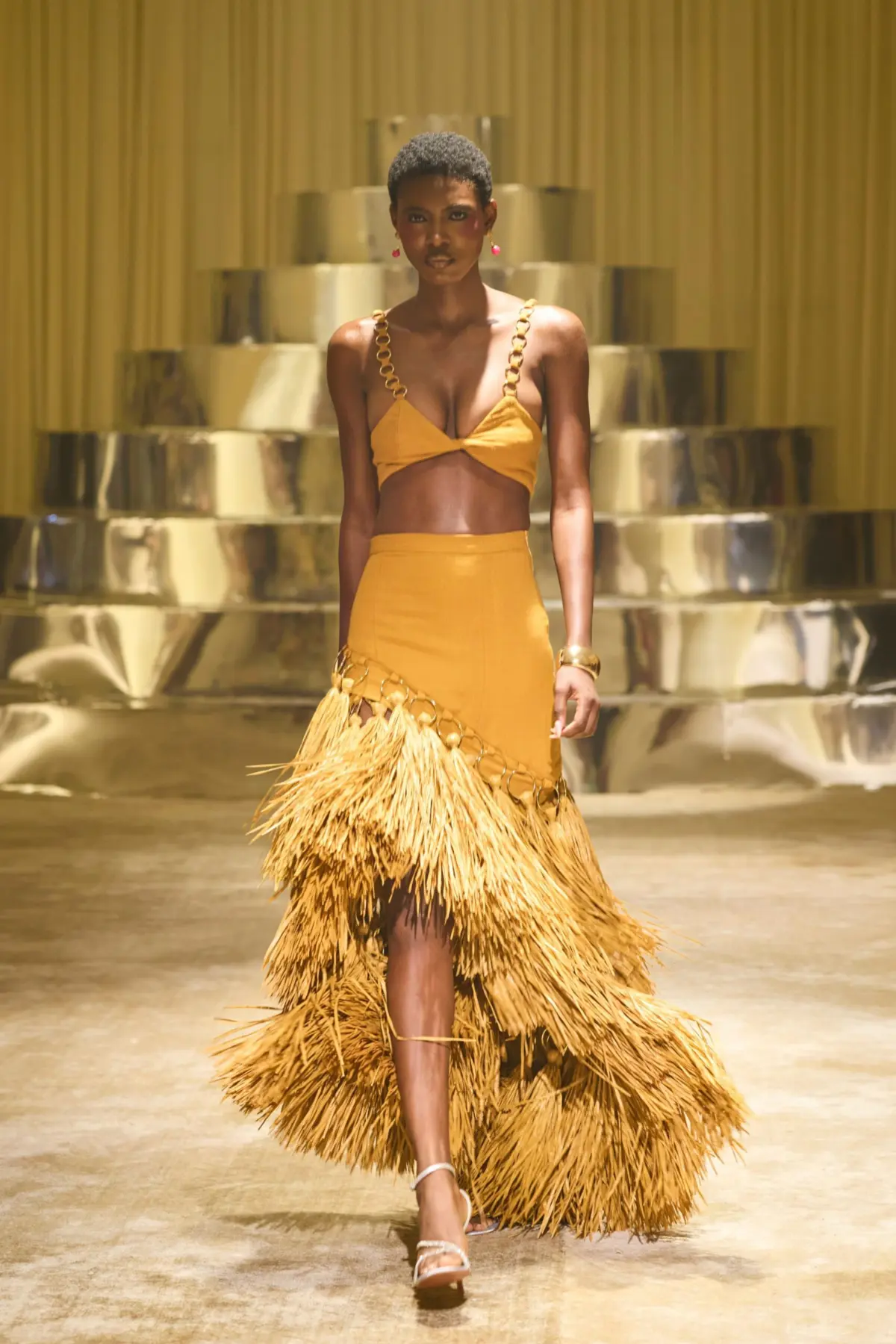
The atmosphere inside the venue was electric, humming with an anticipation that often precedes a major shift in a designer’s creative trajectory. As the house lights dimmed, the opening bars of Raye’s "Where Is My Husband" surged through the sound system, filling the room with an undeniable, rhythmic intensity. Before a single model stepped onto the catwalk, the audience was treated to an immersive performance: dancers, previously obscured among the front-row guests, rose in unison to execute a riotous, high-energy choreography. The performance served as an arresting prelude to the Kìléntár Spring 2027 collection, a presentation that signaled not just a new season, but a profound exploration of the complexities and inherent dualities of the modern woman.
As the dancers exited and the room settled into a breathless quiet, the runway show commenced, revealing a collection that felt deeply personal yet universally resonant. For Michelle Adepoju, the founder and creative director of Kìléntár, this collection was an exercise in the tension between public perception and private identity. It was a meditation on the dichotomy of being observed versus the agency one exerts in choosing how they are seen.
"Being seen and choosing how you want to be seen are two very different things," Adepoju remarked following the show. This philosophy was the bedrock of her design process this season. Throughout the collection, Adepoju manifested this concept through the strategic placement of intricate details on the garments—often tucked away where they would not be immediately apparent to a casual observer. One standout piece, a vibrant yellow dress, featured a thick, elaborate braid adorned with metallic rings cascading down the back. It was a striking example of the designer’s intent: to challenge the viewer to look closer and to appreciate the elements of a design that require time, proximity, and attention to uncover.
Adepoju’s fascination with the unseen is a hallmark of her evolving aesthetic. "I’ve been really fascinated by the beauty of what isn’t immediately revealed," she explained. "Something can seem very simple but have a lot of complexity to it as well." This intellectual approach to garment construction transformed the runway into a series of visual riddles, where the allure of the clothing lied as much in its hidden architecture as in its outward silhouette.
The theme of revelation and concealment was further underscored by the presence of rings, which acted as a recurring motif throughout the presentation. These circular emblems were not merely ornamental; they were integral to the collection’s narrative. Upon taking their seats, guests found small wooden boxes waiting for them. Inside each box was a set of stackable rings and a handwritten-style note bearing the mantra: "not everything needs to be revealed." The gesture invited the audience to become active participants in the collection’s theme, physically engaging with the symbolism that Adepoju had woven into the fabric of the show.
For the designer, the use of rings was a deeply sentimental homage to her family history, specifically her mother’s enduring love for jewelry. "A lot of things that I do are a reference to her," Adepoju shared, highlighting the biographical layer that informs the Kìléntár brand. By incorporating these personal totems into the runway experience, she bridged the gap between the high-fashion stage and the intimate, domestic experiences that shape a designer’s worldview.
The collection itself was a masterclass in balancing tradition with a forward-looking, contemporary sensibility. Signature Kìléntár elements were present throughout, most notably in the thoughtful integration of aso oke—the traditional, hand-woven textile native to the Yoruba people of Nigeria. Adepoju, who has long championed the modernization of traditional Nigerian craftsmanship, showcased the fabric in entirely new light. Rather than relying on classic silhouettes, she reimagined the storied textile into sharp, modern shapes, including a deep-V peplum top paired with a structured, matching skirt. The juxtaposition of the historic, heavy fabric with such sleek, architectural tailoring highlighted the versatility of the textile and the designer’s ability to manipulate it into a distinctly 21st-century language.
Sound, too, played an integral role in the storytelling of the collection. The runway was not a silent space; it was a sensory environment where the movement of the garments contributed to the overall experience. The soft, rhythmic swaying of raffia—a material deeply rooted in natural, artisanal tradition—provided a tactile soundtrack as models moved. Complementing this were the sharp, metallic clinks of the rings adorning the clothing, creating a percussive score that underscored the structural rigidity of the pieces. Every rustle of fabric and every clatter of metal felt intentional, serving as an acoustic reminder of the craftsmanship involved in the construction of each look.
The Spring 2027 collection is, in many ways, a defining moment for the brand. It represents a "loud step" into the next chapter of Kìléntár’s existence. By grounding her work in the dualities of the feminine experience—the seen and the unseen, the simple and the complex, the traditional and the contemporary—Adepoju has created a collection that feels both grounded in its heritage and ambitious in its scope.
As the final models took their walk, the audience was left with the lingering impression of a brand that has moved beyond mere garment production into the realm of conceptual design. The performance, the tactile nature of the rings, and the sophisticated evolution of the aso oke textiles all pointed toward a designer who is increasingly confident in her voice. Adepoju is not just presenting clothes; she is presenting a perspective, one that demands that the observer move past the surface and engage with the layers beneath.
In an industry that often prioritizes the immediate impact of a visual image, Kìléntár’s commitment to "what isn’t immediately revealed" feels like a refreshing, albeit challenging, invitation. It is a reminder that fashion, at its best, is a form of communication—a dialogue between the designer’s intent and the wearer’s reality. With this latest collection, Michelle Adepoju has ensured that the dialogue is as rich and multifaceted as the women she designs for.
The runway show ultimately concluded with the same sense of intentionality with which it began. The memory of the dancers’ opening energy and the tactile, ring-adorned boxes left a lasting impression on the guests, signaling that the Kìléntár label is moving into a phase of heightened maturity. By weaving together the personal—her mother’s influence—and the global—the modernization of aso oke—the brand has successfully positioned itself as a key player in the evolving landscape of contemporary fashion. For Kìléntár, the Spring 2027 collection is not just a seasonal update; it is a declaration of identity, proving that the most profound expressions are often those that require us to look a little closer, to listen a little harder, and to appreciate the beauty of what remains hidden.