
The Lagos fashion scene, long regarded as a pulsating heart of African creativity, witnessed a highly anticipated homecoming this past Thursday night. Eight years after her last runway appearance in the Nigerian metropolis, Ghanaian designer Aisha Ayensu, the creative force behind the acclaimed label Christie Brown, returned to the city to unveil her latest collection. The showcase was more than just a presentation of garments; it served as a symbolic bridge, reconnecting one of West Africa’s most iconic brands with a market that has long admired its craftsmanship and structural ambition.
For Ayensu, the return felt both nostalgic and necessary. Standing backstage amidst the frenetic energy of the runway production, she reflected on the brand’s history in Nigeria and the unique draw of the city. "This isn’t our first rodeo here," Ayensu said, a smile punctuating her words. "We used to show quite a lot, so we’re excited to be back. I love the energy here. It’s just so infectious. There is a particular rhythm to Lagos that pushes a designer to be better, sharper, and more intentional."
The decision to return to Lagos after such a significant hiatus underscores a broader strategy for Christie Brown as it navigates a new era of regional fashion diplomacy. Having established itself as a staple of the Ghanaian luxury market, the brand’s re-entry into the Nigerian ecosystem signals a renewed focus on West African solidarity and market expansion.
A Departure into Muted Sophistication
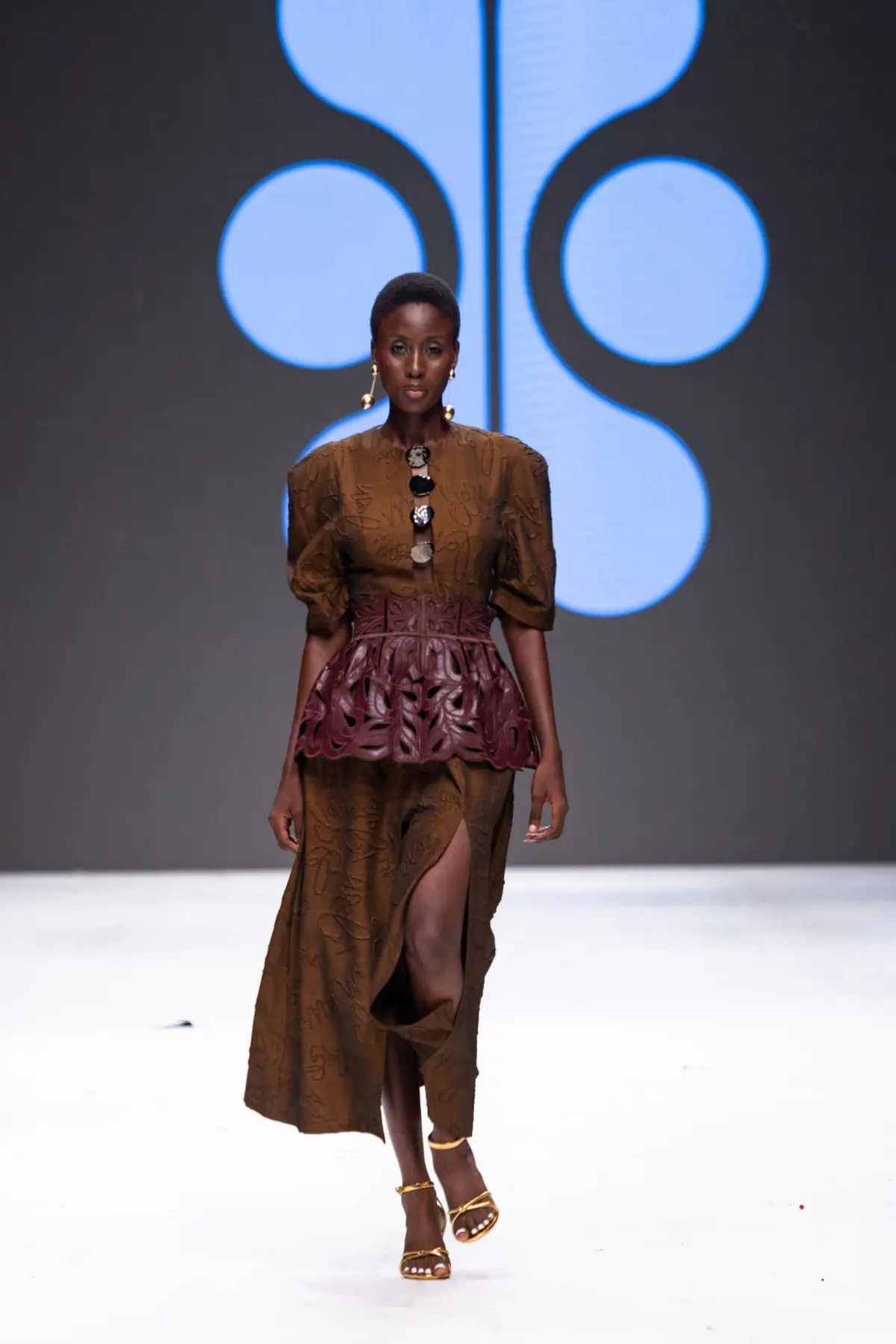
Those who have followed Christie Brown’s trajectory over the last decade are well-acquainted with the brand’s signature DNA: bold, architectural silhouettes and a fearless application of saturated, vibrant color palettes. However, the collection unveiled on Thursday marked a distinct, intentional pivot. While the structural integrity that has defined the brand remained firmly intact, the aesthetic language shifted toward a more nuanced, muted vocabulary.
The collection was defined by a deliberate restraint, favoring earthy tones, grays, and beiges over the high-contrast palettes of previous years. This aesthetic departure was not merely a stylistic whim but a deeply researched exploration of history and infrastructure. Ayensu drew primary inspiration from the iconic Adomi Bridge in Ghana’s Eastern region. Built in the immediate wake of the country’s independence, the bridge stands as a testament to mid-century optimism, engineering prowess, and the spirit of national progress.
Ayensu’s fascination with the bridge extended beyond its physical form. She sought to capture the atmosphere of the era—the collective sense of hope and the structural rigidity of the period’s architecture. By translating the bridge’s geometric lines into garment construction, she managed to maintain the “Christie Brown edge” while softening the overall visual output.
Central to this effort was the integration of Ewe kente. A traditional textile woven by the Ewe people of southeastern Ghana, Ewe kente is often celebrated for its intricate patterns and historical weight. In the hands of Ayensu, however, the fabric was treated with a contemporary, almost clinical, sensibility. By playing with the color palette of the traditional weave—replacing typically vibrant threads with monochromatic shades of gray and beige—she successfully repurposed a heritage textile for a modern, global silhouette. The result was a collection that felt grounded in ancestry yet fully prepared for the contemporary urban environment.
The Evolution of the "She is King" Archetype
The context of the show inevitably invited reflections on time and growth. The last time Christie Brown commanded the Lagos runway, the fashion industry was gripped by the #girlboss phenomenon. It was an era defined by a specific type of aesthetic—one that was perhaps more performative and urgent. The collection presented during that period was titled "She is King," a moniker that became synonymous with the brand’s mission to empower the modern woman through sartorial armor.
Looking at the landscape of Spring 2027, Ayensu finds interesting parallels between the past and the present. Certain design elements, such as exaggerated shoulders and deliberate, structured ruffles, have made a resurgence. Yet, the way these elements were executed in the latest collection revealed a shift in the designer’s philosophy.
"We’re committed to building wardrobes that you always come back to," Ayensu explained when discussing the longevity of her pieces. "And this is where the woman has now evolved to. She is King, but in a mature way. She doesn’t have to prove so much."
This evolution reflects a transition from the frantic "hustle culture" of the 2019 era toward a sense of quiet confidence. The woman Ayensu is designing for today is less concerned with the performative aspects of power and more focused on the substance of her own presence. The ruffles and bold shoulders of 2027 feel less like a shout and more like a statement of poise. It is a subtle shift, but one that feels entirely in line with the brand’s maturation.
Reconnecting with the Lagos Pulse
The significance of the show went beyond the clothing itself. In an era where digital fashion shows and localized content often dominate the industry, the physical act of showing in Lagos remains a vital component for African luxury houses. The city’s fashion community is notoriously discerning, and the energy in the room was a reminder of why designers like Ayensu feel compelled to return.
The connection between the Ghanaian brand and the Nigerian audience was palpable. As the final looks made their way down the runway—muted tones catching the stage lights in ways that highlighted the intricate geometry of the cuts—it was clear that Christie Brown had not lost its ability to command attention. The collection served as a bridge between the past, present, and future: the heritage of Ewe kente, the structural history of the Adomi Bridge, and the evolved, mature sensibilities of the modern African woman.
By stripping away the distractions of overly vibrant colors and focusing on the essential qualities of structure and silhouette, Ayensu has managed to redefine what Christie Brown stands for in the late 2020s. The show served as a successful homecoming, not just for the brand, but for the designer’s own creative evolution. It signaled that while the brand is deeply rooted in the history of the region, it is not tethered to it.
As the lights dimmed and the applause filled the hall, the atmosphere suggested that the eight-year wait had been worth it. The return of Christie Brown to Lagos was not just a successful business move or a well-received show; it was a reaffirmation of a long-standing creative dialogue between two of West Africa’s most dynamic fashion capitals. With this collection, Ayensu has proven that the "She is King" archetype is not a static concept, but one that grows, matures, and continues to find new ways to express its power through the quiet, confident language of structure and form.
The brand’s presence in Lagos continues to resonate with those who see fashion as a form of cultural archiving. Whether through the architectural inspiration of a post-independence bridge or the intricate threads of a traditional textile, Christie Brown’s latest offering ensures that the dialogue remains as vibrant as ever—even when the colors themselves have been dialed back to a whisper. For the Lagos fashion community, the message was clear: Christie Brown is back, and it has never been more refined.