
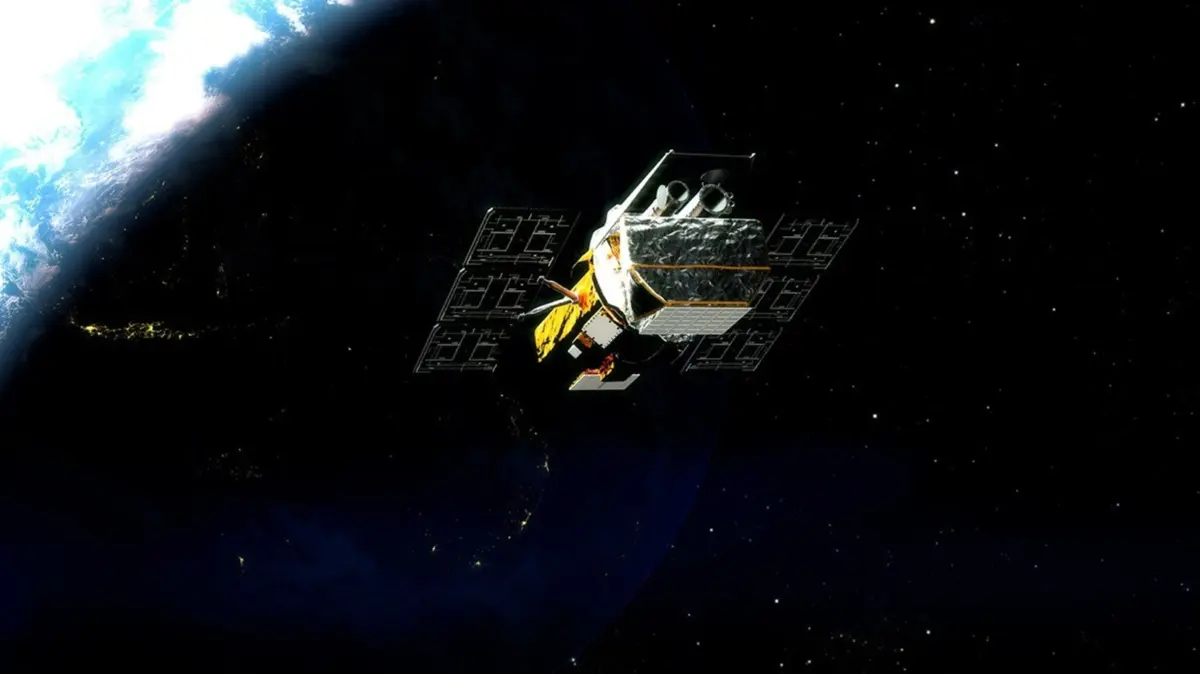
The skies above Indonesia witnessed the fiery conclusion of a long-serving scientific instrument on Wednesday, as NASA’s Neil Gehrels Swift Observatory finally re-entered Earth’s atmosphere. Having spent more than two decades in orbit since its launch in November 2004, the space telescope succumbed to the inevitable decay of orbital mechanics after exhausting the propellant required to maintain its altitude or adjust its trajectory.
However, the manner of its return has raised pressing questions regarding the safety margins of aging spacecraft. According to telemetry and post-reentry data analysis, the satellite’s descent carried a statistical risk of human casualties roughly five times higher than the strict limits mandated by NASA’s own technical standards.
How and why this significant discrepancy occurred remains a complex puzzle. Addressing the shift in risk metrics, NASA Public Affairs Specialist Alise Fisher explained the agency’s initial calculations to reporters: "In the leadup to Swift’s Nov. 20, 2004, launch, NASA determined the risk was consistent with mission requirements as allowed by agency policy."
Somewhere between the spacecraft’s initial ascent two decades ago and its uncontrolled plunge back to Earth, that risk assessment shifted dramatically. Spaceflight experts note that this is unlikely the result of a specific human error or calculation oversight. Rather, it is a stark reminder of the unpredictable nature of orbital decay and the inherent difficulties of forecasting decades into a satellite’s operational lifespan. Even so, the incident highlights an uncomfortable truth about modern aerospace management: humanity’s primary defense against the accumulating detritus of space exploration continues to rely heavily on pure statistical probability and good fortune.
Swift’s fiery demise was ultimately triggered by a simple depletion of resources. Like many low-Earth orbit satellites, it required continuous station-keeping to counteract the subtle yet persistent drag of the upper atmosphere. Once its fuel reserves were entirely exhausted, its descent became a foregone conclusion.
In an effort to prevent this exact scenario, NASA invested heavily in an innovative mitigation strategy. The agency allocated $30 million to a private aerospace company in an unprecedented attempt to mount a rescue mission. The plan called for a specialized servicing satellite to rendezvous with Swift, latch onto the observatory, and physically boost it back into a safe, sustainable orbit. Tragically, that experimental rescue satellite encountered its own operational failures, leaving Swift without assistance and sealing its fate as an uncontrolled reentry vehicle.
Shifting Odds of Risk From Above
In formal aerospace terminology, the descent of the Swift observatory is classified as an "uncontrolled reentry." This designation indicates that the spacecraft possessed no active propulsion capabilities during its final descent, leaving it entirely at the mercy of gravity and atmospheric drag as it tumbled blindly toward the surface of the planet.
For decades, space agencies have operated under internal guidelines to mitigate the dangers posed by such debris. NASA’s own requirements, which date back to 2001 and received their most recent update in 2021, explicitly state that for uncontrolled reentries, the statistical risk of human casualties resulting from surviving debris must remain below 0.0001, commonly expressed as a 1-in-10,000 threshold.
Despite the potential dangers to populated areas, there is currently no binding international law requiring every satellite operator to execute controlled de-orbits that safely target remote oceanic regions. Consequently, the global population relies almost entirely on statistical safety margins to shield the planet from falling space hardware.
Historically, this probabilistic defense has held up. Since the dawn of the space age, roughly 10,000 satellites have de-orbited and fallen back to Earth without causing widespread harm. Statistically speaking, however, experts have long warned that the cumulative numbers are catching up with us. This delicate balance was established during an era when orbital traffic was a fraction of what it is today. In recent years, the commercialization of space has driven a massive paradigm shift, highlighted by the deployment of tens of thousands of new satellites into low-Earth orbit to build sweeping megaconstellations.
In the case of the Swift observatory, however, NASA appeared to manage public disclosures regarding the risk profile with unusual discretion. Observers noted that the agency did not release a dedicated risk assessment for the spacecraft’s specific reentry path prior to the event, a step that is typically standard procedure for high-profile spacecraft returns.
Instead, the revelation emerged quietly embedded within the text of a broader mission announcement published on the official NASA science blogs. Within that update, the agency disclosed that Swift’s actual risk of causing human casualties upon reentry was calculated at approximately 1 in 2,100. This meant that the aging telescope fell back to Earth carrying a hazard level roughly five times higher than the agency’s standard safety guidelines permitted.
The Odds Will Give Out Eventually
Fortunately, the statistical roll of the dice ultimately resolved in humanity’s favor. As the observatory disintegrated during its high-speed passage through the atmosphere above Indonesia, initial reports indicated no injuries, property damage, or close calls involving people on the ground.
Most of the spacecraft was designed to vaporize under the intense thermal pressures of atmospheric friction. The primary areas of concern for any uncontrolled reentry typically center on high-density structural components that can withstand extreme heat, such as heavy reaction wheels or the dense glass elements of a telescope’s primary optical lens. If any such durable fragments survived the plunge and successfully reached the surface, they appear to have landed safely away from inhabited regions.
Relying on luck, however, is not a sustainable long-term strategy for space operations. As the new era of megaconstellations accelerates, thousands of defunct satellites will begin re-entering Earth’s atmosphere every single year. Industry experts argue that the sheer volume of incoming material necessitates the establishment of formal, legally binding international regulations to manage orbital debris disposal.
Implementing stricter controls would likely require operators to budget sufficient fuel reserves for controlled re-orbits, ensuring that heavy spacecraft can be systematically guided toward remote oceanic crash zones known as spacecraft cemeteries. The alternative approach, which is actively pursued by commercial operators like SpaceX, involves engineering satellites from the ground up to ensure they completely burn up during their descent, leaving zero surviving debris to reach the surface.
Yet, this alternative solution introduces an entirely new set of environmental unknowns. Scientists are still working to understand the long-term chemical and physical consequences of vaporizing massive quantities of metal directly into the upper layers of Earth’s atmosphere. Because humanity has never introduced industrial scales of vaporized spacecraft materials into the stratosphere before, researchers lack historical data to predict the outcome. Today, the atmospheric health of our planet may depend on finding answers to questions that were never relevant until the dawn of the modern space age.
As orbital lanes become increasingly congested, the frequency of objects falling from the sky toward the surface will only continue to rise. Up to this point, the comforting mathematics of statistics and favorable chance have kept populations safe from harm. Eventually, however, a mathematical probability of 1 in 10,000—or, in the case of the Swift observatory, a considerably narrower margin—is bound to face a real-world collision. As the margins of error begin to stretch, the reliance on pure luck may soon reach its absolute limit.