
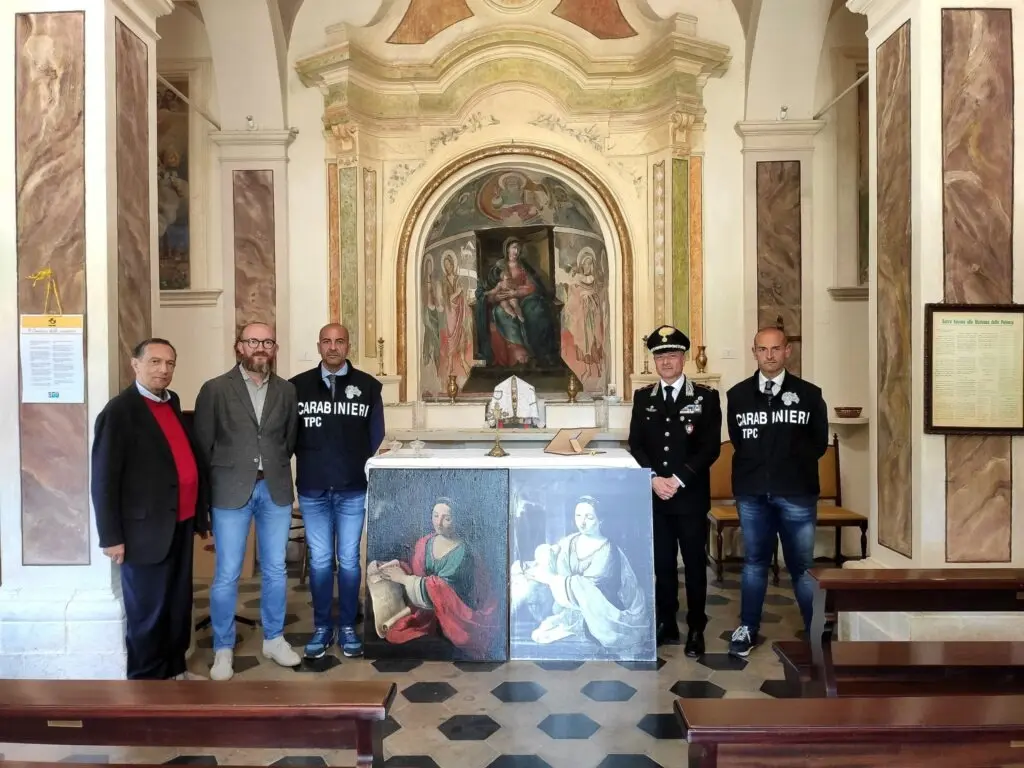
In the autumn of 2024, the landscape of art crime investigation underwent a quiet but profound transformation. During a routine patrol at the Mercanteinfiera, a prestigious biannual antiques fair in Parma that serves as a bustling hub for dealers and collectors from across Europe, officers from the Carabinieri Command for the Protection of Cultural Heritage conducted an operation that would have been unthinkable just a few years ago. By utilizing cutting-edge artificial intelligence to scan thousands of items on display, the specialized art police successfully identified an oil painting that had been missing for two decades—a relic stolen from a small church near L’Aquila that had been hiding in plain sight.
The recovery of this 17th-century depiction of Saint Agnese marked a significant milestone for the Carabinieri, Italy’s elite art crime squad. The success was powered by a sophisticated algorithm known as SWOADS—the Stolen Works of Art Detection System. Since its implementation in 2023, the platform has become an indispensable tool for investigators, bridging the gap between the chaotic, sprawling nature of the global art market and the rigorous demands of law enforcement.
The Evolution of the SWOADS Platform
The creation of SWOADS was the brainchild of Salvatore Rapicavoli, an IT engineer who joined the ranks of the Carabinieri’s cultural heritage division in 2023 with a clear mission: to modernize the fight against the illicit trade of antiquities. For years, the Carabinieri had maintained one of the most comprehensive databases of stolen art in the world. However, the sheer volume of material, combined with the ingenuity of thieves who often alter stolen goods to prevent identification, created a significant bottleneck for human investigators.
Rapicavoli recognized that traditional methods of visual comparison—relying on the human eye to spot minute similarities across thousands of images—were insufficient for the scale of the black market. By developing an AI system capable of recognizing complex visual patterns, he sought to give the Carabinieri a "force multiplier." The resulting system, SWOADS, does not merely look for exact matches in metadata or high-resolution photos. Instead, it is designed to look beneath the surface, identifying what experts call "hidden visual fingerprints."
The power of this technology was put to its ultimate test at the Mercanteinfiera. As officers moved through the exhibition halls, they captured images of various works, feeding them into the database in real-time. Amidst the thousands of pieces of furniture, jewelry, and fine art, the algorithm suddenly flagged a particular portrait of a young woman holding a scroll. To the casual observer, the painting looked like a standard antique, perhaps a generic portrait from a bygone era. To the human eye, it was certainly not an exact match to the stolen painting of Saint Agnese, which had been vanished from the Virgo Potens church in Sulmona in 2004.
Detecting the Hidden Fingerprints
The discrepancy that had shielded the painting for twenty years was a deliberate act of deception. At some point after the theft, a criminal hand had painted over the original iconography. In the original 17th-century masterpiece, the Saint was depicted cradling a lamb, a traditional symbol associated with the martyr. The thief, likely attempting to obscure the painting’s provenance and make it harder to trace against existing police catalogs, had painted over the lamb, replacing it with a scroll inscribed with Latin text.
This kind of modification—a "disguise" for a stolen object—is a classic tactic in the illicit art trade. It is designed to fool experts who might compare a suspect piece against a photograph in a police report. However, the SWOADS algorithm is not fooled by superficial changes. Instead of focusing solely on the overt subject matter, the AI analyzed the underlying structure of the work. It detected subtle consistencies in the artist’s brushwork, the specific shades of pigment used in the skin tones, and the rough silhouettes of the figure. These "hidden visual fingerprints" allowed the system to bypass the physical alteration of the lamb and identify the work as the stolen Saint Agnese.
The implications of this discovery are vast. For two decades, the painting had likely moved through private collections and auctions, unrecognized by those who possessed it. Its return to the church in Sulmona is not just a victory for the Carabinieri; it is a restoration of cultural identity for a community that had long ago reconciled itself to the loss of a significant religious icon.
The Impact of AI on Cultural Heritage Preservation
The success of the Saint Agnese recovery is far from an isolated incident. Since its inception, SWOADS has become a cornerstone of the Carabinieri’s strategy to combat the looting of Italy’s vast cultural wealth. According to data provided by the Carabinieri, the system has already been instrumental in the recovery of more than 300 large paintings and statues. Even more impressive is its success with smaller, often overlooked items; the system has helped identify and recover more than 165,000 artifacts, including ancient coins, historical letters, and commemorative medals.
The total estimated value of the objects recovered through the aid of this technology exceeds $200 million. This financial figure, while staggering, does not fully capture the historical and cultural value of these items. Many of the objects recovered are part of the very fabric of Italian history, often taken from small, under-guarded regional churches or archaeological sites that lack the security of major national museums.
Rapicavoli’s work underscores a growing trend in law enforcement where data science and art history converge. As the global art market becomes increasingly digitized, the tools to protect that market must evolve at a commensurate pace. For the Carabinieri, the goal is to create a digital environment where there is no place for stolen goods to hide, regardless of how much time has passed or how many modifications a thief has made to the original work.
Looking Toward the Future
Despite the technological triumph in identifying the painting, the investigation into the theft of the Saint Agnese portrait remains ongoing. While the painting has been successfully repatriated to the diocese of Sulmona-Valva—returning to the Virgo Potens church to resume its place as an object of devotion—the individuals responsible for the initial theft in 2004 have yet to be apprehended. The recovery serves as a poignant reminder that while technology can bridge the gap of time and distance, the pursuit of justice often requires the patience and persistence of traditional detective work.
The recovery of the painting has prompted discussions about how the AI system might be expanded. As the database of "hidden fingerprints" grows, the accuracy of the system is expected to improve, creating a more robust shield for cultural heritage sites across Europe. The Mercanteinfiera, once a place where a stolen painting could hide in plain sight, now serves as a testament to the fact that the digital age has fundamentally altered the risks for those who traffic in stolen history.
For the community in Sulmona, the return of the Saint Agnese is a moment of profound significance. When the painting was stolen, it was not merely a loss of property; it was a severance of a connection to their past. Now, thanks to the combination of 17th-century artistry and 21st-century code, that connection has been restored. As the Carabinieri continue to refine their use of AI, the case of the Saint Agnese remains a clear indicator that the future of art preservation lies in the ability to see what was once considered unseeable.