
In 1979, the landscape of contemporary art was undergoing a seismic shift, one that art critic and theorist Rosalind Krauss famously sought to map in her seminal essay, "Sculpture in the Expanded Field." At the time, Krauss observed that the definition of what constituted a sculpture had become increasingly fluid, noting that "rather surprising things have come to be called sculpture: narrow corridors with TV monitors at the ends; large photographs documenting country hikes; mirrors placed at strange angles in ordinary rooms; temporary lines cut into the floor of the desert."
Her observation captured a moment of profound transformation, identifying that the rigid, traditional boundaries of the medium—centered on the monument or the pedestal—were collapsing. Today, nearly half a century later, that expansion has accelerated far beyond what Krauss could have predicted. Sculpture has ventured into realms once deemed entirely separate from the fine arts: crafts, horticultural interventions, complex masquerades, and the ephemeral nature of "constructed situations." In the contemporary art world, sculpture can manifest as a living bacterial culture, a fully functional free clinic, or an immersive virtual reality environment.

This evolution is perhaps best exemplified by the way art history now interacts with modern practice. The title The Kiss, for instance, no longer points to a single iconic object. Depending on the context, it might refer to the 1882 marble masterpiece by Auguste Rodin, the 1923–1925 limestone carving by Constantin Brancusi, or a 2003 "constructed situation" by Tino Sehgal, where the medium is human interaction itself rather than physical stone.
This rich, kaleidoscopic variety of sculptural practice is on full display across New York City this fall. From the refined craftsmanship of 15th-century bronzes to the deeply resonant, site-specific memorials of Beverly Buchanan, the city’s current gallery and museum offerings reflect a medium that is more vital, diverse, and theoretically complex than ever before. This vibrant tapestry of exhibitions serves as the backbone for the upcoming Art Week NYC, a citywide festival of art events co-organized by ARTnews, Art in America, and Artforum, running from November 11 to 14.

The Ever-Expanding Boundaries of Form
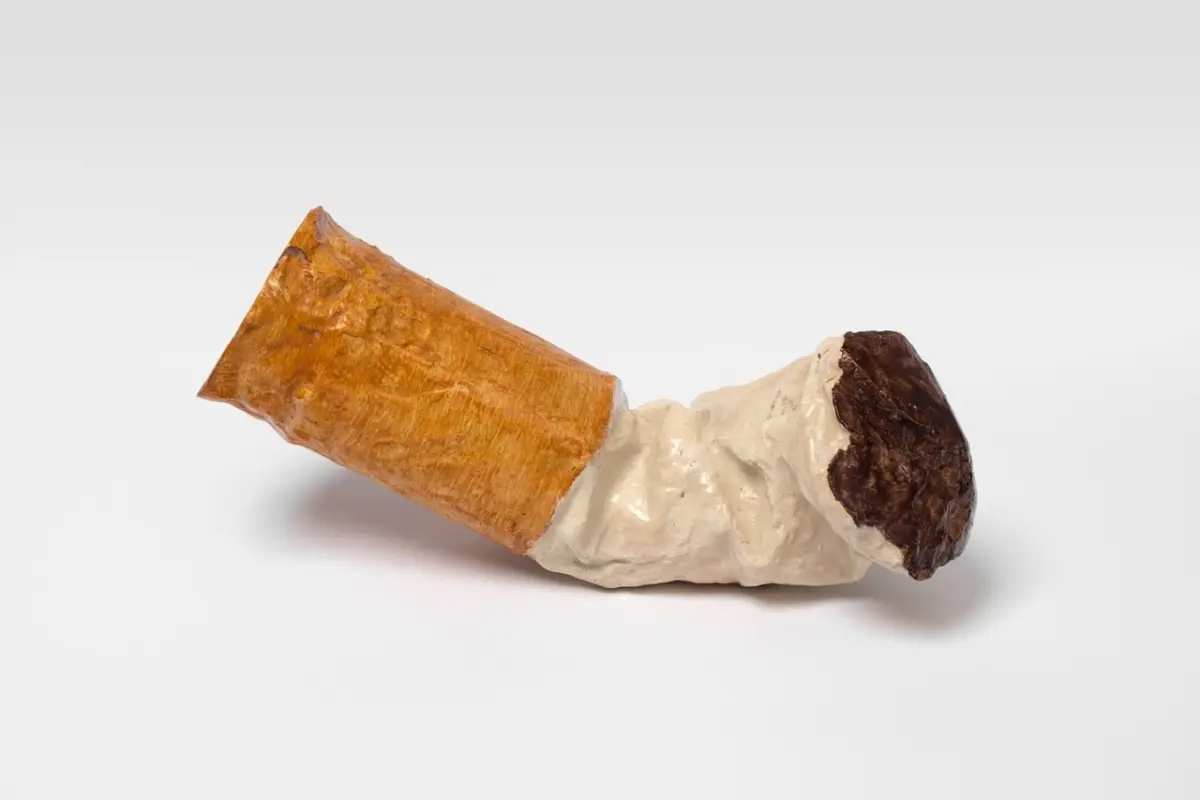
The contemporary sculptural experience is no longer about the object alone; it is about the space the object occupies and the history it carries. When visitors traverse the galleries of New York this November, they will encounter works that challenge the very definition of permanence. Claes Oldenburg and Coosje van Bruggen, whose Fagend Study, Prototype (1976) stands as a testament to the pop-art infusion of everyday objects into the high-art sphere, are primary examples of this shifting paradigm. By monumentalizing the discarded and the mundane, they forced a reconsideration of the relationship between the viewer and the object.
This tradition of challenging the viewer continues in the current exhibition landscape. As we look at the evolution from the mid-20th century to the present, it becomes clear that sculpture has become an act of research and engagement. Artists are increasingly working as ethnographers, historians, and social architects. The "expanded field" that Krauss described has effectively become the entire world.

For those navigating Art Week NYC, the sheer range of work on view provides a unique opportunity to see how this trajectory has unfolded. The exhibitions currently installed across the city do not merely display objects; they stage encounters. Whether it is the intricate detail of Renaissance bronzes—which highlight the technical prowess and material history of the medium—or the stark, emotive power of Beverly Buchanan’s memorials, which anchor sculpture in the landscape of collective memory and racial history, the works on view provide a comprehensive look at how far the medium has traveled.
Navigating the Sculptural Landscape
The festival, which brings together the expertise and curation of three of the most influential voices in art journalism—ARTnews, Art in America, and Artforum—is designed to highlight the intersection of historical rigor and contemporary innovation. The goal is to provide a framework for viewers to engage with these diverse works, moving from the historical foundations of bronze casting to the site-specific, socially conscious practices that define the current era.

As Krauss’s essay suggested, the expansion of sculpture was not just a change in form, but a change in the relationship between the art and the ground it sits upon. This is particularly relevant when examining the work of artists like Beverly Buchanan. Her memorials are not meant to be viewed from a distance; they are meant to be inhabited, walked around, and felt. They represent a bridge between the physical object and the lived experience, proving that sculpture can be a tool for healing and remembering.
The breadth of exhibitions during Art Week NYC ensures that there is a dialogue occurring between the past and the present. When a visitor moves from an exhibition of 15th-century bronzes to a space occupied by contemporary conceptual installations, they are witnessing the full spectrum of what art can achieve. The bronze, once a symbol of power and permanence, is now contextualized alongside works that may exist only for a moment, or works that exist entirely as data or social dynamics.

Why Context Matters Now
In an era where the digital and the physical are increasingly blurred, the importance of the sculptural object remains undiminished. The tactile, material presence of a sculpture provides a necessary anchor in a world that is often experienced through screens. Yet, even as artists experiment with virtual worlds and bacterial art, the core question posed by Krauss remains: what defines the "sculptural"?
The answer, as demonstrated by the diverse programming during Art Week NYC, is that there is no single definition. Instead, sculpture has become a method of inquiry. It is a way of asking questions about the environment, about the body, and about the legacy of history. By showcasing works that range from the deeply historical to the radically experimental, the festival organizers hope to encourage a more nuanced appreciation of how artists are currently wrestling with these themes.

For those planning to attend the events between November 11 and 14, the experience offers more than just a tour of galleries. It is a chance to participate in a citywide conversation about the state of art today. Whether you are interested in the classical techniques of metalwork or the cutting-edge practices of artists working in the "expanded field," the exhibitions on view provide a profound look at the versatility of human creativity.
As we look toward the future, the lessons of the past remain vital. The shift that began in the late 1970s was not an end to sculpture, but a liberation of it. By breaking the chains of the pedestal and the monument, artists have opened the door to a world where anything—a memory, a protest, a virtual landscape, or a cast bronze—can hold space and demand our attention. This fall, New York serves as the perfect backdrop for this ongoing exploration, inviting the public to step into the expanded field and witness the transformation for themselves.