
A government bus outfitted with emergency oxygen tanks. Exhausted firefighters collapsing to the ground in sheer relief at the very first sign of rain. Dozens of displaced orangutans rescued from burning wilderness. And hundreds of Indonesian students marching in sharp defiance through an impenetrable haze, some wearing heavy gas masks while others carry poignant signs reading, “If we burn, you burn with us.”
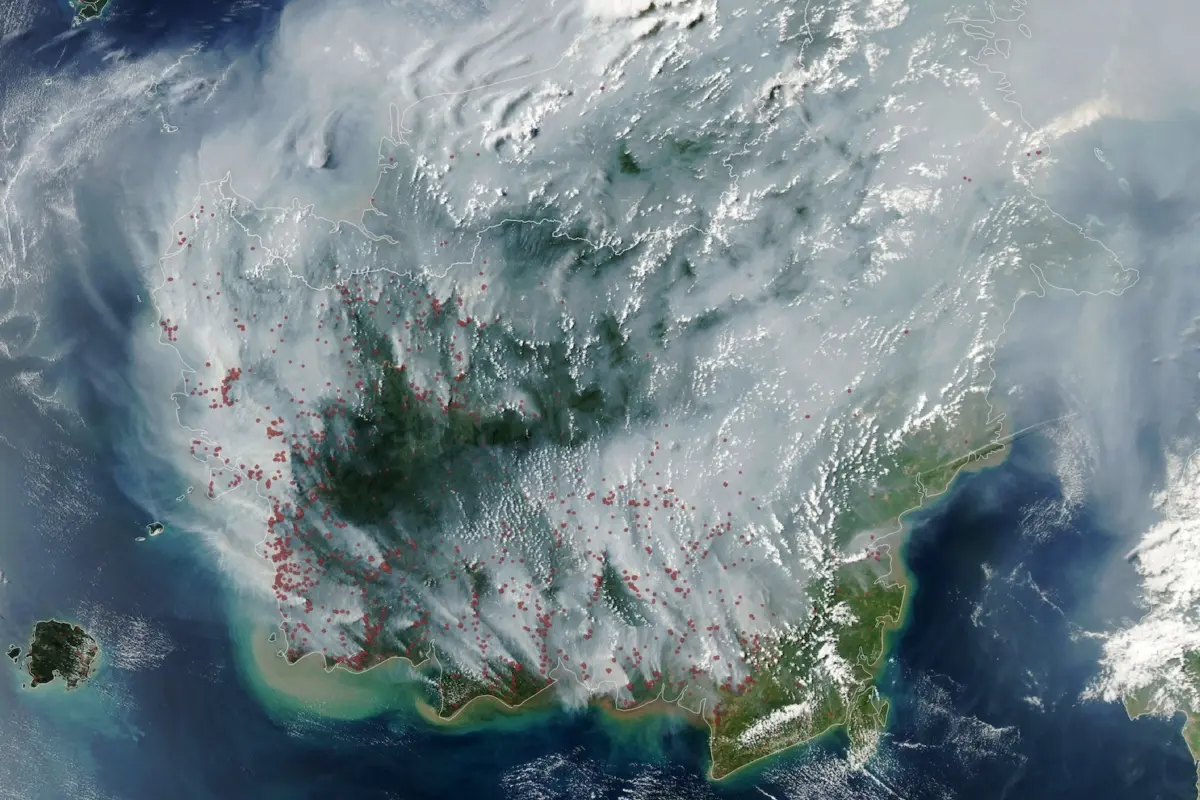
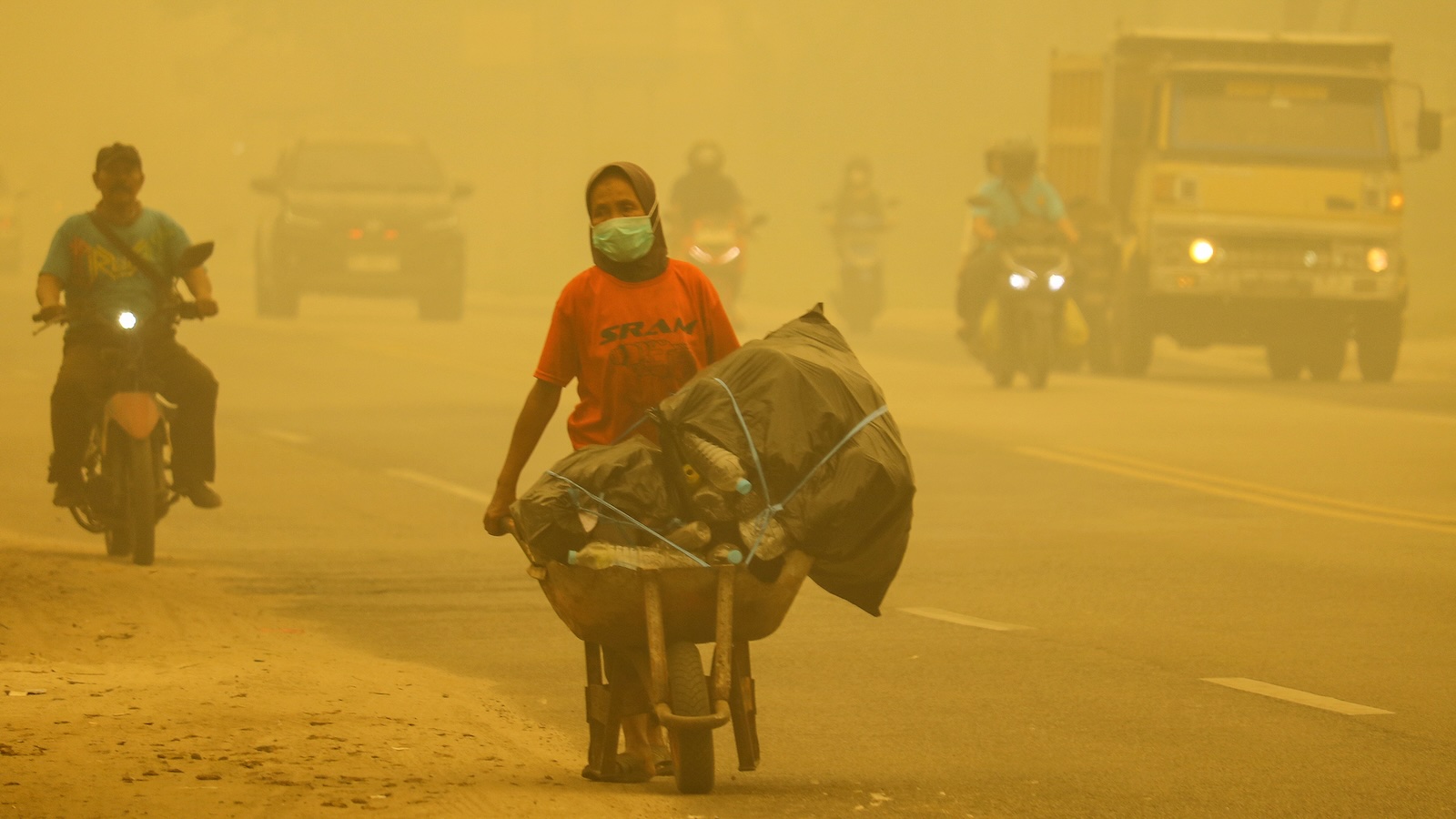
These vivid and sobering scenes define Indonesia’s worst wildfire season in a decade. More than 4.6 million acres have scorched across the vast archipelago nation since August, blanketing its massive island regions, including Kalimantan and Sumatra, in a thick, sulfurous smoke that has continually drifted across borders to neighboring countries. Millions of residents are currently forced to breathe in this toxic, choking haze. According to government health data, more than 300,000 Indonesians have already sought urgent medical treatment for acute respiratory problems, overwhelmed clinics, and severe coughing fits.
On some particularly severe days, local air quality conditions have soared to more than 13 times worse than the established threshold considered unhealthy for human exposure. Compounding the crisis is traditional tropical architecture; much like in many tropical countries, buildings across Indonesia are purposely designed to maximize natural airflow rather than filter incoming air or seal it out.
“This is a public health catastrophe,” said Robert Field, a prominent fire researcher at Columbia University. While acknowledging that there are other pressing, long-term consequences of the fires—such as massive carbon emissions and irreversible harm to vulnerable wildlife and fragile forest habitats—Field noted that right now, “it’s hard to think much past the air quality issues.”
The raging fires represent only the latest environmental catastrophe to inundate Indonesia. The nation is not only one of the most populated countries on the planet, but it is also consistently ranked as one of the most disaster-prone. Just last year, approximately 1,200 residents of Sumatra lost their lives during catastrophic, cyclone-induced flooding and devastating landslides. Furthermore, the nation’s capital city of Jakarta, which already partially sits below sea level, is steadily sinking into the earth. As a warming global climate pushes sea levels progressively higher, the Indonesian government is currently racing against time to construct an entirely new capital city on higher ground.
These compounding disasters are all forged from the dangerous and volatile intersection of human sprawl, agricultural expansion, and climate change. However, scientists note that it is not yet entirely clear precisely how much hotter baseline temperatures directly influenced this ongoing disaster. By contrast, severe wildfires in parts of the world that are warming at a much faster rate than Indonesia—such as the recent devastating outbreaks observed in Canada and parts of Europe—are clearly and directly attributable to long-term climate change, according to climate attribution researchers.
The primary culprits behind Indonesia’s fires, nevertheless, are no mystery to experts or officials. A superstrong El Niño climate pattern has plunged Indonesia into a severe, prolonged drought, drastically drying out the extensive peatlands found throughout the country. Peat, a unique and dense type of soil packed with layers of partially decayed plant matter, is exceptionally flammable, especially when desiccated by drought. When local farmers or commercial agriculture companies intentionally set fires to quickly and cheaply clear away vegetation and agricultural debris—a deeply entrenched traditional practice in Indonesia—these peat fires can quickly spiral wildly out of control, smoldering stubbornly underground for months at a time.
“This is a crime against humanity, because what they have done endangers the health of millions of our people,” declared Prabowo Subianto, the president of Indonesia, during a high-stakes Cabinet meeting last week, according to an official government press release.
Seemingly responding to mounting public outrage, President Subianto vowed to aggressively investigate who was directly responsible for lighting the fires, condemning these reckless actions as a form of environmental terrorism. Widespread frustration over the unrelenting fires, combined with high living costs and heavy government spending, has sparked numerous large-scale protests across various regions of the country in recent weeks.
The Indonesian government had actually been preparing for the year’s wildfire season for months, ever since international and domestic scientists first began forecasting the arrival of the potent El Niño system.
“This year, we must be much more careful,” Raja Juli Antoni, Indonesia’s minister of forestry, warned the United Nations back in May. “The potential for a longer dry season due to El Niño demands heightened vigilance from all of us.”
Unfortunately, the fires were lit regardless of the warnings. According to Field, who previously collaborated with the Indonesian government to design and implement fire prevention strategies back in the 2000s, many of the active fires appear to be located on unmanaged lands immediately adjacent to working agricultural plantations. These commercial operations frequently cultivate oil palm, which remains the primary driver of Indonesia’s historically high rates of deforestation and alarming biodiversity loss. That geographical distribution strongly indicates that the fires were likely being utilized to clear dense overgrowth to cheaply make room for additional crops, Field explained.
Indonesia has grappled with terrible peat fire outbreaks since the 1990s, but the nation began making notable strides to address the systemic problem over the past decade. In 2014, the government officially banned the use of drainage canals that had traditionally been used to dry out peatlands and render them more suitable for intensive crop cultivation. A couple of years later, following another particularly disastrous wildfire season, the government sharply curbed deforestation rates and initiated sweeping efforts to restore large areas of already degraded land. The national rate of deforestation continued to decline steadily for five consecutive years and, although it began creeping back upward in 2022, it remains far below historical highs.
“I was optimistic that the drought was inevitable but the fire was not,” Field said, adding that Indonesia was undeniably much more prepared for this year’s fires than it had been during past crises. “I don’t think there was a lack of sincerity from officials not wanting this to happen, and the fact that it did just points to how hard it is to manage fire in such a large and complicated country.”
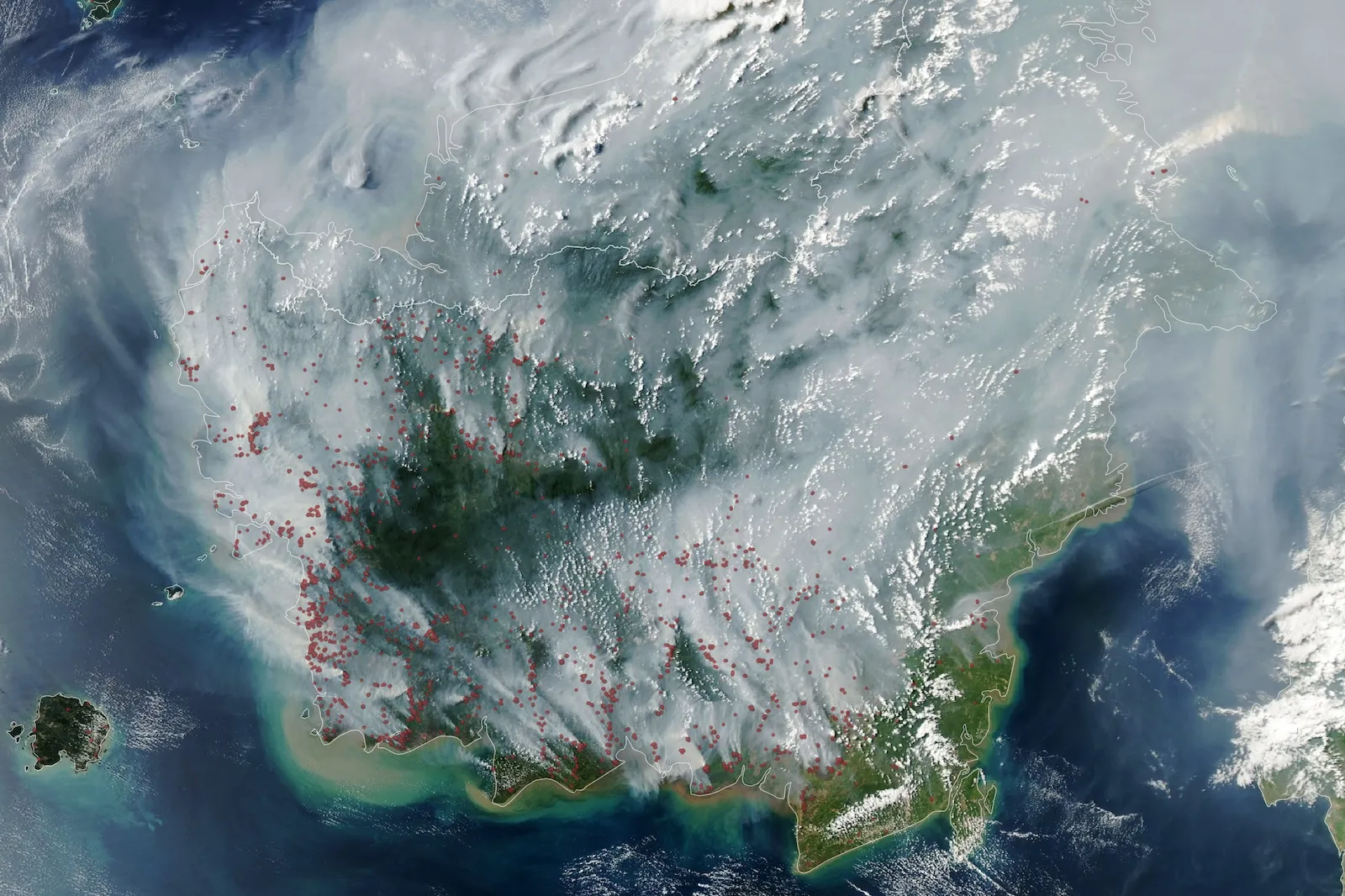
Peat fires present an exceptionally challenging form of wildfire for numerous distinct reasons, explained Israr Albar, Indonesia’s former deputy director of forest fire management, in an emailed statement. The dense accumulation of underground organic material allows fires to burn steadily beneath the surface for months, making them notoriously difficult to detect even by sophisticated satellites, all while continuing to release massive quantities of carbon dioxide and thick smoke into the atmosphere. At times, the resulting smoke becomes dense enough to completely obscure the surface from satellites looking down from orbit.
“Just because we cannot see a fire does not mean it is not there,” Albar emphasized.
This complex dynamic makes the underground flames remarkably difficult to locate and extinguish. Even fires that appear to have been successfully put out will frequently reignite without warning as heat lingers deep within the peat layers. Furthermore, it is not always feasible to source the immense volumes of water necessary to permanently douse a deep-seated peat fire during the severe water-stressed conditions of the dry season. While the country has recently experienced some welcome rainfall, Albar cautioned that the danger is far from over.
“Even when the rainy season begins, fires may continue underground,” he noted.