
Six years ago, Suhanya Raffel, the director of Hong Kong’s M+ museum, offered a prophetic assessment of the cultural landscape. In an interview for the book The Future of the Museum, she told cultural strategist András Szántó that the coming era would demand a radical shift in how institutions operate. She posited that museums would need to “stand together and work to help one another to deliver a more sustainable baseline,” adding that collaboration would become the defining hallmark of the next chapter of museum work.
On Friday morning in Hong Kong, that vision moved from the theoretical to the monumental. In an announcement that marks a historic shift in global museum practice, M+, the Museum of Modern Art (MoMA) in New York, and the Centre Pompidou in Paris unveiled a wide-ranging cultural alliance unprecedented in its scale and ambition. At the core of this partnership is a transformative agreement: the three institutions will treat their respective, vast holdings as a singular, shared collection. This cross-continental resource will be curated by staff operating across three different time zones and cultural spheres, effectively blurring the lines between the world’s most prestigious modern art repositories.
A New Paradigm for Global Institutions
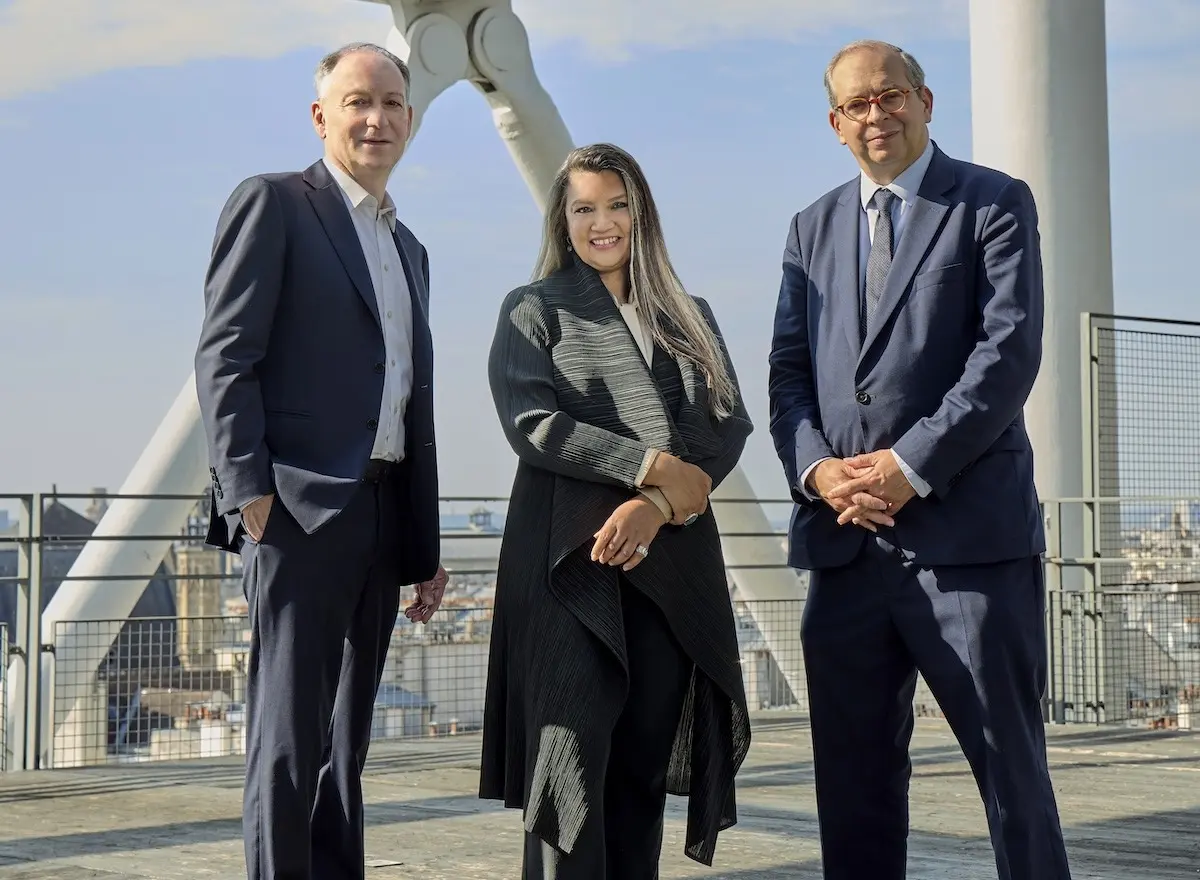
The alliance is not merely a series of loans or a temporary exchange program; it is a structural integration of institutional identities. During a joint interview conducted in Paris, the leaders of the three museums—Raffel, MoMA director Christophe Cherix, and Centre Pompidou president Laurent Le Bon—emphasized that the partnership represents a fundamental reimagining of what a museum can be.
“If we succeed,” Le Bon remarked, “we will be more than the sum of our parts, and I think that is something quite new.”
The sheer magnitude of the combined resources is staggering. MoMA and the Centre Pompidou together hold hundreds of thousands of objects, supported by extensive and invaluable archives that document the evolution of modernism and the avant-garde. While M+, founded only six years ago, possesses a leaner collection of approximately 8,000 objects, its holdings are of immense strategic importance, particularly its definitive collection of contemporary Chinese art, much of which was acquired through the generous donation of Swiss businessman and former diplomat Uli Sigg.
Beyond the art itself, the audience potential is immense. Based on current attendance data, the three institutions serve a combined total of 10 million in-person visitors annually, with an online footprint reaching 125 million people. By pooling their expertise and reach, the museums aim to democratize access to their collections on a global scale.
Implementing the Shared Vision
The operational rollout of this alliance is set to begin in earnest over the next few years. Starting in late 2027, a selection of major works from the M+ collection will be installed on long-term loan within MoMA’s permanent collection galleries. This will be followed in 2028 by the opening of a dedicated, long-term Centre Pompidou gallery at MoMA. Parallel initiatives are being developed to ensure that the cross-pollination of collections occurs at all three sites. These efforts coincide with the Centre Pompidou’s current five-year building restoration, with the museum scheduled to reopen its doors in 2030, at which point the alliance will likely enter its most visible phase.
Beyond displays, the institutions are committing to deep intellectual integration. Over the next five years, the trio will co-organize a major exhibition exploring the complex and fluid concept of “the contemporary.” This exhibition is designed to feature works from all three collections and will be presented as a traveling showcase across Hong Kong, New York, and Paris. Furthermore, curators from the Centre Pompidou and M+ will integrate with MoMA’s C-MAP (Contemporary and Modern Art Perspectives), a renowned cross-departmental research program established in 2009. C-MAP has long been dedicated to fostering research on art histories that exist outside the traditional canon of North America and Western Europe, and this new expansion will provide a truly global platform for those investigations.
To govern this sprawling network, a joint steering committee—comprising the three directors, department heads, and key curatorial staff—has been established. This body will oversee critical priorities, including exhibition planning, conservation standards, and professional development. The committee is scheduled to meet monthly, with one significant in-person plenary session held annually, rotating between the three host cities. The inaugural meeting is slated for next month at MoMA in New York.
From Bilateral Roots to Trilateral Strength
While the announcement is groundbreaking, it is not without a foundation. The alliance is the culmination of several previous successful collaborations. In February 2025, M+ and MoMA signed a memorandum of understanding focused on curatorial exchange and research. Simultaneously, M+ and the Centre Pompidou had already initiated a multiyear strategic partnership, which included plans for the Pompidou to leverage pieces from the M+ collection during the grand reopening of its renovated Parisian headquarters.
In their joint interview, the directors acknowledged that while these bilateral agreements were successful, they were ultimately stepping stones to a more holistic, trilateral model. They cited their shared DNA: all three institutions are deeply invested in the art of the present and the challenge of defining it for future generations. There is also a shared historical lineage of dedication to modernism, spanning nearly a century from MoMA’s founding in 1929, through the 1977 opening of the Centre Pompidou, to the 2021 launch of M+. Raffel noted that the Centre Pompidou served as a vital touchstone for M+ during its formative years, providing a blueprint for building a world-class institution in Asia.
“We each have things that are absolutely unique in the world,” Cherix said. “Our first role is, of course, preservation. But how can we make those collections work harder for us and touch people well beyond the walls of our institutions?”
Sustainability and the Future of Collecting
Perhaps the most significant shift signaled by this alliance is the move away from the traditional, competitive model of museum expansion. For decades, the measure of a museum’s success was the rate at which it could grow its permanent collection. In an era of increased environmental awareness and logistical challenges, this approach is becoming less tenable.
The alliance offers a solution rooted in sustainability. By sharing collections, the museums can reduce the necessity of constant, carbon-heavy international shipping for temporary loans. Furthermore, it allows for a more rigorous approach to acquisitions. Raffel noted that the strategy of endless accumulation is being replaced by a philosophy of intentional, shared stewardship. To be added to the “shared collection,” a work will now need to possess a quality of uniqueness—what Cherix describes as having “no equal” among the existing holdings of the three partners.
“We can’t just keep collecting, so we are sharing instead,” Raffel explained.
This pivot toward a shared, forward-looking vision addresses the fundamental tension of the modern museum: the desire to remain relevant while serving as a repository of history. By combining their scope, the directors believe they can redefine the trajectory of their respective institutions.
This move mirrors a broader trend in the museum world. Over the past two decades, institutions have increasingly sought to pool resources, as seen in joint acquisitions like the 2003 purchase of Bill Viola’s Five Angels for the Millennium by the Whitney, Tate, and the Centre Pompidou. Other models have emerged, such as the collection-sharing arrangement between the Los Angeles County Museum of Art (LACMA) and the Yuz Museum in Shanghai, or the trend of shared gifts, such as the 2022 donation of the Dimitri Daskalopoulos collection to the Guggenheim and the Museum of Contemporary Art Chicago.
Yet, the MoMA–Pompidou–M+ alliance stands apart in its depth. It is not merely a shared transaction, but a long-term commitment to shared governance, research, and institutional culture. As the art world faces the complexities of the 21st century, this partnership suggests that the future of the museum may not lie in the walls that enclose a collection, but in the bridges built between those who hold it in trust.