
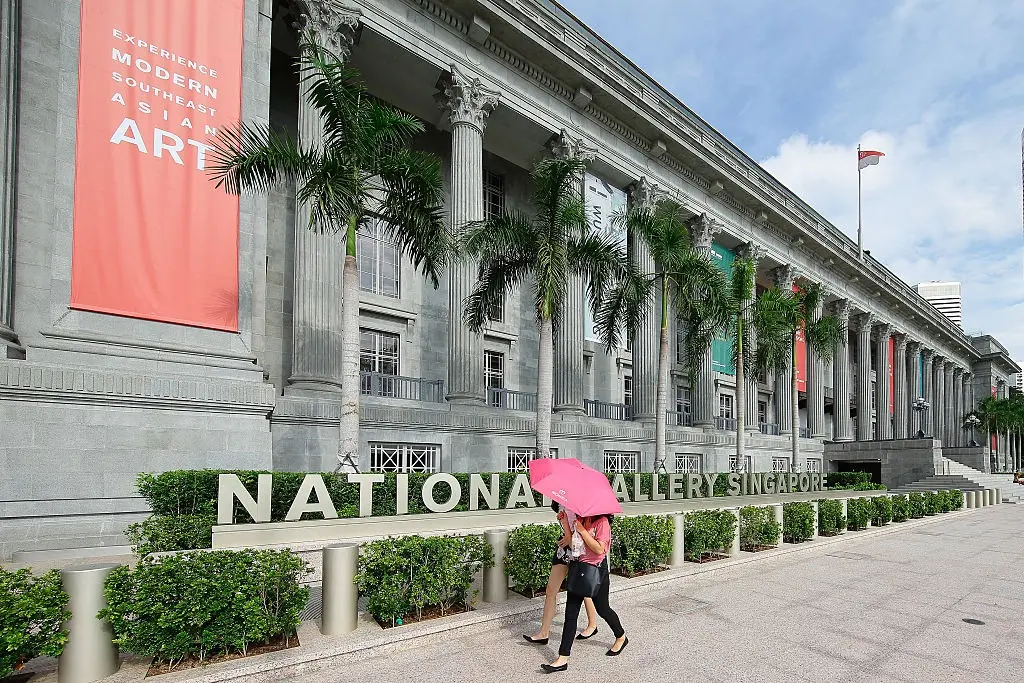
The National Gallery Singapore is undergoing a period of significant leadership restructuring, as the departure of its chief executive officer, Eugene Tan, has triggered a broader shift within the museum’s upper echelons. Following the announcement last month that Chng Hak-Peng is set to assume the role of CEO, succeeding Tan, reports from The Straits Times have confirmed that two other high-profile members of the museum’s senior staff will also be stepping down in December. The simultaneous departure of Chief Curator Patrick Flores and Assistant Chief Executive Chris Lee marks a profound change in the leadership team for one of Southeast Asia’s most prominent cultural institutions.
The transition, which is slated to be finalized by the end of the year, coincides with the handover of the CEO office. While the museum prepares for this new chapter, the institution has signaled its commitment to continuity. Incoming CEO Chng Hak-Peng, in comments provided to The Straits Times, emphasized that the National Gallery’s long-term programming and strategic initiatives remain on schedule. However, the museum has remained notably reserved regarding the specific mechanisms of the leadership search and the future status of the chief curator role—a position that was only recently established, with Patrick Flores serving as its inaugural occupant since 2024.
The Evolution of the Chief Curator Role
The departure of Patrick Flores is perhaps the most notable change regarding the museum’s intellectual direction. Flores, an esteemed figure in the global art world, brought a wealth of curatorial experience to the National Gallery. His pedigree includes serving as the curator for the Philippines Pavilion at the 2015 Venice Biennale and the Taiwan Pavilion at the 2022 edition of the prestigious international exhibition. Additionally, his tenure as the artistic director of the 2019–2020 Singapore Biennale, hosted by the Singapore Art Museum, cemented his reputation as a scholar deeply engaged with the complexities of regional art history.
During his time at the National Gallery Singapore, Flores was instrumental in shaping the institution’s scholarly narrative. His notable exhibitions, such as Figuring a Scene, Elusive Edge: Philippine Abstract Forms, and the ambitious Ties of History: Art in Southeast Asia, showcased his ability to synthesize diverse regional perspectives into cohesive, rigorous displays. The museum has confirmed that Flores intends to return to his native Philippines following his departure, marking the conclusion of a significant chapter for both the curator and the institution.
The uncertainty surrounding the future of the chief curator position—a title that represented a deliberate effort by the gallery to centralize its curatorial vision—has sparked internal and external curiosity. By creating the role in 2024, the museum had signaled an intent to elevate the importance of its research and exhibition programming under a single, authoritative voice. Whether this structure will persist under the new leadership remains a subject of ongoing discussion as the museum navigates its transition.
Strategic Shifts in Institutional Management
While the curatorial department faces a transition, the operational side of the National Gallery is also experiencing a major change. Chris Lee, who has served as the assistant chief executive, will be concluding his decade-long tenure at the museum. Lee’s career at the National Gallery has been marked by a steady rise through the ranks, beginning in the capacity of chief marketing officer before he transitioned into the role of assistant CEO.
Lee’s next move represents a significant pivot toward urban revitalization and the intersection of heritage and commerce. Starting in mid-December, he will step into the role of chief executive officer at Medan Pasar Realty. This organization is currently spearheading efforts to revitalize a historic market neighborhood in downtown Kuala Lumpur, Malaysia. Beyond his responsibilities at the realty firm, Lee will also oversee the operations of Muara Arts, a nonprofit gallery and theater space that serves as a cornerstone for the broader redevelopment project. His move to Kuala Lumpur underscores the fluidity of leadership in the regional cultural sector, where expertise in museum management is increasingly being applied to the broader development of urban cultural ecosystems.
Continuity Amidst Organizational Change
The broader context of these departures is defined by the ongoing restructuring of Singapore’s major arts institutions. Eugene Tan, who has served as the chief executive of the National Gallery, has simultaneously held the role of CEO at the Singapore Art Museum (SAM). Following the leadership shake-up, it has been confirmed that Tan will continue his role as the CEO of the Singapore Art Museum into the new year, effectively decoupling his leadership from the National Gallery.
This separation of roles is significant, as it marks a departure from the integrated leadership model that has characterized the two institutions in recent years. However, both the National Gallery and the Singapore Art Museum have moved to reassure the public and the arts community that the spirit of collaboration remains intact. In a formal statement released last month addressing the changes, both institutions affirmed their commitment to sharing resources, expertise, and strategic planning, as they have done historically. This pledge to maintain collaborative ties is intended to ensure that the synergy between the two museums—which often share research, logistics, and programming efforts—will not be compromised by the changes in their executive suites.
As the museum prepares for December, the departure of three key figures—the CEO, the assistant CEO, and the chief curator—represents a rare moment of concentrated transition for the National Gallery. The institution, which opened its doors in 2015, has rapidly established itself as a global leader in Southeast Asian art. The challenge for Chng Hak-Peng, as he assumes the mantle of leadership, will be to maintain the institution’s momentum, secure its curatorial vision, and navigate the recruitment of new leadership to fill the voids left by these departing experts.
For the arts community in Singapore and across the region, these moves are being watched closely. The National Gallery’s ability to attract and retain top-tier talent has been a defining feature of its success to date. As the museum enters this period of administrative flux, the focus remains on the upcoming exhibition calendar and the long-term strategic goals that define its place in the global cultural landscape. With the transition slated for completion by the end of the year, the institution is bracing for a period of transformation, aiming to integrate its new leadership team while maintaining the high standards of scholarly inquiry and public engagement that have become the hallmarks of the National Gallery.